
Glossary · Single word
Maintaining
In short
keeping a building, system or component in good working order
Maintaining refers to the proactive and systematic process of keeping building components and external wall systems in good working order to ensure long-term functionality, safety, and regulatory compliance through scheduled inspections and preventative care.
Last updated
On this page
Maintaining
Definition and Technical Scope
In the context of the UK built environment, maintaining refers to the systematic process of keeping a building, system, or component in good working order. Within the specific field of external wall systems (EWS), this encompasses a range of activities designed to preserve the functional, structural, and aesthetic integrity of the cladding and its associated sub-structures. Maintenance is not a singular event but a lifecycle requirement that begins immediately upon the completion of a building’s construction or refurbishment.
The term distinguishes itself from 'repair' or 'replacement' by its preventative nature. While repair addresses specific defects or failures that have already occurred, maintaining focuses on the scheduled inspections, cleaning, and minor adjustments required to prevent such failures. In technical terms, this involves managing the effects of environmental exposure—such as UV degradation, moisture ingress, and thermal cycling—to ensure that materials continue to perform according to their original design specifications.
The Role of Maintenance in External Wall Systems
The maintenance of an external wall system involves several distinct layers, from the outermost rainscreen or render to the hidden components such as cavity barriers, fire stopping, and bracketry. Because these systems are complex and multi-layered, maintenance must be holistic. For instance, the accumulation of debris in drainage channels or the blockage of ventilation gaps can lead to interstitial condensation, which may eventually compromise the structural integrity of the secondary steelwork or the thermal performance of the insulation.
Maintaining the building fabric also extends to the seals and gaskets around penetrations, such as windows, vents, and balconies. If these components are neglected, the ingress of water can lead to the corrosion of fixings or the degradation of fire-resistant materials within the cavity. Consequently, maintenance schedules for cladding often include the periodic assessment of these interface details to ensure that the system remains weather-tight and that its fire-performance characteristics are not inadvertently compromised by material decay.
Regulatory and Legislative Context
In England and Wales, the requirement for maintaining the external envelope is underpinned by several layers of regulation and statutory guidance. Under the Building Regulations, there is a general expectation that materials and workmanship are of a standard that ensures the building remains functional for its intended life. More specifically, the Regulatory Reform (Fire Safety) Order 2005 requires the 'Responsible Person' to ensure that the premises and any facilities, devices, and equipment provided in connection with fire safety are subject to a suitable system of maintenance and are maintained in an efficient state, in efficient working order, and in good repair.
The introduction of the Building Safety Act 2022 has further refined these obligations, particularly for 'higher-risk buildings' (typically those over 18 metres or seven storeys). For these structures, the Principal Accountable Person must demonstrate that they are taking all reasonable steps to prevent a building safety risk from materialising and to reduce the severity of any such risk. A robust maintenance regime is a critical component of the Safety Case Report, providing evidence that the building's external wall systems are being managed proactively rather than reactively.
Professional Competence and Inspection Cycles
Maintenance activities are generally categorized into three types: routine, planned preventative, and reactive. For cladding systems, industry practice usually dictates a schedule based on the manufacturer’s recommendations and the specific environmental conditions of the site (for example, coastal locations may require more frequent cleaning to prevent salt-induced corrosion).
| Maintenance Category | Description | Typical Frequency |
|---|---|---|
| Routine | Visual inspections and basic cleaning of accessible areas. | Annually or bi-annually |
| Planned Preventative | Technical inspections, clearing drainage, and checking seals. | 3–5 year cycles |
| Reactive | Addressing identified defects, leaks, or storm damage. | As required |
Professional assessments, such as those conducted during an EWS1 process or a quinquennial fabric survey, often highlight the state of maintenance. A building that has been poorly maintained may require more invasive investigation to determine whether the underlying components have been affected by neglect. Therefore, maintaining a comprehensive record of all maintenance activities—a 'Golden Thread' of information—is increasingly regarded as a baseline requirement for effective building management.
Maintaining
Obligations for Building Owners and Managers
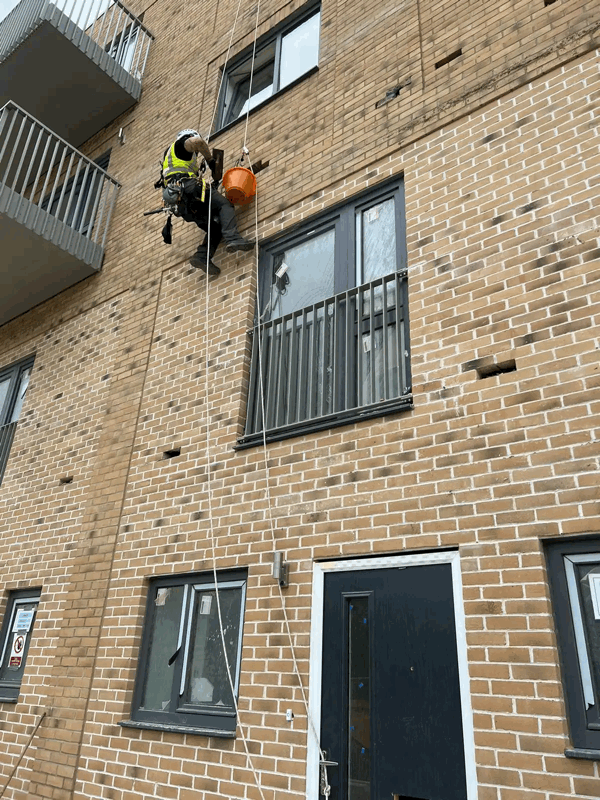
Building owners, Residents' Management Companies (RMC), and Right to Manage (RTM) directors hold the primary responsibility for ensuring that maintenance is carried out. This involves not only the physical act of cleaning or inspecting but also the procurement of competent professionals to undertake the work. The complexity of modern cladding systems means that maintenance often requires specialist access equipment, such as mast climbers or industrial rope access, and technicians who understand the specific requirements of different cladding types, whether they be Aluminium Composite Material (ACM), High-Pressure Laminate (HPL), or traditional masonry.
A significant part of the maintaining process involves the management of warranties. Many manufacturers stipulate that their product warranties are only valid if a documented maintenance programme is followed. Failure to adhere to these schedules can result in the voiding of warranties, leaving the building owner liable for the full cost of any future repairs or replacements. Consequently, managing agents must ensure that maintenance contracts are sufficiently detailed to meet these manufacturer-specific requirements.
Common Misunderstandings
A frequent misunderstanding is the belief that 'low maintenance' cladding materials require 'no maintenance.' While some materials, such as certain types of pre-weathered metal or high-density stone, are more resilient than others, no external wall system is entirely immune to the effects of weathering and environmental pollutants. Neglecting even highly durable systems can lead to aesthetic staining, which, if left untreated, may mask underlying structural issues.
Another misconception is that maintenance is solely concerned with the appearance of the building. While the 'curb appeal' is a factor, the primary function of maintaining a cladding system is to ensure safety and longevity. For example, the build-up of organic growth or industrial pollutants can, over time, chemically interact with surface coatings, leading to micro-cracking. These cracks can then allow moisture to reach the substrate, initiating a cycle of damage that is far more costly to rectify than the original maintenance would have been.
Related Terminology and Technical Definitions
The concept of maintaining is closely linked to several other terms used within the UK cladding and fire safety sectors:
- Remediation: The process of fixing or replacing unsafe or non-functional systems, often occurring when maintenance has failed or the original installation was flawed.
- Life Cycle Costing: The total cost of ownership of a building component, where regular maintenance is balanced against the long-term costs of premature replacement.
- Fabric Survey: A comprehensive inspection of the building's external elements to determine their current condition and future maintenance needs.
- Integrity: The ability of a system to remain intact and perform its intended function (e.g., weatherproofing or fire separation) over time.
Maintaining