
Glossary · Two-word term
Access Solutions
In short
methods and equipment used to reach elevated areas for work
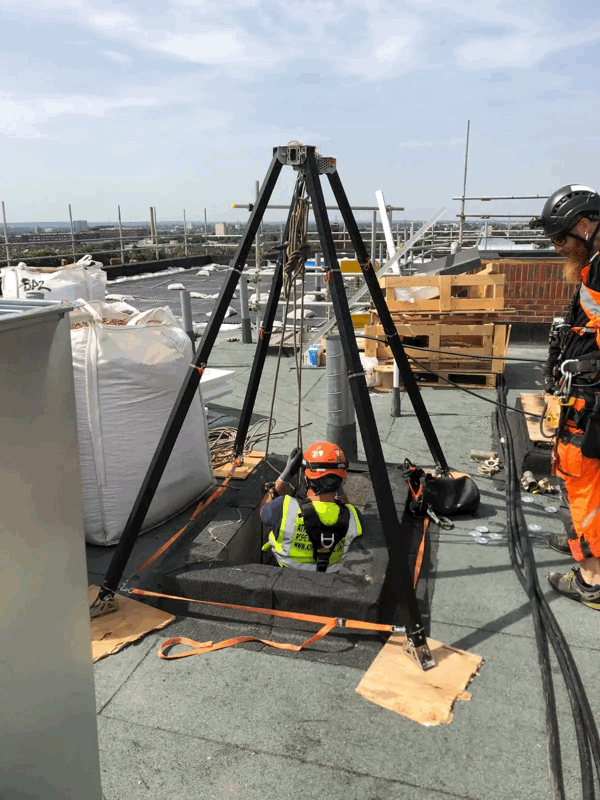
Access solutions are the varied methods and equipment, such as scaffolding and mast climbers, used to reach elevated building facades. They are essential for conducting safe cladding inspections, fire safety testing, and large-scale remediation works on high-rise structures.
Last updated
On this page
Access Solutions
Definition and Scope of Access Solutions
In the context of the UK building envelope sector, the term 'access solutions' refers to the methodologies and physical equipment employed to enable personnel to reach elevated or restricted areas of a structure for work. Within the cladding industry, this encompasses every stage of a project, from initial intrusive testing and fire risk assessments of external walls (FRAEW) to the comprehensive replacement of non-compliant systems.
Access solutions are not merely logistical considerations; they are integrated components of the technical strategy for any cladding project. The selection of an appropriate method is dictated by the building's height, its architectural geometry, the surrounding environment, and the specific technical requirements of the task. For instance, the access requirements for a single-point borescope inspection differ significantly from those required for the systematic removal and replacement of large-scale rainscreen panels across an entire elevation.
Role in Cladding Testing and Remediation
Access solutions serve as the fundamental prerequisite for any meaningful assessment of an external wall system. During the investigation phase, professionals often require access to the building’s substrate to verify the composition of the insulation, fire breaks, and cavity barriers. This often necessitates the removal of sample panels, which cannot be performed safely from the ground.
In the repair and replacement phase, the choice of access equipment influences the pace and methodology of the works. If a building requires full cladding remediation, the access solution must provide a stable, load-bearing platform that allows for the safe storage of new materials and the controlled descent of waste materials. The chosen method must also account for the structural integrity of the building’s frame, ensuring that the attachment of scaffolding or mast climbers does not compromise the very fabric being repaired.
Equipment Types and Technical Selection
The industry categorises access into several primary types, each with specific technical trade-offs. The selection process involves balancing the need for structural stability, the duration of the works, and the physical constraints of the site, such as narrow footways or underground services that limit ground pressure.
| Access Type | Primary Characteristics | Typical Application |
|---|---|---|
| Tube and Fitting Scaffold | Fixed, versatile, high load capacity | Comprehensive facade replacement |
| Mast Climbing Work Platforms (MCWPs) | Vertical movement, rapid assembly | High-rise linear elevations |
| Mobile Elevating Work Platforms (MEWPs) | Flexible, self-propelled, height-limited | Localised testing or minor repairs |
| Rope Access (Abseiling) | Minimal footprint, highly mobile | Inspections and non-weight-bearing work |
| Suspended Cradles | Top-down access, permanent or temporary | Maintenance and glazed unit replacement |
Each of these systems carries distinct implications for the building’s occupants and the surrounding infrastructure. For example, traditional scaffolding requires extensive 'tying' into the building fabric, which may necessitate temporary holes in the cladding or masonry. Conversely, rope access requires certified anchor points, which must be tested and maintained in accordance with British Standards.
Regulatory and Legislative Context
In England and Wales, the use of access solutions is governed by a robust framework of health and safety legislation. The primary regulation is the Work at Height Regulations 2005, which mandates a hierarchy of control measures. This hierarchy requires that work at height be avoided where possible, and where it cannot be avoided, equipment must be used to prevent falls or minimise the distance and consequences of a potential fall.
Under the Construction (Design and Management) Regulations 2015 (CDM 2015), the selection of access solutions is a shared responsibility between the client, the principal designer, and the principal contractor. The 'client'—often a building owner or Residents’ Management Company (RMC)—must ensure that the project is managed in a way that allows work to be carried out safely. Furthermore, for buildings falling under the scope of the Building Safety Act 2022, the 'Accountable Person' must maintain accurate records of the building’s safety arrangements, which includes the structural implications of any fixed access installations.
Access Solutions
Implications for Building Management
For managing agents and directors of Right to Manage (RTM) companies, the procurement of access solutions represents a significant portion of project expenditure and logistical complexity. Beyond the technical selection, there are several operational factors that require careful management:
- Licensing and Permitting: Fixed scaffolding or MEWPs placed on public highways or footpaths require licenses from the Local Highway Authority.
- Structural Loading: The ground must be assessed to ensure it can support the weight of the equipment, particularly in urban environments with basement voids or delicate paving.
- Security and Privacy: Elevated platforms provide potential points of unauthorized entry to a building and may impact the privacy of residents. Screening or alarms are common requirements.
- Impact on Fabric: The method of fixing access equipment to the building must be carefully detailed to prevent water ingress or damage to the underlying structure.
It is general practice for a competent professional, such as a structural engineer or a specialist access consultant, to review the proposed method statements and risk assessments (RAMS) before equipment is deployed on-site.
Common Misunderstandings
A frequent misunderstanding is that rope access is always a direct, lower-cost substitute for scaffolding. While rope access offers speed and minimal visual impact, it is often unsuitable for heavy-duty cladding replacement due to the limited weight a technician can safely handle. Furthermore, the wind-speed thresholds for safe operation vary significantly between a fixed scaffold and a suspended cradle, meaning that certain access solutions are more susceptible to weather-related delays than others.
Another misconception relates to the 'permanent' nature of some access solutions. Building owners may assume that a permanent Cradle or Building Maintenance Unit (BMU) installed for window cleaning is sufficient for cladding remediation. However, these units are often weight-restricted and may not provide the necessary positioning to access every part of the external wall system, particularly in recessed areas or behind architectural features.
Related Terminology
The field of access solutions shares a vocabulary with structural engineering and health and safety management. Terms often encountered include:
Collective Protection: Equipment that protects more than one person at a time, such as guardrails on a scaffold, which is generally preferred over personal protection like harnesses.
Exclusion Zone: A cordoned-off area at ground level designed to protect the public from falling objects during work at height.
Tie Pattern: The specific arrangement and frequency of mechanical fixings used to secure a scaffold to a building’s structural frame.
Point Loading: The concentrated force exerted by the feet or 'outriggers' of access equipment on the ground or a flat roof surface.
In summary, access solutions in the UK cladding industry are a multi-disciplinary concern. They require the integration of structural engineering, regulatory compliance, and logistical planning. For any building undergoing testing or remediation, the choice of access is as critical as the choice of replacement materials, requiring assessment by competent professionals to ensure the work is conducted safely and effectively.
Access Solutions