
Glossary · Two-word term
Access Equipment
In short
tools and machinery used to reach elevated or difficult-to-access areas on a building
Access equipment encompasses the various mechanical systems, scaffolding, and platforms used to reach a building's facade for inspections and remedial works. Its selection depends on building height, structural requirements, and the specific technical demands of the cladding system.
Last updated
On this page
Access Equipment
Definition and Scope of Access Equipment
In the context of the UK built environment, the term "access equipment" refers to the range of tools, machinery, and structures utilised to enable personnel and materials to reach elevated or otherwise restricted areas of a building’s facade. Within the specialist sector of cladding testing, repair, and replacement, these systems are fundamental to the execution of works that occur beyond the reach of ground-based operations.
The scope of access equipment is broad, encompassing both temporary installations and permanent building features. It ranges from simple mobile towers and ladders to complex, heavy-duty mechanical platforms and integrated building maintenance units (BMUs). The selection of specific equipment is dictated by the height of the structure, the nature of the cladding system under investigation or repair, the duration of the project, and the physical constraints of the building’s footprint and surrounding environment.
Applications in Cladding Lifecycle
Access equipment is required at every stage of an external wall system’s lifecycle, particularly during the investigative and remedial phases common in the current UK regulatory climate. During cladding testing and site investigations, access is required to facilitate intrusive surveys. This often involves the removal of small sections of cladding panels to inspect the underlying insulation, cavity barriers, and substrate.
When transition occurs from investigation to remediation or replacement, the scale of access equipment typically increases. While a simple survey might be conducted via a mobile elevating work platform (MEWP), a full-scale replacement project often necessitates more robust, long-term solutions. These systems must support not only the weight of the operatives but also the substantial loads imposed by replacement cladding panels, fire-stopping materials, and the tools required for installation.
Mechanical and Structural Variations
The equipment employed generally falls into several distinct categories, each with specific implications for the building fabric and the site’s logistical requirements.
| Equipment Type | Common Application | Structural Consideration |
|---|---|---|
| Scaffolding | Comprehensive facade replacement | High dead load on ground/pavement |
| Mast Climbers | High-rise cladding installation | Requires structural ties to building |
| MEWPs (Cherry Pickers) | Localised repairs and surveys | Ground pressure and reach limits |
| Suspended Cradles | Vertical maintenance or light repair | Dependant on roof-mounted anchors |
The relationship between access equipment and the building fabric is one of physical interface. For instance, mast-climbing work platforms (MCWPs) and traditional scaffolding often require "ties"—physical anchors drilled into the building’s structural frame. In cladding projects, the placement of these ties must be carefully managed to ensure they do not compromise the integrity of the new external wall system or create thermal bridges.
Access Equipment
Regulatory Context in England and Wales
The use of access equipment is governed by a stringent framework of health and safety legislation in England and Wales. The primary regulations include the Health and Safety at Work etc. Act 1974 and the Work at Height Regulations 2005. The latter stipulates that work at height must be properly planned, supervised, and carried out by competent persons.
In the specific context of higher-risk buildings (HRBs) as defined by the Building Safety Act 2022, the role of access equipment becomes a factor in the "Golden Thread" of information. Documentation regarding how a building is accessed for maintenance and how temporary equipment was attached during remedial works forms part of the safety case. Furthermore, the Construction (Design and Management) Regulations 2015 (CDM) require that the risks associated with accessing the facade are considered from the earliest design stages of a cladding replacement project.
Considerations for Building Management
For building owners, managing agents, and directors of Residents' Management Companies (RMCs), understanding access equipment is essential for project planning and financial oversight. The choice of equipment significantly influences the "preliminaries" cost of any cladding project—often representing a substantial portion of the total budget.
Management must also consider the operational impact on residents. Scaffolding, while providing a stable working platform, can impact building security, natural light, and ventilation. Conversely, mechanical platforms such as mast climbers may offer a smaller footprint and less visual obstruction but require specific power supplies and can be restricted by high wind speeds. The selection process involves balancing these logistical factors with the technical requirements of the cladding work, as determined by the lead consultant or principal designer.
Common Misunderstandings
A frequent misunderstanding is the assumption that any access method is suitable for any cladding task. In reality, the technical requirements of the work often dictate the equipment. For example, some fire-rated cladding panels are too heavy or bulky to be safely handled from a standard suspended cradle, necessitating a mast climber or traditional scaffolding.
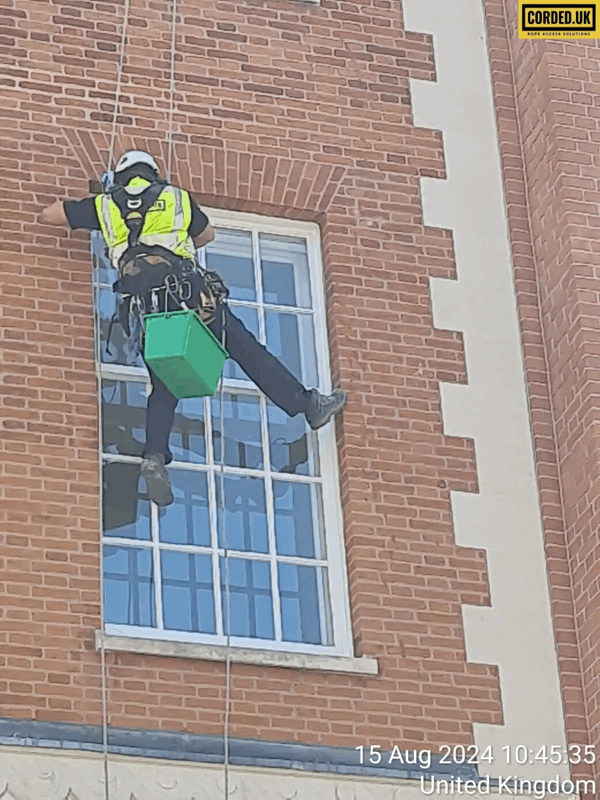
Another misconception relates to the "permanent" access features of a building, such as existing BMUs or abseil points. It is often assumed these can be used for major remedial works. However, these systems are frequently designed for light maintenance or window cleaning and may not have the load-bearing capacity or the necessary reach to facilitate the removal and replacement of heavy external wall systems. A competent professional must assess whether existing infrastructure is suitable for the specific loads and movements required by cladding remediation.
Related Terminology and Technical Interfaces
The term access equipment is closely linked to several other technical concepts in the industry. "Edge protection" refers to the barriers and rails installed to prevent falls, which may be integrated into the access equipment or fixed directly to the building. "Loading bays" are specific reinforced areas within a scaffold or platform system designed to hold heavy pallets of cladding materials.
Furthermore, "exclusion zones" are the designated areas at ground level beneath the access equipment, cordoned off to protect the public from potential falling objects. The coordination between the access equipment provider and the cladding contractor is critical, particularly regarding "interface details"—the points where the equipment meets the building. Ensuring these points are weatherproofed and structurally sound during the works is a vital component of the site management process.
Access Equipment