
cladding adhesion testing
Cladding Adhesion Testing
Cladding adhesion testing is a critical technical assessment used to determine the structural integrity of bonded façade systems. This process measures the tensile strength of the bond between the cladding material and its substrate, ensuring the system can withstand wind loads, thermal expansion, and environmental degradation. For building owners and managing agents, these tests provide empirical evidence of whether a façade remains safe or requires remedial intervention.
Independent
UK-wide coverage
Survey options
Clear reporting
On this page
Book a cladding adhesion testing survey
Cladding adhesion testing is a critical technical assessment used to determine the structural integrity of bonded façade systems. This process measures the tensile strength of the bond between the cladding material and its substrate, ensuring the system can withstand wind loads, thermal expansion, and environmental degradation. For building owners and managing agents, these tests provide empirical evidence of whether a façade remains safe or requires remedial intervention.
Key Takeaways
- Safety Verification: Testing confirms if the bond strength of a cladding system meets original design specifications and current safety standards.
- Risk Mitigation: Identifies potential delamination or debonding risks before they lead to catastrophic panel failure or falling debris.
- Evidence-Based Decisions: Data from pull-off tests allows for targeted repairs rather than costly, unnecessary full-scale replacements.
- Regulatory Compliance: Supports the technical documentation required for building safety cases and insurance renewals under UK regulations.
- Non-Destructive Options: While most pull-off tests are semi-destructive, they are localised and easily repaired, providing a high level of accuracy for high-rise assets.
The reliability of a building’s exterior depends on more than just the quality of the panels; it relies on the invisible interface where the cladding meets the structure. In many modern developments, cladding is adhered using high-performance structural adhesives, mortars, or specialist resins. Over time, factors such as moisture ingress, poor initial installation, or chemical degradation can weaken these bonds.
At CladdingTesting.com, we believe that understanding the current state of these bonds is the only way to manage a property’s long-term liability effectively. A cladding pull off test provides the empirical data necessary to transition from speculation to a clear, actionable remediation strategy.
What is Cladding Adhesion Testing?
In technical terms, cladding adhesion testing is the process of applying a perpendicular tensile force to a section of the façade to measure the point at which the bond fails. This is often referred to as a "pull-off" test. The goal is to quantify the maximum force the bond can resist before the cladding separates from the substrate or the material itself fails.
This testing is not limited to just the adhesive. It evaluates the entire "bond line," which includes the substrate (such as concrete or blockwork), the primer, the adhesive or mortar, and the cladding panel itself. A failure in any one of these layers indicates a weakness in the system that could compromise the building's safety.
Why Adhesion Fails in Façade Systems
Bond failure rarely happens for a single reason. It is usually the result of a combination of environmental stressors and human error during the construction phase. Common causes include:
Substrate Contamination: If the building's structural wall was dusty, wet, or oily when the cladding was applied, the bond will be fundamentally compromised from day one.
Incompatible Materials: Chemical reactions between certain adhesives and specific cladding types can lead to "saponification" or other forms of degradation.
Environmental Fatigue: The UK’s cycle of heavy rain and freezing temperatures causes materials to expand and contract at different rates, placing immense shear stress on the adhesive layer.
The Methodology of a Cladding Pull-Off Test
A cladding pull-off testing programme must be executed with precision to ensure the results are representative of the entire building. The process follows a strict technical sequence to maintain the integrity of the data collected.
1. Surface Preparation and Dolly Attachment
A small area of the cladding is cleaned, and a circular metal disk—known as a "dolly"—is bonded to the surface using a high-strength epoxy resin. It is vital that the adhesive used for the dolly is stronger than the bond being tested; otherwise, the test will fail at the dolly interface rather than the cladding interface.
2. Isolation Cutting
Once the dolly is secure, a diamond-tipped core drill is used to cut through the cladding layer around the circumference of the dolly, down to the substrate. This ensures that the test only measures the bond directly beneath the dolly, preventing the surrounding cladding from providing "support" that would skew the results.
3. Application of Tensile Force
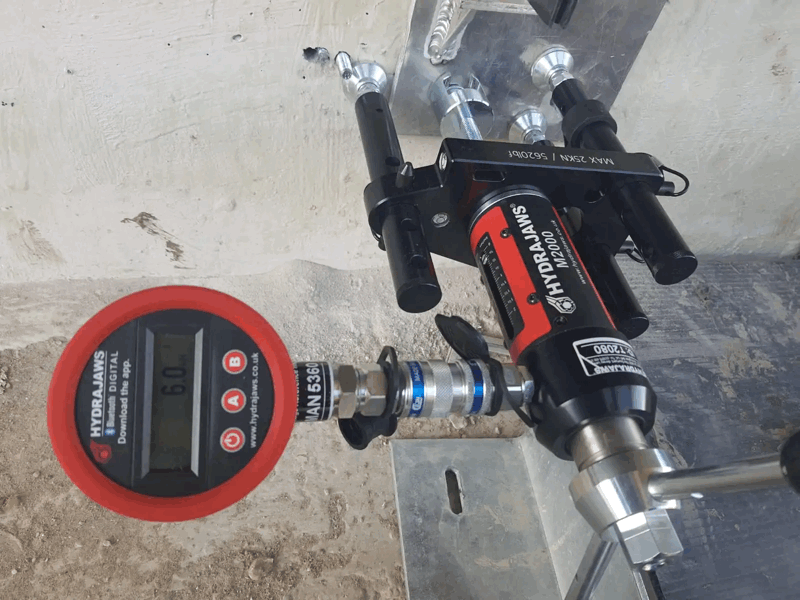
A calibrated hydraulic or electronic pull-off tester is attached to the dolly. The device slowly applies a tensile load, increasing the force at a steady rate. The specialist monitors the gauge until the bond breaks or the required design load is reached without failure.
4. Analysis of Failure Modes
The numerical result (measured in Newtons or MPa) is only half the story. The specialist must also categorise the type of failure:
Adhesive Failure: The bond breaks between the adhesive and the substrate or the panel.
Cohesive Failure: The failure occurs within the adhesive layer itself.
Substrate Failure: The concrete or masonry pulls away, meaning the bond was stronger than the building's wall.
Cladding Failure: The panel itself snaps or delaminates before the bond gives way.
When Should You Commission Facade Adhesion Testing?
Not every building requires immediate testing, but there are specific triggers that make facade adhesion testing a non-negotiable requirement for responsible asset management. Ignoring these signs can lead to increased liability and higher remediation costs in the future.
During a Section 20 Major Works Programme
If a building is already undergoing planned maintenance or a fire safety overhaul, it is the ideal time to conduct cladding bond testing. Using existing scaffolding or mast climbers reduces the "pre-construction" costs of the test, and the findings can be integrated into the wider scope of works.
Following the Discovery of Visual Defects
If managing agents notice "pillowing" (panels bulging outward), cracking in the joints, or water ingress behind the façade, these are often symptoms of debonding. A targeted testing programme can determine if these issues are isolated to one elevation or represent a systemic failure across the entire block.
Post-Extreme Weather Events
High-rise buildings in the UK are subject to significant wind loading. Following major storms, a building owner may notice increased "rattling" or movement in the façade. Testing provides peace of mind that the structural integrity of the external wall system remains intact.
The Role of Testing in Cladding Remediation
One of the most common misconceptions in the industry is that any sign of cladding failure requires a total reclad. While complete replacement is sometimes necessary for fire safety or total systemic failure, cladding adhesion testing often reveals that the majority of a façade is sound.
By identifying exactly where the bonds are failing, CladdingTesting.com can help develop a more nuanced remediation strategy. This might include:
Localised Repairs: Replacing only the panels that failed the pull-off test.
Mechanical Pinning: Supplementing an aging adhesive bond with stainless steel mechanical fixings to "back up" the system.
Targeted Re-bonding: Injecting specialist resins or mortars into void areas where debonding has been detected by thermographic or acoustic surveys.
Understanding the Commercial Impact
For a housing association or a commercial landlord, the difference between a £50,000 repair project and a £2,000,000 recladding project is massive. Testing is a small investment that provides the technical justification for a more economical, yet equally safe, repair route. It moves the conversation from "what we think" to "what the data proves."
Book a cladding adhesion testing survey
Logistics of Testing in Occupied High-Rise Buildings
Conducting cladding pull off testing on an occupied residential tower requires more than just technical skill; it requires meticulous logistical planning. We understand that residents do not want to live in a construction site longer than necessary.
- Access Solutions: Depending on the building height and layout, we utilise a range of access methods, from mobile elevating work platforms (MEWPs) and mast climbers to industrial rope access (abseiling).
- Resident Communication: The noise from core drilling is brief but can be disruptive. We work with managing agents to ensure residents are informed of the testing schedule.
- Weather Dependency: Adhesion testing, especially the curing of the dolly epoxy, is sensitive to temperature and moisture. We monitor meteorological data to ensure tests are conducted in conditions that yield accurate results.
- Safety Cordoning: While testing is underway, "drop zones" must be established to protect pedestrians and residents, particularly when working over balconies or main entrances.
Common Standards and Compliance
In the UK, testing must be carried out in accordance with recognised standards to be legally and technically valid. The most common framework for cladding adhesion testing is BS EN 1542 (Measurement of bond strength by pull-off) or BS 8298 (Code of practice for the design and installation of natural stone cladding).
Adhering to these standards ensures that:
1. The equipment used is calibrated and traceable to national standards.
2. The rate of force application is controlled (typically 0.05 MPa/s).
3. The reporting format is transparent, allowing third-party engineers to verify the findings.
Frequently Asked Questions
Is cladding adhesion testing destructive?
It is classified as "semi-destructive." The test requires a small circular cut through the cladding and the attachment of a test dolly. Once the test is complete, the dolly is removed, and the small area is professionally repaired. When performed by specialists, these repairs are virtually invisible and do not compromise the weather-tightness of the building.
How many tests are needed per building?
The number of tests depends on the total surface area and the variety of substrates. A common rule of thumb is one test for every 50-100 square metres, or a minimum of three tests per elevation. However, if a building has different materials (e.g., stone at the base and aluminium panels above), both systems must be tested independently.
What happens if a test fails?
A single failed test does not automatically mean the building is unsafe. It triggers a wider investigation. We look for patterns—does the failure happen only on the south-facing elevation where thermal stress is highest? Or is it localized to a specific floor where a different crew might have installed the panels? We then recommend either expanded testing or a specific remediation plan.
Can you test cladding in the winter?
Yes, but it requires specialist equipment. The epoxy used to bond the test dolly to the cladding often requires a minimum temperature to cure correctly. In colder months, we use heated enclosures or fast-curing resins to ensure the test results remain accurate and are not skewed by environmental factors.
How long does the testing process take?
On-site testing for a standard high-rise block typically takes 2 to 5 days, depending on access requirements. The preparation of the final technical report, which includes the laboratory analysis of the failure modes and the calculated bond strengths, usually takes another 7 to 10 working days.
Advanced Insights: The Future of Bond Assessment
While the cladding pull off test remains the "gold standard" for physical verification, the industry is moving toward a multi-layered approach. At CladdingTesting.com, we often combine adhesion testing with non-invasive methods to provide a comprehensive view of the building envelope.
Acoustic Tap Testing
A specialist uses a calibrated hammer to "tap" the surface of the cladding. A "hollow" sound indicates a void or debonding behind the panel. This is an excellent way to map out large areas quickly, identifying the best locations to perform a more rigorous physical cladding pull off test.
Thermographic Surveys
Using infrared cameras, we can detect temperature variations on the façade. Areas where the cladding has debonded from the substrate often show a different thermal signature because the air gap acts as insulation. This helps us target our physical testing to the areas most likely to be at risk.
Digital Twin Documentation
We are increasingly using 3D laser scanning and drone photogrammetry to create a "digital twin" of the building. We can then overlay the results of the cladding adhesion testing onto this 3D model. This provides building owners with a visual map of the façade’s health, making it easier to track deterioration over years or decades.
Why Choose a Specialist?
Cladding is a complex system involving structural engineering, material science, and fire safety. A general building surveyor may identify that a panel looks "loose," but they rarely have the equipment or the specific expertise to quantify why it is loose or how much force it can still take.
Working with a specialist team ensures that the data you receive is robust enough to stand up to scrutiny from insurers, mortgage lenders, and the Building Safety Regulator. In the post-Grenfell landscape, "guessing" about the safety of an external wall system is no longer an option for property professionals.
Evaluating the Results: What the Numbers Mean
When you receive a report on cladding bond testing, you will see values expressed in Megapascals (MPa). Understanding these figures is vital for decision-making. For most bonded systems, a result below 0.5 MPa is often considered a cause for concern, while results above 1.0 MPa are generally viewed as robust, depending on the weight of the cladding material.
However, the number must be viewed in context. A heavy natural stone panel requires a much higher bond strength than a lightweight aluminium composite material (ACM). Our reports don't just give you the raw numbers; we interpret them based on the specific dead loads and wind loads your building faces.
The Impact on Insurance and Valuation
In the current UK market, many lenders are hesitant to provide mortgages on high-rise flats without clear evidence of the façade's condition. A comprehensive cladding pull off testing report can be the key to "unlocking" a building, allowing sales and re-mortgaging to proceed by proving that the cladding system is structurally sound and well-maintained.
Risk and Responsibility in Façade Management
The responsibility for a building’s façade ultimately rests with the "Accountable Person" under the Building Safety Act. This individual or entity must demonstrate that they are taking proactive steps to manage all building safety risks. Facade adhesion testing is a proactive step that demonstrates a commitment to structural safety.
It is important to remember that cladding does not just fall off without warning. There is almost always a period of progressive debonding. By the time a panel is visibly moving, the risk to the public is already high. Testing allows you to catch the problem during the "silent" phase of failure, when remediation is still simple and relatively inexpensive.
Moving Forward with CladdingTesting.com
If you are responsible for a building with an adhered façade system, the first step is a professional consultation. We don't believe in a "one-size-fits-all" approach. We assess your building's age, construction type, and known history to design a testing programme that gives you the answers you need.
Whether you are dealing with a modern rainscreen system, a traditional render-on-insulation setup, or a specialist stone-slip façade, our team has the technical expertise to evaluate the bond integrity. We provide the clarity needed to ensure your building remains a safe, compliant, and valuable asset for the long term.
Contact CladdingTesting.com today to discuss your requirements for cladding adhesion testing and take the first step toward a safer building envelope.
Book a cladding adhesion testing survey
What it costs
Pricing depends on building height, access and scope
Reviews
What clients say
Verified 5-star Google reviews from building owners, managing agents and contractors.