
GRC cladding remediation
GRC Cladding Remediation
GRC cladding remediation refers to the systematic process of identifying, testing, and rectifying defects in Glass Reinforced Concrete (GRC) facade systems. This process encompasses everything from localised structural repairs to comprehensive GRC cladding replacement where panels have reached the end of their service life or fail to meet modern safety standards.
Independent
UK-wide coverage
Survey options
Clear reporting
On this page
Book a grc cladding remediation survey
GRC cladding remediation refers to the systematic process of identifying, testing, and rectifying defects in Glass Reinforced Concrete (GRC) facade systems. This process encompasses everything from localised structural repairs to comprehensive GRC cladding replacement where panels have reached the end of their service life or fail to meet modern safety standards.
For building owners and property managers, GRC remediation is often a multi-stage technical challenge. It involves assessing the structural integrity of the panels, the condition of the hidden fixing brackets, and the performance of the building’s thermal and fire barriers behind the decorative facade.
Key Takeaways
- GRC is a composite material: While durable, it is susceptible to micro-cracking, moisture absorption, and fixing failure over time.
- Investigation is the first step: Remediation should always begin with a professional cladding testing and inspection to determine the root cause of defects.
- Repair vs. Replacement: Localised GRC cladding repair is often viable for aesthetic issues, but systemic fixing failures usually necessitate GRC panel replacement.
- Compliance is non-negotiable: Any remediation work must align with current UK Building Regulations, specifically regarding fire safety and structural loadings.
- Access logistics: Remediation on high-rise buildings requires specialist access solutions, such as mast climbers or cradles, to minimise disruption to occupants.
What is GRC and Why Does it Require Remediation?
Glass Reinforced Concrete (GRC) is a high-strength composite material made from cement, fine aggregates, and alkali-resistant glass fibres. It has been used extensively across the UK since the 1970s because it allows for complex, lightweight architectural shapes that would be too heavy in traditional pre-cast concrete.
However, despite its versatility, GRC is not immune to degradation. Over decades of exposure to the UK’s fluctuating climate, the material can experience carbonation, loss of ductility, and "crazing" or micro-cracking. When these issues arise, they can lead to water ingress, which further accelerates the corrosion of internal steel fixings.
GRC facade remediation is therefore not just about aesthetics; it is a critical maintenance requirement to ensure the building envelope remains secure and weather-tight. Neglecting minor cracks today can lead to significant structural risks or the need for a total GRC cladding replacement programme in the future.
Common Defects in GRC Facade Systems
Before deciding on a remediation strategy, it is essential to understand the typical failure modes associated with GRC. These defects are rarely visible from the ground and often require close-up inspection via drone surveys or industrial rope access.
1. Micro-Cracking and Crazing
Fine, hair-like cracks on the surface of the GRC panels are often the first sign of distress. While often dismissed as "aesthetic," these cracks can allow moisture to penetrate the panel, leading to freeze-thaw damage and internal degradation of the glass fibre matrix.
2. Fixing Failure and Corrosion
GRC panels are typically held in place by stainless steel or galvanised steel brackets. If the original design did not account for thermal expansion, or if moisture has reached the fixings, the brackets can corrode or become loose. This poses a significant health and safety risk, particularly on high-rise residential blocks.
3. Joint Sealant Degradation
The mastics and sealants between panels have a limited lifespan, typically 15 to 25 years. Once these fail, water enters the cavity, potentially damaging the insulation and fire cavity barriers behind the GRC. Effective GRC cladding repair must include a full review of the jointing system.
The Importance of Professional Cladding Testing
You cannot fix what you have not accurately diagnosed. At CladdingTesting.com, we advocate for a "discovery-first" approach. This involves a combination of non-destructive testing and intrusive inspections to see behind the GRC panels.
During an inspection, a specialist team will:
- Perform "pull-out" tests on fixings to ensure they meet original design loads.
- Conduct borescope inspections to view the condition of the cavity.
- Take core samples of the GRC for laboratory analysis to check for carbonation and fibre strength.
- Use thermographic cameras to identify areas of significant heat loss or moisture entrapment.
By identifying the specific failure mechanism, building owners can avoid the unnecessary cost of a full replacement when a targeted GRC cladding remediation plan would suffice.
Options for GRC Cladding Remediation
The strategy for remediation depends entirely on the severity of the defects found during the testing phase. Every building is unique, and the solution must balance safety, longevity, and budget.
Targeted GRC Cladding Repair
If the structural integrity of the panels and fixings is confirmed to be sound, localised repairs may be the most cost-effective route. This typically involves:
- Resin Injection: Using specialist high-strength resins to seal cracks and prevent further moisture ingress.
- Surface Coatings: Applying breathable, anti-carbonation coatings to protect the GRC from the elements and refresh the building's appearance.
- Joint Replacement: Raking out failed sealants and installing modern, high-performance silicone or polymer joints.
Partial GRC Panel Replacement
In cases where only specific elevations or storeys show signs of failure—perhaps due to higher exposure to wind and rain—a partial GRC panel replacement might be recommended. This involves:
Identifying individual panels that are structurally compromised and manufacturing bespoke replacements that match the existing architectural profile and colour. This approach requires precise surveying to ensure the new panels interface perfectly with the original system.
Full GRC Cladding Replacement
When a facade system is found to be systemically flawed—either due to poor original installation, failed fire barriers, or widespread material degradation—a full GRC cladding replacement is often the only viable long-term solution.
While this is a major capital project, it offers several advantages:
- Modern Compliance: The new system will meet the latest Part B fire safety regulations and Part L thermal requirements.
- Increased Asset Value: A fully remediated building is more attractive to insurers, mortgage lenders, and potential buyers.
- Warranty Protection: New systems come with comprehensive manufacturer and installer warranties, providing peace of mind for decades.
The Regulatory Landscape in the UK
Following the introduction of the Building Safety Act 2022 and the Fire Safety Act 2021, the standards for GRC facade remediation have become significantly more stringent. If you are responsible for a building over 11 metres (or 18 metres for certain funding schemes), you must demonstrate that the external wall system does not pose an undue risk to life.
GRC itself is generally non-combustible (typically rated A1 or A2-s1, d0), but the system as a whole—including the insulation, breather membranes, and cavity barriers—must be assessed. Often, GRC cladding remediation projects are triggered not by the GRC failing, but by the discovery of non-compliant combustible insulation behind the panels.
In these instances, the GRC panels may need to be carefully removed, the internal components replaced with non-combustible alternatives, and the GRC then either reinstated or replaced with a new compliant system.
Logistics of Remediating Occupied Buildings
One of the greatest challenges in GRC cladding remediation is that these buildings are often fully occupied residential blocks or active commercial spaces. Managing a major construction project while people are living or working inside requires a specialist approach.
Access and Scaffolding
Traditional tube-and-fitting scaffolding is not always the best choice for tall buildings due to the weight and the "caging" effect on residents. We often utilise:
- Mast Climbing Work Platforms (MCWPs): These provide a stable, high-capacity platform for workers and materials with minimal impact on the building's footprint.
- Cradle Systems: Ideal for targeted repairs or inspections where full-height access is not required simultaneously.
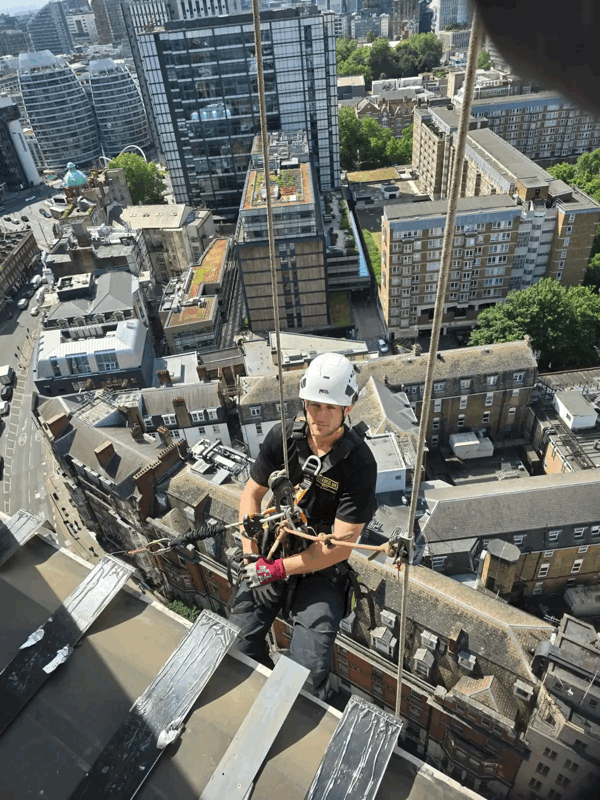
- Industrial Rope Access: Used primarily for testing and minor repairs to avoid the high cost of heavy plant.
Resident Liaison and Safety
Communication is vital. Residents need to know when work will be happening outside their windows, how noise will be managed, and what the timeline for completion looks like. A structured remediation programme includes:
- Pre-start briefings: Explaining the scope of the GRC facade remediation to all stakeholders.
- Noise and Dust Mitigation: Using dampened tools and protective screens to contain debris.
- Sequence Planning: Working elevation by elevation to ensure residents are not "boxed in" for longer than necessary.
Book a grc cladding remediation survey
How to Structure a Remediation Project
A successful remediation project follows a logical path from problem identification to final certification. Property professionals should look for a partner who can manage the entire lifecycle of the project.
Phase 1: Initial Appraisal
A visual survey to identify "red flags" and determine if a building qualifies for government funding, such as the Building Safety Fund (BSF).
Phase 2: Intrusive Investigation
Removing panels to inspect the sub-frame, cavity barriers, and insulation. This phase results in a detailed technical report outlining the necessary scope of GRC cladding remediation.
Phase 3: Design and Specification
Architects and facade engineers develop a design that addresses the defects while ensuring structural and fire compliance. This includes choosing between GRC panel replacement or alternative lightweight materials if the building's load capacity has changed.
Phase 4: Construction and Quality Control
Executing the works with rigorous oversight. Every fixing, cavity barrier, and panel must be documented for the "Golden Thread" of information required by the Building Safety Regulator.
Phase 5: Handover and Certification
Final inspections and the provision of warranties and Operation & Maintenance (O&M) manuals.
Financial Considerations and Funding
The cost of GRC cladding remediation can be significant, particularly on high-rise structures. However, building owners in the UK may have access to several routes of financial recovery.
The Building Safety Fund and the Cladding Safety Scheme are designed to cover the costs of remediating unsafe external wall systems on buildings of specific heights. Eligibility often hinges on the results of a PAS 9980 assessment, which evaluates the fire risk of the external wall.
If the defects are due to poor original workmanship, there may also be grounds for legal claims against the original developers or through NHBC/Premier Guarantee warranties. A thorough technical report from CladdingTesting.com is an essential piece of evidence in these proceedings.
Advanced Insights: GRC and Thermal Performance
A common misconception is that GRC cladding remediation is only about safety. In reality, it is a prime opportunity to improve a building's energy efficiency.
When panels are removed for GRC panel replacement, there is an opportunity to install superior mineral wool insulation. This can significantly reduce the U-value of the walls, lowering heating costs for residents and helping the building owner meet ESG (Environmental, Social, and Governance) targets.
Furthermore, modern GRC manufacturing techniques have improved the material's durability. New panels are often thinner and lighter but with higher fibre content, making them less prone to the crazing seen in 1980s and 90s installations.
FAQs: GRC Cladding Remediation
How long does a GRC facade typically last?
When correctly designed and installed, a GRC facade can have a design life of 50 to 60 years. However, many systems in the UK are showing signs of distress after 25 to 30 years due to poor maintenance, harsh weather conditions, or substandard original fixings. Regular inspections are key to reaching the full design life.
Will GRC remediation always involve removing all the panels?
No. If the issue is localized—such as a single damaged panel or a specific area of failed sealant—then targeted GRC cladding repair is possible. We only recommend full replacement when the underlying system (like the fixings or the fire barriers) is non-compliant or structurally compromised across the entire building.
Is GRC considered a fire risk?
GRC itself is typically non-combustible. The risk usually lies in the "system build-up." This includes the insulation behind the GRC, the presence (or absence) of cavity barriers, and the chimney effect created if the facade was not installed with proper fire stops. GRC cladding remediation often focuses on fixing these hidden fire safety issues.
Can I replace GRC with a different material?
Yes. During a GRC cladding replacement project, some owners choose to switch to alternative materials like Aluminium Composite Material (ACM - fire rated), solid aluminium, or high-pressure laminates (HPL). However, this requires new structural calculations and planning permission, as it changes the appearance and weight loading of the building.
How much does GRC remediation cost?
Costs vary wildly based on the building height, the extent of the damage, and the required access methods. A minor GRC cladding repair project might cost a few thousand pounds, while a full-scale GRC cladding replacement on a high-rise block can run into the millions. Accurate testing is the only way to get a reliable quote.
What is the "Golden Thread" in remediation?
The "Golden Thread" is a digital record of a building’s design, construction, and management. For any GRC facade remediation, you must keep detailed records of materials used, fire safety certificates, and inspection photos to comply with the Building Safety Act.
Do I need to move out during remediation?
In the vast majority of cases, no. GRC cladding remediation is designed to be carried out from the outside. While there will be some noise and windows may need to be kept closed during certain phases, we structure our programmes to allow residents to remain in their homes throughout the works.
How do I know if my building needs GRC remediation?
Visible signs include cracking, staining (which may indicate rusting fixings), loose panels, or water ingress inside the flat. However, many structural issues are invisible. If your building is over 15 years old and hasn't had a professional facade audit, it is time to schedule a technical inspection.
What is the difference between GRC and traditional pre-cast concrete?
GRC is much thinner (typically 10mm to 20mm) and lighter because it uses glass fibres for strength rather than steel rebar. This makes it easier to install but also means it has less "mass" to hide structural defects, making GRC cladding remediation a more delicate technical process than traditional masonry repair.
Can GRC be painted?
Yes, but only with specialist mineral-based or anti-carbonation coatings. Using the wrong paint can trap moisture inside the GRC, leading to "spalling" where the surface of the concrete flakes off. A key part of GRC facade remediation is ensuring that any aesthetic finishes are chemically compatible with the composite material.
Managing the Risks of Facade Failure
The risks of ignoring cladding issues are not just financial. A falling GRC panel is a significant life-safety hazard. Furthermore, under the new UK regulatory regime, directors of management companies and building owners can face personal liability for failing to address known safety defects.
By engaging in a proactive GRC cladding remediation strategy, you protect your residents, your investment, and your legal standing. The process begins with facts—getting onto the scaffolding, looking behind the panels, and understanding exactly how the building is performing.
Whether you require a minor GRC cladding repair to extend the life of your facade or a complete GRC cladding replacement to meet modern safety standards, CladdingTesting.com provides the technical expertise to guide you from the first bolt check to the final sign-off.
Book a grc cladding remediation survey
What it costs
Pricing depends on building height, access and scope
Reviews
What clients say
Verified 5-star Google reviews from building owners, managing agents and contractors.