
cladding repair vs replacement
Cladding Repair Vs Replacement
Determining the future of a building’s façade requires a balance between structural necessity, fire safety compliance, and commercial viability. The choice between cladding repair vs replacement is rarely binary; it involves a detailed assessment of the existing external wall system, the nature of the defects, and the long-term lifecycle goals of the property.
On this page
14 min read
Last updated
Cladding Repair Vs Replacement
Determining the future of a building’s façade requires a balance between structural necessity, fire safety compliance, and commercial viability. The choice between cladding repair vs replacement is rarely binary; it involves a detailed assessment of the existing external wall system, the nature of the defects, and the long-term lifecycle goals of the property.
For building owners and managing agents in the UK, understanding when to replace cladding versus when a targeted refurbishment is sufficient is critical for managing budgets and ensuring resident safety. At CladdingTesting.com, we advocate for an evidence-based approach, where the decision to repair or replace cladding is driven by technical data rather than guesswork.
Key Takeaways
- Cladding repair is suitable for localised damage, aesthetic wear, or minor fixing failures where the underlying system remains compliant.
- Full replacement is generally required when systemic fire safety risks (such as combustible cores) or widespread structural failings are identified.
- Cladding refurbishment vs replacement: Refurbishment involves upgrading components like seals and fixings, while replacement involves a complete removal of the façade.
- Regulatory compliance, specifically the Building Safety Act 2022, dictates the urgency and scope of remediation for high-rise residential buildings.
- Cost-benefit analysis should consider not just the immediate capital expenditure, but the long-term maintenance and insurance implications of each route.
- Professional inspections are the only reliable way to determine the internal condition of an external wall system.
Defining Cladding Repair vs Replacement
In the context of UK high-rise and multi-storey buildings, cladding repair refers to targeted interventions designed to restore the functionality or appearance of specific areas. This might include replacing a small number of dented panels, reapplying failed mastic joints, or strengthening localized bracketry. It assumes that the overall "build-up" of the wall is safe and performing as intended.
Conversely, cladding replacement (or recladding) involves the total removal of the external rainscreen, insulation, cavity barriers, and often the secondary support structure. This is a major capital project usually necessitated by systemic failure, such as the presence of non-compliant materials or widespread water ingress that has compromised the building’s thermal envelope.
- Localised Repair: Focuses on visible or isolated defects.
- Remediation: A mid-point involving the correction of specific safety defects, such as missing cavity barriers.
- Recladding: A comprehensive overhaul resulting in a brand-new, compliant façade system.
When to Repair Cladding
Repairing a façade is the preferred route for many building owners because it is less disruptive to residents and typically more cost-effective. However, cladding repair or reclad decisions must be based on the structural integrity of the entire system. Repair is viable when the issues are superficial or isolated to a specific elevation or floor level.
1. Impact Damage and Cosmetic Wear
High-rise buildings in urban environments often suffer from minor impact damage at ground level or wear and tear from window cleaning cradles. If the damage is limited to the outer "skin" of the building and the weather-tightness remains intact, replacing individual panels is a standard and effective repair strategy.
2. Failed Sealants and Gaskets
Sealants have a finite lifespan, often between 15 and 25 years. When gaskets perish or mastic joints fail, it can lead to localised water ingress. Cladding refurbishment often involves a full "re-seal" of the building, which prevents moisture from reaching the insulation layer without needing to strip the panels back to the substrate.
3. Minor Fixing Issues
During a cladding testing and inspection process, we may identify that certain fixings have become loose or are showing signs of galvanic corrosion. If this is a localized issue caused by specific environmental factors, replacing the fixings or adding secondary restraints can extend the life of the cladding significantly.
When to Replace Cladding
Knowing when to replace cladding is often a matter of safety and legal compliance. In the UK, the landscape shifted dramatically following the Grenfell Tower tragedy, leading to a much lower tolerance for combustible materials and poor installation practices in high-rise buildings (those over 11 metres or 18 metres depending on the specific regulation).
1. Presence of Combustible Materials
If an inspection reveals that the cladding panels have a highly combustible core (such as PE-cored ACM) or that the insulation behind the panels is not of limited combustibility, a full reclad is usually the only way to achieve a satisfactory EWS1 rating. Repairs cannot fix a fundamentally unsafe material choice.
2. Systemic Cavity Barrier Failure
Cavity barriers are essential for preventing the spread of fire within the void behind the cladding. If these are missing, incorrectly sized, or poorly installed throughout the entire building, the cost of removing all panels to install them often makes cladding replacement the more logical choice, especially if the panels are older.
3. Widespread Water Ingress and Substrate Damage
If water has been penetrating the façade for years, it may have caused significant rot in timber frames or corrosion in steel light-gauge framing. In these instances, cladding repair vs replacement becomes a question of structural survival. You cannot simply patch the outer layer if the support structure behind it is failing.
4. End of Design Life
Most cladding systems have a design life of 30 to 50 years. As a building nears the end of this period, the frequency of required repairs increases. Eventually, the cumulative cost of ongoing maintenance exceeds the cost of a modern, high-performance recladding project that offers better thermal efficiency and lower insurance premiums.
The Grey Area: Cladding Refurbishment vs Replacement
Sometimes, the best approach sits between a minor repair and a total replacement. Cladding refurbishment might involve stripping the panels to replace defective insulation and cavity barriers, then reinstalling the original panels if they are non-combustible and in good condition. This is often referred to as "remediation" rather than a full reclad.
Pros of Refurbishment:
- Lower material costs as the original "skin" is reused.
- Reduced waste sent to landfill, making it a more sustainable option.
- Less aesthetic change to the building, which can simplify planning permissions.
Cons of Refurbishment:
- Original panels may be damaged during removal.
- Difficult to provide a comprehensive long-term warranty on a "hybrid" system.
- Labour costs remain high because the panels still need to be handled twice.
Technical Factors Influencing the Decision
Professional façade engineers look at several technical metrics when weighing up repair or replace cladding options. We don't just look at what is broken; we look at why it broke and what else is likely to fail in the near future.
Thermal Performance
Modern Building Regulations (Part L) require much higher levels of thermal insulation than buildings constructed 20 or 30 years ago. If a building is undergoing major works, there is often a legal trigger to improve its U-value. Cladding replacement allows for the installation of thicker, more efficient non-combustible mineral wool insulation that repairs simply cannot accommodate.
Acoustic Performance
In noisy urban environments, the façade plays a major role in acoustic dampening. Older systems with thin panels or air gaps may not meet modern standards. A full replacement allows for the introduction of acoustic membranes and heavier, denser materials that significantly improve the living environment for residents.
Loading and Structural Capacity
Replacing a lightweight plastic-based system with a heavier solid aluminium or terracotta system adds weight to the building. An engineering assessment must determine if the existing structure can handle the increased load. If it cannot, the choice may be forced toward a specific type of lightweight cladding repair or a very specific recladding material.
The Process: From Investigation to Action
You cannot decide between cladding repair vs replacement by looking at a building from the ground. A systematic investigation is required to uncover the "latent defects" that exist behind the visible surface.
- Desktop Review: Examining "as-built" drawings and Operation & Maintenance (O&M) manuals to understand the original specification.
- Visual Inspection: Using drones or high-powered lenses to identify surface-level defects and patterns of wear.
- Intrusive Investigation: Opening "probes" or "discovery holes" at various heights and elevations to inspect the cavity, insulation, and barriers.
- Material Testing: Taking samples of panels and insulation for laboratory analysis to determine their combustibility and chemical composition.
- Reporting: A comprehensive document outlining the findings and providing a clear recommendation: repair or replace cladding.
For buildings requiring an EWS1 (External Wall System) certificate for lending purposes, these steps are non-negotiable. An inspector needs to see what is inside the wall to sign off on its safety.
Logistical Challenges of Façade Works
Whether you are performing a cladding repair or a full reclad, the logistics of working on a tall building are complex. This is particularly true for occupied residential blocks where residents' daily lives must be respected.
Access Requirements
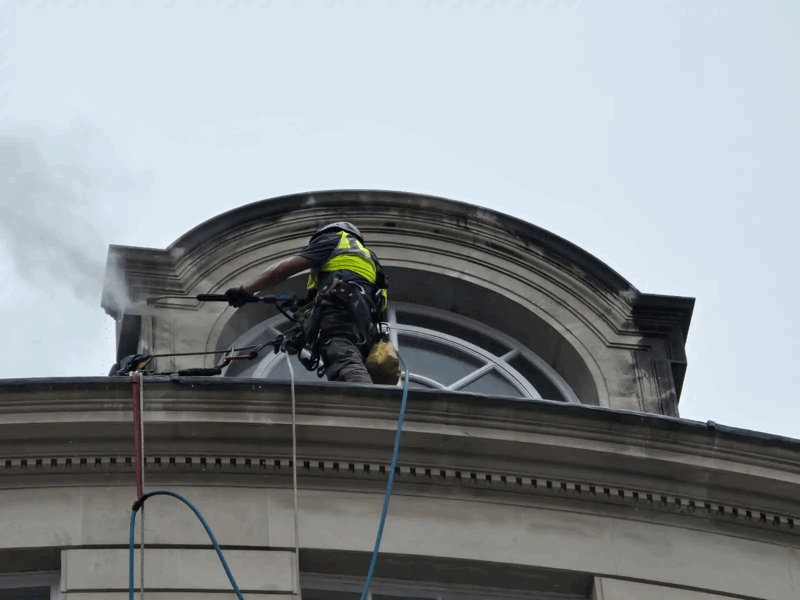
The cost of access often dictates the scope of the work. If you have to pay £100,000 for scaffolding to reach a specific area for a cladding repair, it often makes financial sense to perform a more comprehensive cladding refurbishment while the access is in place. Alternatives to scaffolding include mast climbers, which are often faster to install, and industrial rope access (abseiling) for lighter repair tasks.
Resident Disruption
Full cladding replacement is noisy and intrusive. It involves drilling into the building’s structure and removing the primary weather barrier. Managing resident expectations, ensuring site safety, and maintaining temporary weatherproofing are significant parts of the project management process. In contrast, localised repairs may only require short-term access to specific balconies or elevations.
Sequencing and Weather
Façade work is highly weather-dependent. Stripping a building’s cladding during the winter months requires robust temporary protection to prevent internal water damage. A phased approach, where sections of the building are stripped and reclad in quick succession, is essential for maintaining the building's integrity during the project.
Financial Considerations and Funding
The cost difference between cladding repair vs replacement can be millions of pounds. For many UK leaseholders, the cost of remediation has been a source of significant stress. However, various funding routes and legal frameworks now exist to help manage these costs.
The Building Safety Fund (BSF)
The UK government’s Building Safety Fund is designed to cover the cost of replacing unsafe cladding on residential buildings over 18 metres. For buildings between 11 and 18 metres, the Cladding Safety Scheme (CSS) provides similar support. These funds are specifically for remediation or replacement of unsafe systems, not for general maintenance or cosmetic repairs.
Insurance Implications
Insurance premiums for buildings with known cladding defects have skyrocketed. In many cases, insurers will only lower premiums once a full cladding replacement is completed and certified. A simple repair may not be enough to satisfy an insurer’s risk department if the core materials remain questionable.
VAT on Cladding Works
In some circumstances, certain types of energy-saving materials or residential renovations may attract lower VAT rates. However, cladding remediation is a complex tax area. It is vital to consult with a financial professional to see if a recladding project qualifies for any tax relief compared to ongoing repair work.
Cladding Repair Vs Replacement
Cladding Repair vs Replacement: A Comparison Table
Comparison of Repair, Refurbishment, and Replacement
Feature
Cladding Repair
Refurbishment
Full Replacement
Scope
Localised (panels/fixings)
Component upgrades
Total strip and new system
Disruption
Minimal to Moderate
Moderate
High / Long-term
Compliance
Maintains status quo
Fixes specific defects
Achieves modern standards
Cost
Low to Medium
Medium to High
High
Lifespan
Short-term (5-10 years)
Mid-term (15-20 years)
Long-term (30-50 years)
Common Misconceptions in Façade Management
There are several myths surrounding cladding repair or reclad decisions that can lead building owners down the wrong path. Addressing these early can save time and prevent costly mistakes.
"A new coat of paint is a repair"
While specialist coatings can extend the life of metal panels, they are purely aesthetic or anti-corrosive. They do not address structural failings, fire safety, or water ingress. Over-painting can also change the surface spread of flame characteristics, potentially making a compliant panel non-compliant.
"If it’s not ACM, it doesn't need replacing"
While Aluminium Composite Material (ACM) is the most well-known unsafe cladding, many other systems are also problematic. High-Pressure Laminate (HPL), certain rendered systems with combustible EPS insulation, and even incorrectly installed brick-slip systems can require full replacement to ensure safety.
"Repairs are always cheaper"
In the short term, yes. However, if a building requires frequent repairs to fix recurring leaks or falling panels, the cumulative cost of access and labour will eventually dwarf the cost of a single, well-executed recladding project. Furthermore, the "patchwork" look of multiple repairs can negatively impact the property's market value.
The Role of EWS1 and Fire Risk Appraisals
In the UK, the cladding repair vs replacement debate is often settled by a Fire Risk Appraisal of External Walls (FRAEW) conducted to the PAS 9980 standard. This assessment evaluates whether the wall system, as a whole, poses a risk to life safety.
If the FRAEW concludes that the risk is "Low," then cladding repair or maintenance is likely all that is needed. If the risk is "Medium" or "High," the surveyor will recommend remediation or replacement. This document is often the trigger for accessing government funding or for insurance companies to adjust their terms.
Managing agents should ensure that any cladding testing or inspection work is carried out by qualified professionals whose reports meet the stringent requirements of lenders and fire authorities. A vague report can lead to unnecessary replacement or, worse, inadequate repairs that leave the building at risk.
Sustainability and Environmental Impact
As the UK pushes toward Net Zero, the environmental impact of construction projects is under scrutiny. Cladding replacement is carbon-intensive due to the manufacturing of new materials (aluminium, mineral wool, steel) and the disposal of old ones.
Wherever possible, we look for ways to make cladding refurbishment work. This might include:
- Recycling old aluminium panels.
- Improving the building's airtightness during the repair process.
- Selecting new materials with high recycled content and low embodied carbon.
However, the primary driver must always be safety. A "sustainable" repair that leaves a building at risk of fire is not a viable solution.
Future-Proofing Your Building Envelope
When deciding when to replace cladding, look ahead at the next 20 to 30 years. Building regulations are only becoming stricter. A repair that meets today's minimum standard might be obsolete in five years.
Full replacement offers the chance to "future-proof" the asset. This includes:
- Installing non-combustible A1 or A2-rated materials that exceed current safety standards.
- Significantly upgrading thermal performance to lower energy bills for residents.
- Enhancing the building's aesthetic to modern architectural standards, which can increase the capital value of the units.
Choosing the Right Partner for the Project
The complexity of high-rise façade works requires a partner who understands the intersection of structural engineering, fire safety, and UK building law. At CladdingTesting.com, we provide the technical clarity needed to make the right choice between cladding repair vs replacement.
Our approach is focused on:
- Individual Assessment: Every building is unique. We don't believe in one-size-fits-all solutions.
- Technical Competence: Our teams are experienced in the nuances of external wall systems and modern remediation techniques.
- Solution-Focused Methodology: We identify the core problem and outline the most practical, safe, and cost-effective route to resolution.
Frequently Asked Questions
What is the main difference between cladding repair and replacement?
Cladding repair focuses on fixing specific, localised issues like a few damaged panels or failed seals. Cladding replacement, or recladding, involves removing the entire external wall system and replacing it with new, compliant materials, including insulation and cavity barriers.
How do I know when to replace cladding instead of repairing it?
Replacement is typically necessary if the materials are combustible (non-compliant with fire safety laws), if there is widespread structural failure, or if the system has reached the end of its design life. A professional inspection and an FRAEW report will provide the definitive answer.
Is cladding refurbishment vs replacement a cheaper option?
Refurbishment (upgrading parts of the existing system) is usually cheaper than a full replacement because you reuse the existing panels. However, it is only an option if the existing panels are safe and in good condition. It may not provide the same long-term warranties as a full replacement.
Can I get funding for cladding replacement in the UK?
Yes, for residential buildings over 11 metres, there are government schemes like the Building Safety Fund and the Cladding Safety Scheme. These are designed to cover the costs of remediating unsafe cladding systems to protect leaseholders from high costs.
Will a cladding repair improve my building's EWS1 rating?
It depends on the findings of the initial survey. If the EWS1 "B2" or "A3" rating was triggered by a small, fixable defect, then a targeted repair might be enough to move the rating to "B1" or "A1". However, if the rating is due to combustible panels, only replacement will change the status.
How long does a full cladding replacement project usually take?
For a typical high-rise building, a full recladding project can take anywhere from 6 to 18 months, depending on the building's size, the complexity of the access requirements, and the weather conditions during the construction phase.
Do residents need to move out during cladding replacement?
In most cases, no. Cladding replacement is an external process. However, there will be significant noise, loss of views due to scaffolding, and potential restrictions on using balconies. Professional contractors will have strategies in place to minimise the impact on residents.
What are the risks of delaying cladding repairs?
Delaying repairs can lead to water ingress, which causes internal damp and rot, potentially damaging the building's structure. In terms of safety, delaying the remediation of unsafe cladding leaves the building at risk of fire and can make the property unmortgageable and difficult to insure.
Navigating the choice between repair or replace cladding is a significant responsibility for any property professional. By focusing on technical evidence, regulatory compliance, and long-term building health, you can ensure that the chosen path provides the best possible outcome for the building's safety and its commercial future.
If you are facing uncertainty regarding the condition of your building's façade, the first step is always a thorough, professional investigation. At CladdingTesting.com, we have the expertise to guide you from those initial findings through to a fully compliant, high-performance building envelope.
Cladding Repair Vs Replacement