
school cladding remediation
School Cladding Remediation
School cladding remediation is the process of identifying, managing, and resolving defects in the external wall systems of educational buildings. This specialised field of construction involves assessing the fire safety, structural stability, and weatherproofing performance of a school’s facade to ensure it meets current UK building regulations and safety standards.
On this page
9 min read
Last updated
School Cladding Remediation
School cladding remediation is the process of identifying, managing, and resolving defects in the external wall systems of educational buildings. This specialised field of construction involves assessing the fire safety, structural stability, and weatherproofing performance of a school’s facade to ensure it meets current UK building regulations and safety standards.
For headteachers, governors, and local authority asset managers, the objective of education building cladding remediation is to maintain a safe learning environment while minimising disruption to the academic calendar. Whether the issue involves non-compliant materials, aged systems, or poor installation, a methodical approach is required to determine whether a building requires minor repairs, targeted remediation, or a complete school cladding replacement.
Key Takeaways
- Safety First: Remediation prioritises the fire performance of external wall systems and the structural integrity of panel fixings.
- Regulatory Compliance: All works must align with the latest versions of Approved Document B and the Building Safety Act 2022.
- Minimal Disruption: Projects are typically phased around term times, with specific focus on noise control and student safety.
- Assessment over Assumptions: Comprehensive cladding testing is essential to avoid the unnecessary cost of full replacement when repairs may suffice.
- Holistic Approach: Effective remediation addresses hidden components like cavity barriers and insulation, not just the visible outer panels.
The Current Landscape of School Facade Safety
In recent years, the focus on the external envelopes of public buildings has intensified. Many schools built or refurbished between the 1990s and mid-2010s may feature cladding systems that do not meet contemporary fire safety standards or have reached the end of their functional lifespan.
The Department for Education (DfE) and local authorities have become increasingly proactive in identifying "at-risk" structures. This often involves school recladding projects where combustible materials, such as certain types of Aluminium Composite Material (ACM) or High-Pressure Laminate (HPL), are replaced with non-combustible alternatives like solid aluminium or fibre cement.
Understanding the Risks
The primary risks associated with defective school facades include:
Fire Spread: The presence of combustible cores in cladding panels or the absence of correctly installed cavity barriers can allow fire to move rapidly across the building exterior.
Structural Failure: Corroded fixings or panels that have become brittle over time pose a significant risk of falling, particularly in high-traffic playground areas.
Water Ingress: Failed seals and joints lead to damp and mould, which can damage the internal school structure and affect the health of pupils and staff.
Phases of School Cladding Remediation
A successful remediation project does not begin with scaffolding; it begins with data. At CladdingTesting.com, we advocate for a tiered approach that ensures building owners only spend what is necessary to achieve safety and compliance.
1. Initial Inspection and Desktop Study
The first step is to review the original "as-built" drawings and operation and maintenance (O&M) manuals. However, these documents are often inaccurate or missing. A visual inspection from ground level or via drone can identify obvious signs of distress, such as warping, discolouration, or loose flashings.
2. Technical Investigation and Intrusive Testing
To understand what is happening behind the panels, intrusive surveys are required. This involves removing small sections of the facade to inspect the internal makeup. We look for:
- The type of insulation used (e.g., combustible PIR vs. non-combustible mineral wool).
- The presence and condition of vertical and horizontal cavity barriers.
- The integrity of the rail system and mechanical fixings.
- Evidence of moisture trapped within the wall cavity.
3. Risk Assessment and Strategy Development
Once the data is collected, a specialist report will categorise the findings. Not every building requires school cladding replacement. In some instances, the external wall system may be safe, but requires specific maintenance, such as the retrospective installation of cavity barriers or the replacement of failed gaskets.
Options for Remediation: Repair vs. Replacement
One of the most critical decisions a school board will make is choosing the scope of work. A "rip and replace" approach is not always the most pragmatic or sustainable solution.
When to Opt for School Cladding Replacement
Full school recladding is typically necessary when the core materials of the existing system are inherently unsafe or when the system has failed so comprehensively that repairs are no longer cost-effective.
If a building features ACM Category 3 (PE core) panels or extensive HPL without fire-retardant properties, a full replacement is generally the only way to satisfy insurers and fire safety officers. This process involves stripping the building back to its substrate and installing a completely new, compliant system.
Targeted School Facade Remediation
School facade remediation often sits in the middle ground. It may involve keeping the existing outer panels if they are non-combustible but replacing the combustible insulation behind them. It could also involve "over-cladding" where appropriate, though this is less common in modern safety-led projects. Remediation focuses on fixing the specific defect—such as missing fire breaks—without the upheaval of a total overhaul.
Localised Cladding Repairs
For newer buildings or those with high-quality systems that have suffered minor damage, repairs are the preferred route. This includes:
- Replacing individual dented or scratched panels.
- Re-sealing joints to prevent water ingress.
- Strengthening fixings in high-wind zones.
- Cleaning and coating systems to extend their aesthetic and functional life.
Navigating the Regulatory Environment
The legal framework surrounding school cladding remediation is complex. Following the Grenfell Tower tragedy, the Building Safety Act 2022 introduced more stringent oversight for "higher-risk buildings," which includes many multi-storey educational blocks.
Compliance is not just about the panels; it is about the entire "wall system." This includes the insulation, the vapour membrane, the rails, and the fixings. All these components must work together to limit fire spread. When undertaking education building cladding remediation, it is vital to ensure that the new materials have been tested as a complete system (typically via BS 8414 large-scale fire tests) or meet the "linear" requirements of non-combustibility.
Key Standards to Consider:
- Approved Document B: The primary guidance for fire safety in and around buildings in England.
- Regulation 7: Restricts the use of combustible materials in the external walls of certain buildings over 18 metres (and increasingly impacts buildings over 11 metres).
- BS 9991: Code of practice for fire safety in the design, management, and use of residential and mixed-use buildings, often applied to boarding schools.
School Cladding Remediation
Logistics and Operations in an Active School Environment
Executing a school cladding remediation project requires a higher level of logistical planning than a standard commercial site. The safety of students and staff is the absolute priority, which dictates how the site is managed.
Managing Disruption
Ideally, major works are scheduled for the summer holidays. However, large-scale school recladding can take months, meaning work often continues into the autumn and spring terms. Strategies to manage this include:
- Acoustic Screening: Using specialised barriers to reduce the noise of drilling and mechanical tools during lesson times.
- Segregated Access: Ensuring construction traffic and deliveries do not coincide with the start and end of the school day.
- Dust Mitigation: Implementing strict controls to prevent construction dust from entering classrooms through ventilation systems.
Access Solutions
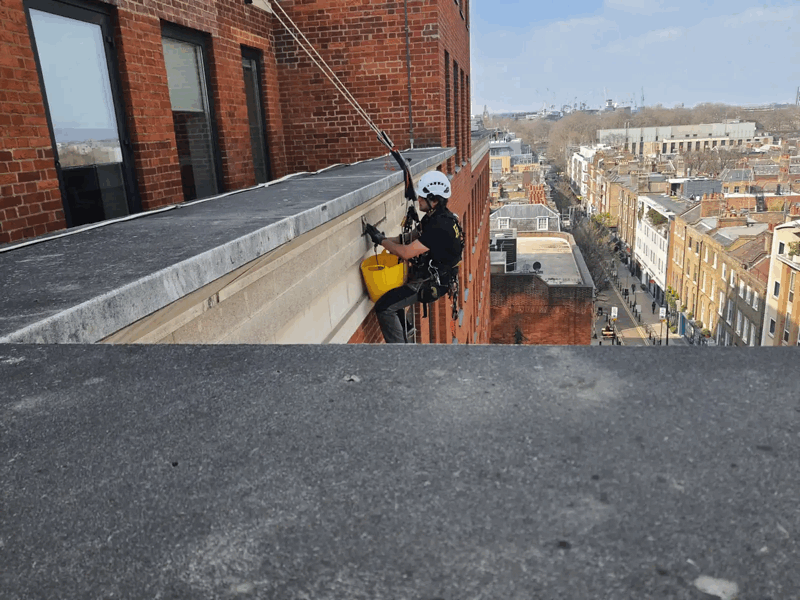
The choice of access equipment—whether it be traditional scaffolding, mast climbers, or rope access—depends on the building’s height and the surrounding grounds. In a school setting, mast climbers are often preferred as they offer a smaller footprint on the ground, leaving more playground space available and offering better security against unauthorised climbing after hours.
Financial Considerations and Funding
The cost of school cladding remediation can be significant, ranging from tens of thousands for repairs to several million for full replacement. For state-funded schools, access to the Condition Improvement Fund (CIF) or School Condition Allocations (SCA) is often the primary route for financing these works.
Documentation is key to securing funding. A detailed report from a specialist, such as those provided by CladdingTesting.com, provides the evidence needed to demonstrate that the works are a "health and safety" priority rather than a cosmetic upgrade. For independent schools, insurance requirements often drive the timeline for remediation, as premiums can rise sharply if non-compliant cladding is identified and not addressed.
Choosing the Right Partner for School Remediation
Given the technical and safety implications, choosing a contractor or consultant requires due diligence. A specialist in school facade remediation should be able to demonstrate:
Technical Literacy: An understanding of the chemical composition of different cladding cores and how they react to fire.
Operational Experience: A track record of working in occupied educational environments.
Regulatory Knowledge: Up-to-the-minute awareness of changes to building codes and the Building Safety Act.
Transparent Methodology: A clear process that begins with non-destructive testing where possible and moves toward evidence-based solutions.
Common Challenges in School Recladding Projects
Every building presents unique challenges. In older school buildings, we often encounter "latent defects"—problems that were hidden during the original construction but are uncovered during the cladding removal process. These might include structural issues with the masonry or incorrectly installed windows.
Managing these surprises requires a flexible project plan and a contingency budget. Furthermore, ensuring the "Golden Thread" of information—a digital record of all materials and decisions made during the project—is now a legal requirement for many buildings, ensuring that future facilities managers know exactly what is on their walls.
Frequently Asked Questions
Does all school cladding need to be replaced?
No. Not all cladding is dangerous. Many systems are perfectly safe and simply require routine maintenance. A professional assessment will determine if your building has combustible materials that require school cladding replacement or if localized repairs are sufficient to maintain safety and longevity.
How long does a school recladding project take?
The duration depends on the size of the building and the complexity of the system. A small primary school block might be remediated within 8-12 weeks, whereas a large secondary school or multi-storey college building could take 6-12 months. Works are often phased to coincide with holiday periods to reduce the impact on teaching.
What is the difference between remediation and repair?
School cladding remediation typically refers to correcting a systemic defect, such as replacing non-compliant insulation or installing missing cavity barriers across the whole facade. Repairs are usually more localised, such as fixing a specific area of water ingress or replacing a few damaged panels.
Will the school need to close during the works?
In the vast majority of cases, the school can remain open. Through careful sequencing, the use of external access equipment, and strict noise management protocols, education building cladding remediation can be carried out safely while the building is occupied.
Is funding available for these works?
For academies and sixth-form colleges, the Condition Improvement Fund (CIF) is a common source of funding for essential safety works. Local authority schools are typically funded through their council's capital programs. Private schools must generally self-fund, though some may have insurance policies that cover latent defects.
How do I know if my school's cladding is unsafe?
The only definitive way to know is through professional cladding testing and inspection. If your building was constructed or refurbished between 1990 and 2018 and features rainscreen cladding, it is advisable to have a professional review your O&M manuals and perform an initial visual survey.
The Importance of Professional Guidance
Managing the external envelope of an educational facility is a significant responsibility. The decisions made during the remediation process have long-term implications for the safety of students, the value of the asset, and the school’s legal standing.
At CladdingTesting.com, we focus on providing the technical clarity needed to make those decisions with confidence. Whether you are dealing with a single elevation of deteriorating panels or a complex high-rise campus requiring school cladding remediation, the goal remains the same: a safe, compliant, and durable building that allows education to continue without interruption.
By following a clear path of investigation, assessment, and targeted action, building owners can resolve cladding issues efficiently, ensuring that their facilities meet the highest standards of the modern UK construction landscape.
School Cladding Remediation