
fire stopping around windows
Fire Stopping Around Windows
In the field of façade engineering, the interface between a window frame and the external wall structure represents a significant fire safety risk if not managed correctly. Fire stopping around windows involves the installation of specialist materials designed to maintain the fire resistance of a wall where it has been breached by an opening. This ensures that the cavity behind the cladding remains sealed in the event of a fire, preventing the rapid spread of flames and toxic gases between floors.
On this page
11 min read
Last updated
Fire Stopping Around Windows
In the field of façade engineering, the interface between a window frame and the external wall structure represents a significant fire safety risk if not managed correctly. Fire stopping around windows involves the installation of specialist materials designed to maintain the fire resistance of a wall where it has been breached by an opening. This ensures that the cavity behind the cladding remains sealed in the event of a fire, preventing the rapid spread of flames and toxic gases between floors.
Key Takeaways
- Regulatory Compliance: Correct fire stopping is essential for meeting Building Regulations, specifically Approved Document B and the requirements of the Building Safety Act 2022.
- Cavity Barriers vs Fire Stops: While often used interchangeably, fire stops provide a full seal, whereas cavity barriers allow for necessary ventilation while closing under heat.
- Installation Integrity: Even high-specification materials will fail if the window interface fire stopping is not fitted tightly against both the substrate and the window frame.
- Holistic Systems: Fire stopping must be compatible with the insulation, breather membranes, and the specific window profile used in the external wall fire stopping windows strategy.
- Remediation: Defective fire stopping is a common finding in EWS1 surveys and often requires targeted remediation or full replacement to ensure resident safety.
For building owners and managing agents, understanding how these systems function is critical for maintaining a safe and compliant property portfolio. At CladdingTesting.com, we provide the technical expertise required to assess these hidden components through detailed intrusive inspections.
What is Fire Stopping Around Windows?
Fire stopping around windows refers to the methods and materials used to seal the gaps between a window unit and the adjacent wall construction. In modern high-rise buildings, windows are rarely set flush against a solid masonry wall; they usually sit within a complex "sandwich" of materials including internal linings, insulation, and external cladding panels.
The gap surrounding the window—the perimeter—is a natural weak point. Without robust window perimeter fire stopping, a fire originating inside a room could breach the window seal and enter the building’s internal cavity. Once inside the cavity, fire can spread upwards with alarming speed, bypassing the fire-rated floors that are designed to contain it.
Effective fire stopping uses materials such as intumescent seals, mineral wool batts, or specialist fire-rated foams. These materials are engineered to withstand extreme temperatures for a specific duration, typically 30, 60, or 120 minutes, depending on the building's fire strategy and height.
The Critical Difference: Cavity Barriers vs Fire Stops
In the context of cladding fire stopping around windows, it is important to distinguish between two distinct but related safety components:
- Fire Stops: These provide a permanent, airtight seal. They are used where no airflow is required, typically around the immediate perimeter of the window frame where it meets the inner leaf of the wall.
- Cavity Barriers: These are installed within the ventilated air gap behind cladding. They are designed to allow moisture to escape and air to circulate under normal conditions, but they contain intumescent strips that expand rapidly when exposed to heat, closing the gap.
Why Window Interface Fire Stopping Fails
During our Cladding Testing and inspection programmes, we frequently identify failures in fire stopping that were either present from the day of construction or developed during subsequent maintenance. Because these components are hidden behind the external façade, they often go unnoticed until a professional survey is conducted.
Common Failure Modes:
- Inadequate Compression: Mineral wool fire stops rely on being compressed (usually by at least 10-15%) to form a smoke-tight seal. If the gap is wider than the material provided, the fire stop will simply fall out or leave a path for smoke.
- Incorrect Material Specification: Using standard expanding foam instead of fire-rated products is a common and dangerous error. Standard foam is often highly flammable and offers no fire resistance.
- Poor Substrate Preparation: If the surface where the fire stop is attached is uneven or covered in debris, the seal will be compromised.
- Discontinuity: Fire stopping must be continuous. Gaps at the corners of windows or where horizontal and vertical barriers meet are frequent points of failure.
The Regulatory Framework in the UK
Following the Grenfell Tower tragedy, the regulatory environment for external wall fire stopping windows has become significantly more stringent. The Building Safety Act 2022 and the updated Regulatory Reform (Fire Safety) Order 2005 place clear legal responsibilities on "Accountable Persons" to ensure the safety of the building envelope.
Approved Document B (Fire Safety) outlines the specific requirements for cavity barriers and fire stopping. For buildings over 11 metres (and particularly those over 18 metres), the requirements for non-combustibility and the placement of fire stopping are rigorous. Failure to comply can result in the inability to obtain an EWS1 (External Wall System) form, which in turn prevents residents from mortgaging or selling their properties.
Assessing Existing Fire Stopping Systems
Building owners often ask how they can be sure their window perimeter fire stopping is adequate. Because these systems are concealed, a visual inspection of the building's exterior is insufficient. A technical, intrusive investigation is required.
The Inspection Process
At CladdingTesting.com, we follow a structured methodology to evaluate the fire safety of window interfaces:
- Opening Up Works: We carefully remove small sections of the external cladding or internal reveals to expose the window interface.
- Measurement and Verification: We measure the gaps and compare the installed materials against the original building specification and current fire safety standards.
- Photographic Evidence: Detailed records are taken to document the presence (or absence) of fire stopping, the quality of installation, and the condition of the materials.
- Reporting: Our findings are compiled into a comprehensive report, outlining whether the system is compliant or if remediation is required.
Remediation and Repair Strategies
If an inspection reveals that the cladding fire stopping around windows is defective, the next step is to determine the most appropriate course of action. At CladdingTesting.com, we advocate for a measured approach that balances safety, cost, and resident disruption.
Localised Repairs
In cases where the majority of the fire stopping is sound but specific windows have been poorly fitted, localised repairs may be possible. This involves removing the external flashings or trim, installing the correct fire-rated materials, and resealing the interface. This is often the preferred route for buildings where the cladding panels themselves are non-combustible and in good condition.
Systemic Remediation
If the failure is systemic—meaning the wrong material was used throughout the entire building—a more significant remediation programme is necessary. This may involve stripping back the cladding around all window openings to install new, compliant window interface fire stopping. While more invasive, this ensures the building's fire strategy is fully restored.
Full Recladding
Where fire stopping failures are combined with flammable cladding materials (such as ACM or certain HPL panels), the most sensible solution is often a full recladding project. In these instances, the fire stopping is designed and installed as part of a completely new, modern wall system that meets all current safety standards.
Fire Stopping Around Windows
Design Considerations for New Fire Stopping
When designing external wall fire stopping windows for a remediation project, several technical factors must be considered to ensure long-term performance.
Acoustic and Thermal Performance
Fire stopping does not just protect against fire; it also plays a role in the building's acoustic and thermal envelope. A poorly sealed window will allow noise transfer and create "cold bridges" that lead to condensation and mould growth inside the apartments. High-quality fire stops provide a degree of thermal insulation and sound dampening, improving the living environment for residents.
Movement and Tolerances
High-rise buildings are dynamic structures. They move due to wind loads, thermal expansion, and settlement. Window perimeter fire stopping must be flexible enough to maintain a seal even as the window frame and the wall move slightly relative to each other. Using rigid mortars or brittle fillers is rarely appropriate in these applications.
Weather Protection
The fire stop sits within the "wet" zone of the building envelope. It must be able to withstand occasional moisture without degrading or losing its fire-resistive properties. Compatibility with breather membranes and DPCs (Damp Proof Courses) is essential to prevent water ingress into the building structure.
The Importance of Qualified Installers
The performance of fire stopping is almost entirely dependent on the quality of the installation. A 5mm gap left at the end of a mineral wool batt can be enough for smoke to bypass the barrier entirely. This is why we emphasise the importance of using specialist contractors who understand the nuances of cladding fire stopping around windows.
Third-party accreditation schemes, such as FIRAS or IFC, provide assurance that the installers have the necessary skills and that their work is subject to regular audits. When CladdingTesting.com manages a remediation project, we ensure that every fire stop is checked and documented before it is covered up by the cladding panels.
Challenges in Occupied Buildings
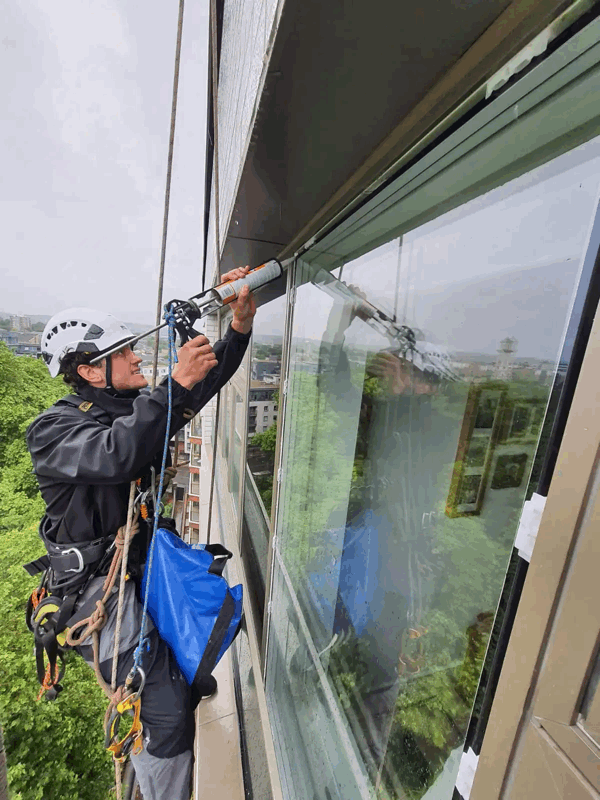
Carrying out work on window interface fire stopping in occupied residential blocks presents unique logistical challenges. Residents rely on their windows for light, ventilation, and security. Any work that involves removing window reveals or external cladding must be carefully sequenced.
Managing Resident Disruption:
- Access Equipment: Using mast climbers or cradles is often more efficient than full scaffolding for targeted window works, reducing the "closed-in" feeling for residents.
- Acoustic Protection: Remediation work is noisy. Scheduling work during standard business hours and providing residents with clear timelines helps manage expectations.
- Weatherproofing: When a window interface is opened up, the building is temporarily vulnerable to the elements. We ensure that temporary seals are in place at the end of every shift to prevent water ingress.
Future Trends in Façade Fire Safety
The industry is moving towards more integrated and tested systems. Rather than choosing individual components, specifiers are increasingly looking for "full system" tests where the window, the fire stop, the insulation, and the cladding have been tested together in a large-scale rig (such as BS 8414).
We are also seeing the rise of digital "Golden Thread" record-keeping. For new remediation projects, every single fire stopping around windows installation can be photographed and geotagged, providing building owners with a permanent digital record of the safety measures hidden within their walls. This level of transparency is becoming the benchmark for high-rise residential management.
How CladdingTesting.com Can Help
Navigating the complexities of external wall fire stopping windows requires a partner with deep technical expertise and a practical understanding of construction logistics. We don't just identify problems; we provide the roadmap to solving them.
Our Comprehensive Service:
- Initial Survey: A non-intrusive review of building records and a site walkaround.
- Intrusive Investigation: Targeted "opening up" works to inspect the hidden window perimeter fire stopping.
- Risk Assessment: Evaluating the findings in the context of the building’s overall fire strategy.
- Remediation Design: Developing a cost-effective, compliant repair or replacement strategy.
- Project Delivery: Managing the physical works, from access and logistics to final certification.
Commercial Considerations for Property Professionals
For developers and freeholders, fire stopping defects represent a significant financial liability. However, ignoring these issues is not an option under current UK law. Early intervention is key. A targeted remediation programme to fix cladding fire stopping around windows is significantly less expensive than facing legal action or being forced into an emergency recladding project because a fire safety order has been issued.
Furthermore, buildings with certified, compliant fire stopping are more attractive to insurers and lenders. By proactively managing these risks, property professionals can protect the value of their assets and ensure the long-term viability of their buildings.
Frequently Asked Questions
What is the most common material used for fire stopping around windows?
In the UK, the most common material is high-density mineral wool, often foil-faced. This material is non-combustible and can be compressed into the gap to create a tight seal. In certain applications, intumescent seals or fire-rated graphite-based products are used, which expand when heated to block the spread of fire.
Can expanding foam be used for fire stopping around windows?
Only if it is a specifically tested and certified fire-rated foam, and even then, its use is often limited to very specific gap sizes and substrate types. Standard "off-the-shelf" expanding foam is often highly flammable and should never be used as a fire stop in a commercial or high-rise residential setting. Many remediation projects involve removing this type of non-compliant foam.
Does fire stopping prevent water leaks?
While the primary purpose of window interface fire stopping is fire safety, a correctly installed seal will also improve the building’s air tightness and resistance to water ingress. However, fire stopping should always be used in conjunction with appropriate flashing and DPCs to ensure a fully weather-tight finish.
How often should fire stopping be inspected?
Fire stopping is generally considered a "fit and forget" component, but it should be inspected whenever significant works are carried out on the building envelope or if there are signs of cladding failure. For high-rise buildings, a thorough inspection of the façade—including the fire stopping—is typically part of the five-yearly safety review or EWS1 assessment.
Is fire stopping required for all windows?
Generally, yes, in any building where a fire-rated wall is breached by a window opening. The specific type and rating of the fire stop depend on the building’s height, its proximity to other buildings, and the fire strategy defined by the building’s designers. In high-rise residential blocks, the requirements are at their most stringent.
What happens if my building fails a fire stopping inspection?
If defects are found, CladdingTesting.com will provide a detailed report outlining the risks. Depending on the severity, you may need to implement interim fire safety measures (such as a waking watch or enhanced alarm system) while a remediation plan is developed. We then work with you to design and implement the necessary repairs to bring the building back into compliance.
How long does it take to remediate window fire stopping?
The timeline depends on the number of windows and the type of cladding. A targeted repair on a single elevation might take a few weeks, while a full building remediation involving hundreds of windows could take several months. We focus on phased delivery to minimise the time any single resident is affected by the works.
For building owners, managing agents, and facilities managers responsible for high-rise assets, ensuring the integrity of fire stopping around windows is a fundamental safety obligation. If you have concerns about the compliance of your building's façade, contact CladdingTesting.com to arrange a professional inspection.
Fire Stopping Around Windows