
Glossary · Single word
Maintenance
In short
work performed to keep a building or its systems in good condition
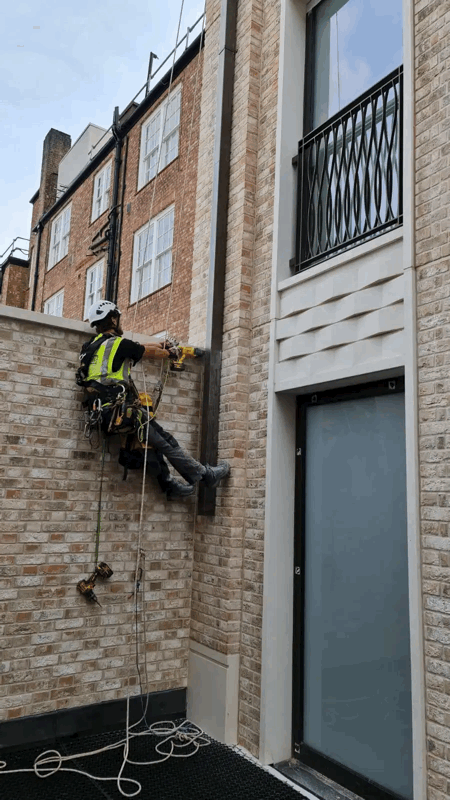
Maintenance refers to the systematic, proactive work required to preserve the condition and performance of a building’s external wall systems. This process involves routine inspections and minor repairs to ensure structural integrity and functional longevity in accordance with manufacturer guidelines.
Last updated
On this page
Maintenance
Definition and Scope of Maintenance
In the context of the UK built environment, maintenance refers to the systematic work performed to keep a building or its systems in good condition. When applied to the building envelope, maintenance encompasses a broad spectrum of activities designed to preserve the aesthetic, structural, and functional integrity of the external wall system. This includes routine inspections, minor repairs, cleaning, and the replacement of components that have reached the end of their anticipated service life.
Maintenance is distinct from 'repair'—which typically involves fixing something that is broken—and 'replacement'—which involves the wholesale removal of a system. Instead, it is a proactive and ongoing discipline. For cladding systems, this means ensuring that the primary weather screen, the supporting sub-frame, the insulation, and the fire-stopping measures remain as effective as they were at the point of installation. Effective maintenance strategies are predicated on the principle that consistent, small-scale interventions prevent the accelerated degradation of materials and mitigate the risk of systemic failure.
Application in Cladding Testing and Remediation
Maintenance plays a critical role throughout the lifecycle of a cladding project. During the testing and assessment phase, the recorded history of a building’s maintenance is often a primary data point. Surveyors and fire engineers may examine maintenance logs to determine if historical interventions—such as the application of sealants or the adjustment of panels—have altered the performance characteristics of the wall system. A lack of maintenance documentation can complicate the process of establishing a building's current condition.
In the context of remediation or replacement, the concept of 'maintainability' is a significant design consideration. Modern external wall systems are evaluated not only on their immediate performance but on how easily they can be maintained over several decades. This includes the accessibility of cavities for inspection, the ease of replacing individual damaged panels without compromising the entire facade, and the durability of finishes against environmental pollutants. For buildings undergoing cladding replacement, the new Operations and Maintenance (O&M) manuals serve as the definitive guide for future upkeep, outlining specific cleaning regimes and inspection frequencies required to uphold product warranties.
Relationship to Building Fabric and External Walls
The external wall system is a complex assembly of multiple layers, each with different maintenance requirements. The outermost layer—the cladding panels or masonry—is subject to environmental stressors such as UV radiation, wind loading, and moisture. Maintenance here often focuses on surface integrity, the condition of gaskets, and the clearing of drainage channels to prevent water ingress. If moisture is allowed to bypass the primary screen due to poor maintenance, it can lead to the degradation of the underlying insulation or the corrosion of the metal sub-frame.
Internal components, such as cavity barriers and fire-stopping, are also subject to maintenance considerations, though they are not 'maintained' in the traditional sense of being cleaned. Instead, maintenance involves periodic 'hidden' inspections to ensure that these components have not been disturbed by subsequent works or affected by building movement. The interaction between different materials—such as the electrochemical reaction between dissimilar metals—must also be monitored. A maintenance regime ensures that these interactions do not compromise the structural stability of the cladding over time.
Regulatory and Process Context in England and Wales
The regulatory framework in England and Wales places a clear emphasis on the ongoing management of building safety, which inherently involves maintenance. Under the Building Safety Act 2022 and the modified Regulatory Reform (Fire Safety) Order 2005, there is a legal requirement for 'Accountable Persons' and 'Responsible Persons' to ensure that the building is managed safely. While the legislation focuses heavily on life safety and fire risk, the physical state of the external wall is central to these obligations.
Building Regulations, specifically Approved Document 7, provide guidance on workmanship and materials, implying that buildings should be constructed and maintained to remain adequate for their purpose. Furthermore, the ‘Golden Thread’ of information—a digital record of a building’s design, construction, and ongoing management—requires that maintenance records are kept up to date and are accessible. This ensures that any professional assessing the building has a clear understanding of what work has been performed and by whom, facilitating a more accurate assessment of the building's long-term viability.
Maintenance
Considerations for Building Owners and Managers
For those responsible for the management of high-rise or complex buildings, such as Resident Management Company (RMC) directors or managing agents, maintenance is a fiduciary and operational necessity. Understanding the specific requirements of a cladding system is essential for accurate service charge budgeting and long-term capital expenditure planning. Manufacturers often stipulate specific maintenance cycles; failure to adhere to these can void warranties and may lead to premature material failure.
Managing agents must ensure that maintenance is carried out by competent professionals who understand the specificities of the installed system. For example, using inappropriate cleaning agents on certain architectural coatings can cause irreversible damage. Furthermore, the transition from a 'construction' mindset to a 'management' mindset is crucial. Once a cladding remediation project is complete, the focus must immediately shift to the implementation of the O&M manual to ensure the investment is protected and the building remains in its intended condition.
Common Misunderstandings
A frequent misunderstanding is that modern cladding systems are 'maintenance-free.' While many materials are marketed as low-maintenance, no external wall system is entirely exempt from the need for inspection and upkeep. Environmental factors, such as salt spray in coastal areas or atmospheric pollutants in urban centres, can necessitate more frequent cleaning and inspection than the manufacturer’s baseline recommendations.
Another misconception is that maintenance is purely aesthetic. While cleaning panels improves the appearance of a building, the primary function of maintenance is often invisible. Ensuring that weep holes are not blocked, that seals remain watertight, and that fixings have not loosened is fundamental to the structural and thermal performance of the building. Finally, maintenance is often confused with 'improvement' or 'betterment.' In a regulatory and accounting sense, maintenance is about preservation; replacing an entire system to meet new standards generally falls outside the scope of routine maintenance.
Related Terminology
The following terms are frequently used alongside or in relation to maintenance in the UK cladding industry:
| Term | Context |
|---|---|
| O&M Manual | The Operations and Maintenance manual provided at the handover of a building project. |
| Planned Preventative Maintenance (PPM) | A scheduled program of works designed to prevent equipment or material failure. |
| Reactive Maintenance | Work carried out in response to a specific failure or identified defect. |
| Service Life | The period during which a component is expected to perform its intended function. |
| Lifecycle Costing | An assessment of the total cost of ownership, including initial installation and ongoing maintenance. |
| Facade Access | The methods (e.g., cradles, abseiling, MEWPs) used to reach the external wall for maintenance. |
Maintenance