
Glossary · Two-word term
Resident Disruption
In short
inconvenience or disturbance experienced by building occupants during works
Resident disruption describes the logistical, physical, and sensory disturbances building occupants face during cladding inspections or remediation. This entry outlines how these impacts are managed within the UK regulatory and construction framework.
Last updated
On this page
Resident Disruption
Definition and Scope of Resident Disruption
Resident disruption refers to the range of inconveniences, disturbances, and alterations to living conditions experienced by building occupants during the assessment or remediation of external wall systems. In the context of the UK cladding industry, this term encompasses both the physical impact of onsite works and the logistical constraints placed upon residents to facilitate safe access for surveyors, engineers, and contractors.
While the term often implies noise or dust, its technical application covers a broader spectrum of impacts. These include the loss of access to private balconies, the obscuring of natural light by scaffolding or debris netting, and the temporary loss of amenity space. In high-density residential developments, resident disruption is a critical factor in project planning, as the requirements for cladding remediation—often involving the total removal and replacement of the building envelope—are significantly more invasive than standard maintenance cycles.
Context in Cladding Testing and Inspection
The initial stages of identifying external wall compositions often necessitate intrusive inspections. During this phase, resident disruption is typically focused on short-term access requirements. Surveyors may need to enter individual apartments to inspect cavity barriers, internal fire-stopping, or the interface between the internal leaf and the external cladding panels.
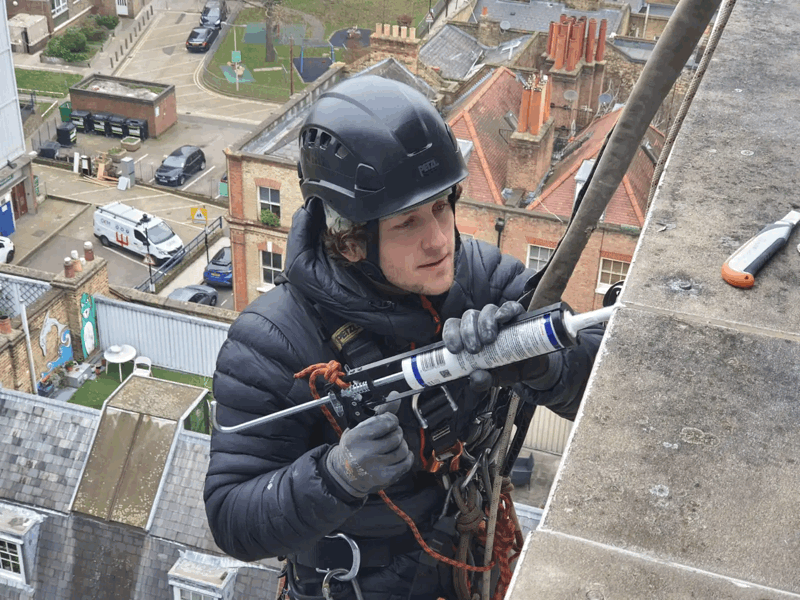
External inspections frequently involve the use of mobile elevating work platforms (MEWPs), mast climbers, or abseil teams. Each method carries specific disruptive characteristics. For example, the use of MEWPs may require the temporary closure of residents’ parking bays or access roads. Furthermore, the removal of 'pilot' panels for laboratory testing creates temporary voids in the building envelope, which must be secured and weather-proofed, potentially affecting the thermal or acoustic performance of the affected unit for a short duration.
Impact on Building Fabric and External Wall Systems
When a building undergoes large-scale cladding replacement, the building fabric is fundamentally compromised for the duration of the project. The removal of the rainscreen layer exposes the insulation and the underlying substrate to the elements. To protect the structure, temporary membranes are applied, but these lack the acoustic dampening and aesthetic properties of the finished system.
| Disruption Factor | Source of Impact | Typical Duration |
|---|---|---|
| Acoustic Disturbance | Percussive drilling, mechanical fixing, and site machinery. | Daytime working hours. |
| Visual Obstruction | Scaffolding, Monarflex sheeting, and debris netting. | Duration of facade works. |
| Access Restriction | Balcony closures and communal area hoarding. | Phased by elevation. |
| Privacy Reduction | Presence of personnel on external platforms. | Periodic during shifts. |
The installation of new fire breaks and compliant insulation requires significant mechanical fixing into the building’s primary structure. This process generates structure-borne sound that can travel across multiple floors, representing one of the most consistent forms of resident disruption during the remediation phase.
Regulatory and Process Context in England and Wales
The regulatory landscape, particularly following the introduction of the Building Safety Act 2022, emphasizes the importance of communication and resident engagement. While the Act primarily focuses on safety risks and the 'Accountable Person's' duties, the practical execution of these duties involves navigating the rights and expectations of leaseholders.
In England and Wales, the Golden Thread of information requires detailed record-keeping, but the physical work to achieve safety standards must be balanced against the 'quiet enjoyment' clauses typically found in residential leases. Managing agents and Responsible Entities must ensure that the methods chosen for remediation comply with the Construction (Design and Management) Regulations 2015 (CDM 2015). Under CDM, the Principal Designer and Principal Contractor are required to plan and manage works to ensure the health and safety of not just the workers, but also the residents who remain in situ during the project.
Resident Disruption
Considerations for Building Owners and Managing Agents
For those responsible for the management of residential blocks, such as Right to Manage (RTM) directors or Resident Management Companies (RMC), understanding the logistical footprint of a project is essential. Resident disruption is not merely an inconvenience but a variable that can affect project timelines and insurance premiums.
Professional consultants typically advise on a 'Resident Engagement Strategy.' This document outlines how occupants will be notified of specific disruptive activities. Key areas of focus usually include:
- The scheduling of 'noisy hours' to align with local authority requirements.
- The provision of alternative access routes for residents with mobility issues.
- The management of site security to prevent unauthorized access via scaffolding.
- The methodology for internal access where 'facing' works require internal verification.
Effective management involves distinguishing between unavoidable disruption—such as the presence of scaffolding—and avoidable disruption, such as poor site housekeeping or inadequate scheduling of deliveries.
Common Misunderstandings
A frequent misunderstanding is that resident disruption can be entirely mitigated through alternative construction methods. While some systems, such as off-site manufactured panels, may reduce the time spent on-site, the fundamental requirement to strip the existing facade remains a highly intrusive process. It is also often incorrectly assumed that residents will be required to vacate their properties during cladding replacement. In the vast majority of UK projects, works are conducted while the building remains occupied, which necessitates more complex safety measures and results in a longer period of lower-level disruption.
Another misconception involves the extent of balcony access. Residents often believe that balconies can be used during evening hours when contractors are not present. However, for safety reasons and to maintain the integrity of the site as a workplace, balconies are usually decommissioned and placed 'out of bounds' for the entire duration that an elevation is under scaffold or being worked upon.
Closely Related Terminology
Understanding resident disruption requires familiarity with several related industry terms:
- Decanting: The process of moving residents out of their homes temporarily, which is rarely utilized in cladding remediation unless structural integrity or fire safety risks are deemed extreme during the works.
- Enabling Works: The preliminary activities, such as erecting hoarding or site offices, that signify the start of the disruptive phase.
- Oversheeting: An alternative method where new cladding is placed over the old; however, this is rarely an option in modern fire safety remediation where the underlying combustible materials must be removed.
- Mast Climbers (MCWPs): An alternative to traditional scaffolding that can sometimes reduce visual obstruction but may increase localized mechanical noise.
Each project requires a bespoke assessment by a competent professional to determine the most appropriate balance between technical necessity and the minimization of occupant disturbance.
Resident Disruption