
Glossary · Two-word term
Intrusive Investigation
In short
a process involving opening up parts of a building to inspect hidden elements
An intrusive investigation is a technical process where parts of a building's exterior are opened to inspect hidden components like fire barriers and insulation. This physical verification is essential for accurate risk assessments and regulatory compliance in the UK.
Last updated
On this page
Intrusive Investigation
Definition of Intrusive Investigation
In the context of the UK built environment, an intrusive investigation refers to a physical process involving the systematic opening up of specific areas of a building’s envelope to inspect hidden elements. Unlike visual surveys or thermal imaging, which are non-destructive, intrusive methods require the removal of external finishes—such as cladding panels, render, or masonry—to examine the underlying sub-structure and cavity components.
This process is fundamental to assessing the "as-built" condition of a property. While architectural drawings and operation and maintenance (O&M) manuals provide a theoretical view of a building's construction, intrusive investigations are used to verify whether the actual installation aligns with these records. The objective is to gather empirical evidence regarding the materials used, their arrangement, and the quality of workmanship within the external wall system (EWS).
The Role of Investigations in External Wall Systems
The external wall of a modern building is rarely a single homogeneous layer. It is typically a complex assembly comprising the outer cladding, a ventilated cavity, fire barriers, insulation, a vapour control layer, and the primary structural frame or inner leaf. Many of these components are entirely obscured once construction is complete.
Intrusive investigations allow surveyors and engineers to assess several critical features that cannot be verified from the surface. These include:
- Material Identification: Confirming the exact composition of insulation (e.g., mineral wool, PIR, or phenolic foam) and the core material of composite panels.
- Cavity Barrier Verification: Checking the presence, positioning, and orientation of horizontal and vertical fire breaks, and ensuring they are correctly sized to close the cavity in the event of a fire.
- Fixings and Rails: Inspecting the mechanical integrity and corrosion levels of the support systems and helping to determine if the load-bearing capacity remains adequate.
- Substrate Condition: Evaluating the state of the sheathing board or primary structure behind the insulation layers.
Regulatory Context in England and Wales
The requirement for intrusive investigations has become a standard feature of the regulatory landscape in England and Wales, particularly following the introduction of the Building Safety Act 2022 and the Fire Safety Act 2021. These legislative frameworks place a significant emphasis on the "golden thread" of information and the necessity for Accountable Persons to possess an accurate understanding of their building’s risks.
Current guidance, including PAS 9980:2022, provides a methodology for the Fire Risk Appraisal of External Walls (FRAEW). This code of practice often necessitates intrusive sampling to inform the risk assessment. A professional undertaking a PAS 9980 assessment must decide if there is sufficient information available to form a judgement; if the original construction details are missing or deemed unreliable, an intrusive investigation is typically the mechanism used to bridge that information gap.
The process is also central to the EWS1 (External Wall System) valuation process. While the EWS1 form is a mortgage valuation tool rather than a legal requirement, the chartered professionals who sign these forms usually require intrusive evidence to support their professional opinion on the wall system’s composition.
Intrusive Investigation
Implementation and Methodology
The execution of an intrusive investigation is a coordinated technical exercise. It generally begins with a desk study of available plans to identify "typical" and "atypical" areas of the facade. A representative sample of locations is selected—often including areas around windows, floor levels, and corners—to ensure a comprehensive view of the building’s construction.
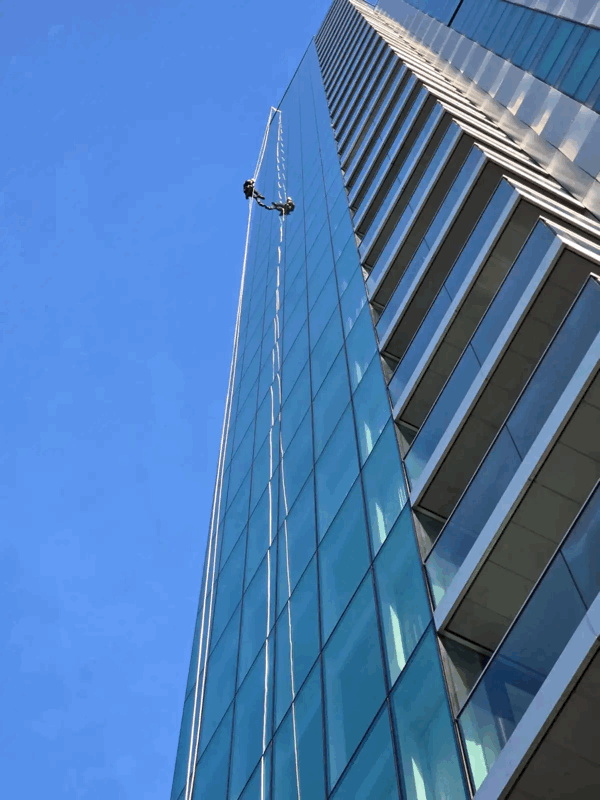
Access is a primary logistical consideration. Depending on the height and configuration of the building, investigations may be conducted via mobile elevating work platforms (MEWPs), mast climbers, or industrial rope access. Once at the specified location, a small section of the cladding is carefully removed.
| Investigation Element | Common Methods |
|---|---|
| Opening Up | Removal of panels, drilling of core samples, or lifting of coping stones. |
| Documentation | High-resolution photography, measurement of cavity widths, and material sampling. |
| Reinstatement | Temporary or permanent resealing of the opening to maintain weatherproofing. |
| Laboratory Analysis | Sending material samples for composition testing (e.g., bomb calorimetry). |
Following the data collection, the openings are reinstated. It is a standard industry practice to ensure that the building remains weather-tight during and after the process, particularly if the investigation occurs on a tenanted building where water ingress could cause internal damage.
Considerations for Building Owners and Managers
For Residential Management Companies (RMCs), Right to Manage (RTM) directors, and managing agents, the decision to commission an intrusive investigation involves several practical implications. Unlike a standard visual survey, this process is inherently disruptive and requires careful communication with residents.
One of the most critical aspects for owners to understand is the "representative" nature of sampling. An investigation at three or four points on a large elevation provides a snapshot, but it does not guarantee that the entire facade was built to the same standard. If inconsistencies are found—such as fire barriers being present in one location but missing in another—the scope of the investigation may need to be expanded to determine the extent of the issue.
Furthermore, the findings of an intrusive investigation form the technical basis for any subsequent remedial strategy. If repairs or replacements are eventually required, the data gathered during this stage ensures that the design of the new system is based on the actual structural realities of the building rather than assumptions.
Common Misunderstandings
A frequent misunderstanding is that an intrusive investigation is synonymous with a "cladding test." In common parlance, people often conflate the two, but they are distinct. A "test" often refers to a laboratory-based assessment of a specific material’s combustibility, whereas an "investigation" is the holistic process of examining how various materials were assembled on site.
Another misconception is that intrusive investigations are always required. If a building has a complete and verifiable "as-built" record, including photographic evidence from the original construction phase and clear manufacturer specifications, a professional may decide that further intrusive work is unnecessary. However, in the UK's legacy building stock, such comprehensive documentation is rarely available, making physical inspection the default requirement for due diligence.
Finally, it is often assumed that the investigation will always result in a recommendation for replacement. This is not necessarily the case. The investigation's purpose is to provide factual data; the subsequent risk assessment determines whether that data represents a tolerable risk or necessitates action.
Related Terminology
To navigate the technical reports generated by these investigations, it is helpful to understand closely related terms:
- Borescope Inspection: A "semi-intrusive" method where a small hole is drilled to allow a camera probe into the cavity. This is less disruptive but offers a more limited field of view than full opening-up works.
- As-Built Drawings: Plans supposed to reflect the building as it was actually constructed, which intrusive investigations are designed to verify.
- Remediation Strategy: The plan of action developed after an investigation if the external wall system is found to require modification.
- Pilot Hole: A small initial cut made to gauge the depth of the cladding layers before full removal.
Intrusive Investigation