
Glossary · Two-word term
Visual Inspection
In short
examination of a building's exterior surfaces without invasive access
A visual inspection is a non-destructive examination of a building's exterior surfaces conducted from ground level or accessible points. It serves as a preliminary tool in UK cladding assessments to identify surface defects and inform the need for further invasive testing.
Last updated
On this page
Visual Inspection
Definition and Scope of Visual Inspection
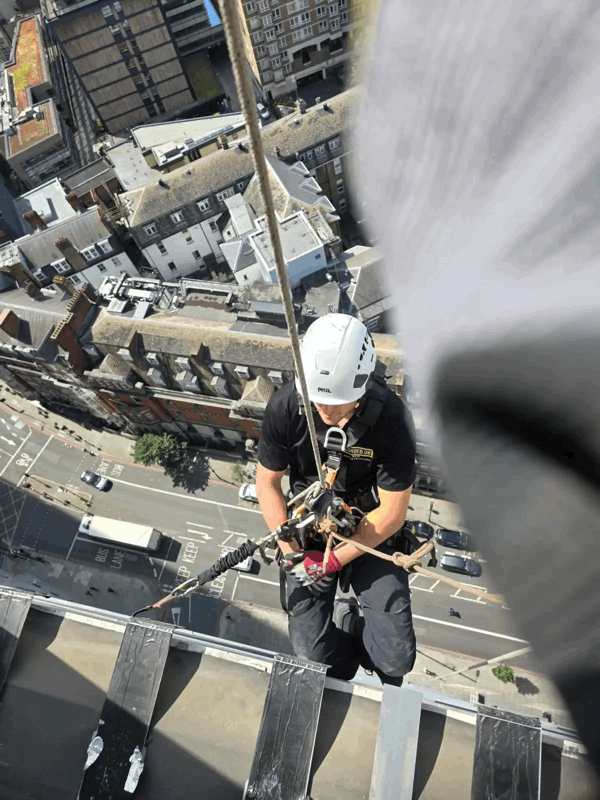
In the context of the UK built environment, a visual inspection is defined as the examination of a building's exterior surfaces without invasive access. It represents the primary level of assessment for external wall systems (EWS) and is typically the initial stage in any technical evaluation of a facade. This process involves a competent professional observing the condition, configuration, and apparent materials of the cladding, glazing, and associated components from ground level, balconies, or accessible roof areas, often utilising optical aids such as high-powered binoculars or long-lens photography.
Unlike invasive surveys, a visual inspection does not involve the removal of panels, the creation of 'sampling holes', or the use of borescope cameras to view internal cavities. Its scope is strictly limited to what is visible to the naked eye or through magnification. In technical reporting, this is often categorised as a 'Type 1' or 'Level 1' assessment, providing a non-destructive overview of the building fabric's current state.
Role in Cladding Testing and Remediation
Visual inspections serve several distinct functions within the lifecycle of cladding maintenance and repair. In the preliminary stages of a building safety assessment, a visual review is used to identify the types of cladding systems present and to look for signs of degradation, such as corrosion, delamination, or failing sealants. It is also a critical tool for identifying 'obvious' defects that may require immediate attention, such as loose panels or damaged fire breaks that have become exposed.
During the repair or replacement phase, visual inspections are utilised for quality control. Surveyors use them to ensure that the aesthetic finish of new installations matches the original design intent and to verify that visible components, such as weep holes and expansion joints, are correctly positioned according to the manufacturer’s specifications. However, it is standard industry practice to acknowledge that a visual inspection alone cannot confirm the internal composition of a wall system or the presence of hidden fire-stopping measures.
External Wall Systems and Building Fabric
The relationship between visual inspection and the wider external wall system is one of surface-level identification. A surveyor will look for characteristic features of specific materials, such as the 'oil-canning' effect often seen in thin-gauge metal rainscreens, or the specific texture of high-pressure laminates (HPL). The inspection also covers the 'ancillary' components of the building fabric, including:
- Flashings and Trims: Checking for secure fixings at windows and parapets.
- Sealants: Identifying cracking, shrinkage, or adhesive failure in movement joints.
- Gaskets: Observing the condition of EPDM or rubber seals in glazing systems.
- Support Framework: Where visible through gaps, assessing the condition of rails or brackets.
Because the external wall system is a complex assembly of multiple layers—including insulation, vapour membranes, and cavity barriers—the visual inspection is limited to the 'weather screen' or outermost layer. It provides the context for where more detailed, invasive investigations may be required if the surface condition suggests underlying issues.
UK Regulatory and Process Context
In England and Wales, the regulatory framework governing building safety has evolved significantly, placing greater emphasis on the competence of those performing inspections. The visual inspection is often the first step in the process of completing an EWS1 (External Wall System) form, although a visual-only assessment is rarely sufficient for a final sign-off unless the building meets specific low-risk criteria defined in current consolidated advice.
Professional bodies, such as the Royal Institution of Chartered Surveyors (RICS) and the Institution of Fire Engineers (IFE), provide guidance on when a visual inspection is appropriate. Under the Building Safety Act 2022 and the Fire Safety Act 2021, the 'Accountable Person' or 'Responsible Person' must ensure that the building’s external walls are assessed. While the visual inspection is a foundational part of the 'Golden Thread' of information, it is generally treated as a screening tool to determine if further, more intensive sampling is necessitated by the building's height, occupancy, or known material risks.
Visual Inspection
Considerations for Building Owners and Managers
For Residential Management Companies (RMC), Right to Manage (RTM) directors, and managing agents, understanding the limitations of a visual inspection is essential for procurement and compliance. A common requirement is the 'routine' or 'periodic' inspection, which is often visual in nature and forms part of a standard planned preventative maintenance (PPM) schedule.
It is important for stakeholders to recognise that a visual inspection report will contain significant caveats. Because the surveyor cannot see behind the cladding panels, the report will state that the findings are based on reasonable assumptions and visible evidence. If a building owner requires a definitive statement regarding the fire performance of the insulation or the integrity of the cavity barriers, they must understand that the visual inspection is merely the precursor to the invasive works required to obtain that data.
| Feature | Visual Inspection (Non-Invasive) | Invasive Investigation (Sampling) |
|---|---|---|
| Access Requirements | Ground level / Balconies | MEWPs / Abseil / Scaffolding |
| Material Analysis | Surface identification only | Laboratory testing / Core samples |
| Cavity Review | Not possible | Borescope / Panel removal |
| Cost Profile | Lower | Higher |
| Impact on Fabric | None | Temporary patches or repairs required |
Common Misunderstandings
A frequent misunderstanding is the belief that a visual inspection is sufficient to guarantee the safety of a cladding system. In the technical reality of modern rainscreen construction, the most critical components for fire safety and structural integrity are hidden from view. Therefore, a "clean" visual inspection report does not necessarily mean the building is free from defects; it simply means no defects were visible on the exterior surface at the time of the survey.
Another misconception involves the use of drones. While drone surveys are a form of visual inspection and offer excellent high-level access, they are still limited by the same non-invasive constraints as a surveyor with binoculars. They provide high-resolution visual data but cannot "see through" panels to verify the internal build-up of the wall.
Related Terminology
To accurately interpret technical documents, it is helpful to distinguish visual inspection from related terms:
- Invasive Survey: A physical examination involving the removal of building components to inspect the internal cavity.
- Condition Survey: A broader assessment that includes a visual inspection but focuses on the remaining functional life and maintenance requirements of the materials.
- EWS1 Assessment: A specific process for valuation purposes that may involve both visual and invasive elements depending on the 'Option' triggered.
- Desktop Study: A review of architectural drawings, O&M manuals, and specifications without necessarily visiting the site.
- Facade Audit: A comprehensive review that often combines a desktop study, visual inspection, and thermal imaging to assess overall performance.
Ultimately, the visual inspection remains a vital, albeit preliminary, component of professional cladding management in the UK, providing the necessary baseline data for all subsequent technical and regulatory actions.
Visual Inspection