
Glossary · Two-word term
Urban Environments
In short
built-up areas with high population density and complex infrastructure
The term "urban environments" describes high-density built-up areas with complex infrastructure. In the cladding industry, this context influences everything from wind-load calculations and fire spread risks to the logistical challenges of replacing external wall systems in restricted city sites.
Last updated
On this page
Urban Environments
Definition and Context
In the context of the UK built environment, the term "urban environments" refers to built-up areas characterised by high population density and complex infrastructure. Within the cladding and external wall sectors, this definition extends beyond simple demographics to encompass the physical and environmental conditions unique to cities and large towns. These conditions include significant building height, close proximity between adjacent structures, and the presence of critical transport or utility networks.
For professionals involved in the assessment of external wall systems (EWS), an urban environment is not a monolithic category but a spectrum of density. It ranges from suburban fringes to the "inner city" and "central business districts," where the concentration of high-rise residential and commercial assets is greatest. The technical relevance of this term lies in how these dense surroundings influence building performance, logistics for remediation, and the application of fire safety regulations.
Impact on Building Fabric and External Wall Systems
The performance of cladding systems is intrinsically linked to the environment in which they are installed. In urban settings, building fabric is subject to specific stressors that may not be as prevalent in rural or isolated locations. One primary factor is the "canyon effect," where tall buildings situated close together alter wind patterns, potentially increasing wind loads on specific elevations or creating turbulence that affects the long-term durability of fixings and panels.
Furthermore, urban environments often exhibit higher levels of atmospheric pollutants and particulate matter from traffic and industry. This can lead to accelerated surface degradation or staining of certain cladding materials, necessitating more frequent maintenance cycles or the selection of specific finishes designed for chemical resistance. The thermal performance of the building fabric is also influenced by the "urban heat island" effect, where concentrated masonry and asphalt surfaces retain heat, potentially affecting the expansion and contraction cycles of the external wall system.
Relevance to Testing and Assessment
When conducting fire performance tests or condition surveys, the urban context informs the scope of the assessment. For example, the proximity of a building to its neighbours—often termed "spatial separation" in planning and fire engineering—dictates the requirements for preventing fire spread between buildings. In dense urban areas, the risk of external fire spread from one structure to another is a critical consideration in the design and remediation of cladding systems.
Environmental testing also accounts for urban factors. Standardised tests for weather tightness and wind resistance may be calibrated differently for a building located in a high-exposure urban corridor compared to one in a sheltered low-rise area. During an EWS1 (External Wall Fire Review) process or a PAS 9980 appraisal, the "site context" section typically requires a detailed description of the urban environment, noting any factors that might impede emergency service access or increase the consequences of a facade failure.
Regulatory and Process Context in England and Wales
The regulatory framework, particularly following the introduction of the Building Safety Act 2022, places significant emphasis on the height and occupancy of buildings, which are defining characteristics of urban environments. In England and Wales, buildings over 18 metres (or seven storeys) are subject to more stringent oversight by the Building Safety Regulator (BSR). Given that the vast majority of such buildings are located within urban centres, the term "urban environment" is often functionally synonymous with the highest tier of regulatory scrutiny.
Planning policy and Building Regulations (specifically Approved Document B) provide the baseline for how cladding must perform in these settings. The process of remediation in a dense city centre involves navigating complex legal and logistical hurdles, such as "oversailing" agreements (where cranes must swing over neighbouring land) and Section 50 or Section 171 licences for placing scaffolding on public highways. These requirements are a direct consequence of the building's location within an urban environment.
Urban Environments
Considerations for Building Owners and Managers
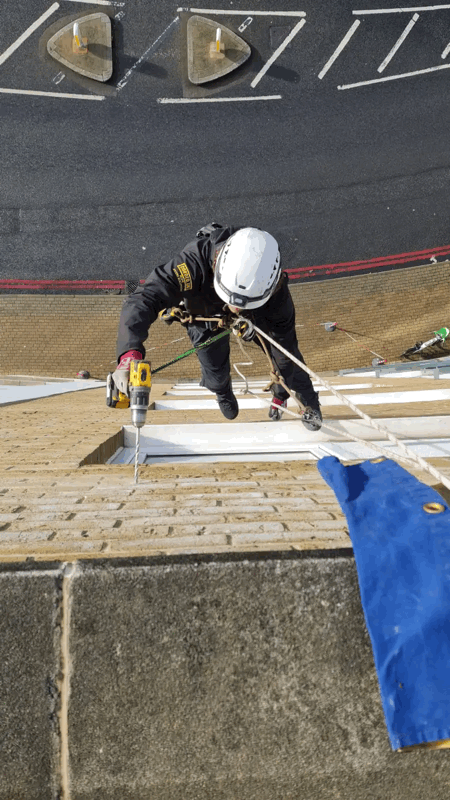
Building owners, Resident Management Companies (RMCs), and Right to Manage (RTM) companies must understand that the urban location of their property influences both the cost and the complexity of cladding projects. Managing a facade replacement in a restricted city-centre site is markedly different from a similar project on a standalone site.
Key considerations for these stakeholders include:
| Factor | Impact on Urban Projects |
|---|---|
| Logistics | Limited space for material storage and welfare facilities. |
| Access | Requirement for complex scaffolding or mast climbers over public paths. |
| Stakeholders | Necessity to coordinate with local authorities and neighbouring owners. |
| Environmental | Stricter controls on noise, dust, and working hours. |
A competent professional assessment will typically highlight these urban-specific challenges early in the feasibility stage to ensure that budgets and timelines reflect the realities of working in a high-density area.
Common Misunderstandings
A frequent misunderstanding is the assumption that "urban" only refers to the centres of major cities like London, Manchester, or Birmingham. In regulatory and technical terms, any area where buildings are clustered sufficiently to impact wind loads, fire separation, or logistical access can be treated as an urban environment. A medium-sized town with a concentration of four-to-six-storey blocks may present many of the same challenges as a metropolitan core.
Another misconception is that the environmental impact on cladding in cities is purely aesthetic. While surface soot is a visible issue, the chemical interaction between urban pollutants and certain sealants or metallic coatings can have structural implications over decades. Finally, it is often wrongly assumed that all buildings in an urban environment face the same risks; in reality, the micro-climate created by surrounding skyscrapers can mean two identical buildings on the same street require different technical specifications for their cladding systems.
Related Terminology
To fully grasp the implications of urban environments in the cladding sector, it is helpful to be familiar with several related terms:
- Spatial Separation: The distance between buildings required to limit the risk of fire spreading from one to another via radiation.
- Building Envelope: The physical separator between the conditioned and unconditioned environment of a building, including the cladding.
- High-Rise Residential Building (HRRB): A specific regulatory category in England for buildings at least 18 metres or seven storeys high.
- Urban Heat Island (UHI): The phenomenon where urban regions experience higher temperatures than surrounding rural areas, affecting material thermal stress.
- Access and Facilities: The provisions required for the Fire and Rescue Service to reach a building and operate effectively, often constrained in dense urban layouts.
Understanding these terms alongside the broader concept of the urban environment allows for a more comprehensive approach to building safety and maintenance in the UK's most densely populated areas.
Urban Environments