
How To Repair Pvc Cladding
Short answer
External wall envelopes utilizing Polyvinyl Chloride (PVC) or Unplasticized Polyvinyl Chloride (uPVC) are common across the United Kingdom's residential and commercial sectors. While these materials are durable, they are susceptible to impact damage, thermal…
Last updated
On this page
How To Repair Pvc Cladding
External wall envelopes utilizing Polyvinyl Chloride (PVC) or Unplasticized Polyvinyl Chloride (uPVC) are common across the United Kingdom's residential and commercial sectors. While these materials are durable, they are susceptible to impact damage, thermal expansion stresses, and environmental degradation over time. Understanding how to repair PVC cladding is essential for building managers to maintain the integrity and aesthetic value of their property without always resorting to costly full-scale replacements.
Repairing these systems requires a distinction between minor cosmetic fixes and structural remediation. In high-rise environments, a simple repair can become a complex logistical operation involving specialist access and compliance with strict fire safety regulations. Whether dealing with a puncture from a stray ladder or cracking due to poor installation, the approach must be systematic to ensure the longevity of the building facade.
Key Takeaways
- Assessment First: Always determine if the damage is localized or symptomatic of a wider systemic failure before attempting a repair.
- Material Compatibility: Use specialized PVC fillers and resins; standard DIY fillers often fail to bond with uPVC or lack the necessary UV stability.
- Safety Compliance: For buildings over 11 meters, any repair must consider the fire rating of the materials used to maintain the building’s safety integrity.
- Thermal Movement: PVC expands and contracts significantly; repairs must allow for this movement to prevent recurrent cracking.
- Professional Verification: Large-scale remediation should always be preceded by professional cladding testing to ensure the substrate and cavity barriers are functional.
What is PVC Cladding Repair?
PVC cladding repair refers to the technical process of restoring the visual and functional integrity of external plastic wall panels. This involves cleaning, filling, sanding, and sometimes over-painting or replacing individual sections that have suffered from holes, cracks, or discoloration. It is a targeted alternative to full recladding, aimed at extending the service life of the existing facade system.
- Localized Patching: Fixing small holes or punctures caused by impact.
- Crack Stabilization: Sealing fractures to prevent water ingress into the building envelope.
- Refurbishment: Restoring the color and finish of weathered panels.
- Component Replacement: Swapping out damaged boards or trim sections without disturbing the entire system.
Can uPVC Cladding Be Repaired?
One of the most frequent questions we receive from facilities managers is: can upvc cladding be repaired? The answer is yes, provided the underlying structure remains sound. uPVC is a resilient thermoplastic, meaning it can be cleaned, filled, and even chemically bonded to new material. However, the success of a repair depends entirely on the extent of the damage and the age of the installation.
If the cladding has become brittle due to decades of UV exposure, it may shatter upon impact rather than denting. In such cases, attempting to fill a hole might lead to further cracking around the repair site. For multi-storey buildings, can upvc wall cladding be repaired often depends on the accessibility and whether the specific profile is still manufactured. If the profile is obsolete, specialist resin-based repairs become the primary solution.
When Repair is Feasible
Repair is generally the preferred route for cosmetic defects or minor accidental damage. If a building has suffered localized impact—perhaps during maintenance work or due to severe weather—a targeted repair is commercially sensible. It avoids the disruption of a full site setup and keeps the building envelope weather-tight in a shorter timeframe.
When Remediation is Required
Remediation goes a step further than simple repair. This is necessary when the cladding is functionally failing—for example, if fixings have corroded or if the panels are warping due to incorrect spacing for thermal expansion. At this stage, CladdingTesting.com would typically recommend a more thorough investigation to see if the internal cavity barriers are still compliant before proceeding with surface-level fixes.
How to Repair a Hole in PVC Cladding
Learning how to repair a hole in pvc cladding requires a different mindset than repairing timber or masonry. Because PVC is non-porous and high-density, the "filler and paint" approach used in internal decorating will not suffice. The repair must be able to withstand the vibrations of the building and the extreme temperature fluctuations of the UK climate.
Step 1: Preparation and Cleaning
The area surrounding the hole must be meticulously cleaned. Any dirt, algae, or oxidation will prevent the repair compound from adhering. Use a specialist PVC cleaner or a mild detergent solution. Avoid solvent-based cleaners that might melt the surrounding plastic unless you are using a solvent-welding technique for the repair itself.
Step 2: Stabilizing the Void
For larger holes, the filler needs a "backstop." If the hole is deep, you may need to insert a small piece of expanded foam or a backing rod into the cavity. This ensures the filler stays in place and creates a solid plug. Ensure the backing material does not obstruct the ventilation cavity behind the cladding, as this is vital for moisture control.
Step 3: Applying the Filler
Apply the chosen repair compound in layers. Most experts will use a two-part polyester filler or a specialized uPVC acrylic resin. Overfill the hole slightly to allow for shrinkage as the product cures. If you are wondering what filler to repair upvc cladding, it is best to choose a product specifically designed for external plastics, often found in automotive or specialist marine repair kits.
Step 4: Finishing and Color Matching
Once cured, the filler must be sanded back using progressively finer grits of wet-and-dry sandpaper. To finish, a uPVC touch-up pen or a specialist spray paint designed for plastics can be used. For commercial buildings, achieving a seamless color match is difficult, so we often recommend painting the entire panel to ensure a uniform appearance.
What Filler to Repair uPVC Cladding?
Selecting the right material is the difference between a permanent fix and a temporary patch that falls out after one winter. When searching what filler to repair upvc cladding forum, you will find various suggestions, but professional-grade solutions are usually restricted to trade suppliers. The goal is to match the expansion coefficient of the PVC as closely as possible.
Two-Part Polyester Fillers
These are common in the industry because they cure quickly and are extremely hard-wearing. They consist of a resin and a hardener. They are excellent for structural filling but can be brittle. In high-traffic areas or on elevations facing high winds, these may eventually crack if the panel flexes too much.
Acrylic Resin Systems
Acrylic-based fillers offer better flexibility. They bond chemically with the uPVC, essentially "welding" the repair to the board. These are often the best choice for hairline cracks or small punctures. They also tend to have better UV resistance, meaning the repair won't turn yellow over time compared to standard fillers.
PVC Solvent Cement
For very small cracks or for bonding a patch of new PVC over an old hole, solvent cement is highly effective. It melts the surface of the plastic, fusing the two pieces together. This is a permanent solution but requires precision, as the solvent can easily damage the surrounding finish if spilled.
Common Causes of PVC Cladding Damage
Identifying the root cause of the damage is critical. If you repair a crack without understanding why it formed, it will likely return. In our experience at CladdingTesting.com, most damage on UK buildings falls into three categories: environmental, mechanical, or installation-based.
- Thermal Stress: uPVC expands approximately 1mm per meter for every 10°C rise in temperature. If the boards are pinned too tightly, they will buckle or crack.
- UV Degradation: Older PVC formulations can become "chalky" and brittle after years of sun exposure, making them susceptible to wind-blown debris damage.
- Impact: Damage from window cleaning cradles, ladders, or even birds is common on high-rise residential blocks.
- Water Ingress: If water freezes behind a panel that is not properly sealed, the expansion of the ice can pop the panels off their fixings.
The Risk of Brittle Failure
In older buildings, particularly those constructed in the 1990s, the PVC may have lost its plasticizers. This makes the material incredibly fragile. When assessing how to repair pvc cladding on an older asset, a "tap test" is often used. If the material sounds hollow or "tinny," it may be too brittle for localized repairs, and a wider remediation strategy may be safer.
How To Repair Pvc Cladding
Logistics of Repairing Cladding on High-Rise Buildings
Repairing a hole in a ground-floor bungalow is a DIY task; repairing a 15th-floor panel on a London apartment block is a major technical undertaking. The complexity arises not from the repair itself, but from the access and safety requirements mandated by UK law, including the Building Safety Act.
Access Solutions
Depending on the building's height and surrounding area, we utilize several methods to reach damaged cladding:
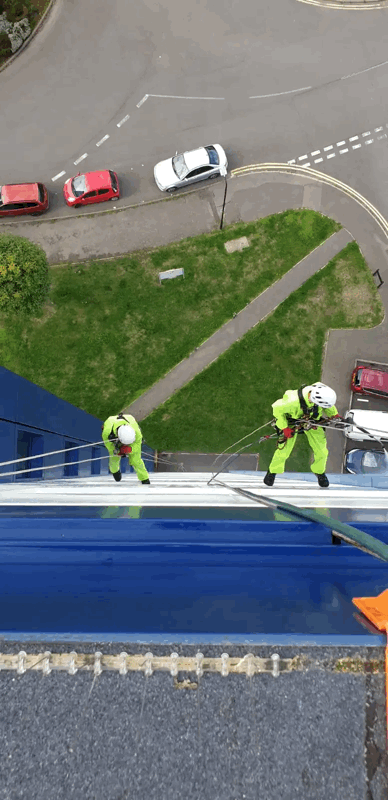
- Rope Access (Abseiling): Often the most cost-effective for localized repairs. Technicians can reach specific panels without the need for extensive scaffolding.
- MEWPs (Cherry Pickers): Ideal for lower-level work where ground conditions allow for heavy machinery.
- Cradle Systems: If the building has a permanent BMU (Building Maintenance Unit), this is used for systematic inspection and repair.
- Fixed Scaffolding: Required for major remediation where multiple panels need replacement or structural work is being carried out.
Resident Disruption and Safety
Working on occupied buildings requires a sensitive approach. Noise, dust, and privacy are significant concerns for residents. At CladdingTesting.com, we prioritize a "phased" approach, ensuring that work is completed elevation by elevation to minimize the time any single resident is affected by access equipment.
Technical Inspection: The First Step in Repair
Before deciding how to repair pvc cladding, a professional inspection is non-negotiable for commercial or multi-occupancy buildings. A visual check from the ground is rarely sufficient to identify the true extent of the problem. What looks like a small crack could be a sign that the entire facade is under excessive tension.
Moisture Probing and Thermography
We use thermal imaging to detect moisture trapped behind the cladding. If water has penetrated the system through a hole or failed joint, it can rot the timber battens or corrode the metal framing used to hold the PVC in place. Repairing the surface without addressing the internal moisture will lead to catastrophic failure of the support system.
Fixing Pull-Out Tests
If panels are becoming detached, we perform pull-out tests on the fixings. This determines whether the original screws or nails have reached the end of their life or if the substrate they are attached to has deteriorated. If the fixings are failing, localized filling of holes is a waste of resources—the entire fixing system needs remediation.
Comparing Repair vs. Replacement
Building owners often struggle to decide between a targeted repair and a full reclad. The decision usually comes down to three factors: cost, compliance, and longevity. While how to repair a hole in pvc cladding is a simple question, the answer to "should I replace the whole wall?" is more complex.
Comparison: Repair vs. Replacement
| Factor | Repair/Remediation | Full Replacement |
| --- | --- | --- | | Cost | Lower initial outlay; targeted spending. | High capital expenditure. | | Disruption | Minimal; often done via rope access. | Significant; full scaffolding required. | | Longevity | Extends life by 5-10 years. | New 25-50 year lifecycle. | | Compliance | Must not degrade existing safety ratings. | Updates building to current standards. |
Advanced Repair Techniques: Resin Injection and Bonding
For high-value assets where aesthetic perfection is required, we use advanced resin injection. This involves drilling tiny holes into the damaged area and injecting a color-matched liquid PVC resin. This resin bonds at a molecular level, often resulting in a repair that is virtually invisible to the naked eye.
This method is particularly useful for repairing cracks near window reveals or architectural features where replacing a full panel would be prohibitively difficult due to the surrounding flashings and seals. It is a highly skilled task that requires specific environmental conditions—namely dry weather and moderate temperatures—to ensure the resin sets correctly.
Fire Safety and PVC Cladding Repairs
In the post-Grenfell landscape of the UK construction industry, any work on an external wall must be scrutinized for fire safety. PVC is naturally fire-retardant to an extent (it is generally Class 1 or Class 0 for surface spread of flame), but it can contribute to a fire if the system is not installed correctly.
Cavity Barriers
When performing a repair to pvc cladding, we ensure that the cavity behind the boards is not compromised. Cavity barriers are designed to close off the air gap in the event of a fire, preventing the chimney effect. If a repair involves removing panels, it is the perfect opportunity to inspect these barriers and ensure they are present and correctly fitted.
Material Selection
The fillers and adhesives used in repairs must be considered in the context of the whole wall assembly. Using large amounts of non-compliant, flammable fillers on a high-rise building could theoretically alter the building's fire risk profile. We always use materials that have been tested and approved for use in external wall systems.
Maintenance Strategies to Avoid Repairs
The best way to handle how to repair pvc cladding is to prevent the damage in the first place. A proactive maintenance schedule can save building owners thousands of pounds in remediation costs. PVC is marketed as "maintenance-free," but in reality, it is "low maintenance."
- Annual Cleaning: Removing atmospheric pollutants and salt (especially in coastal UK cities) prevents the degradation of the plastic's top layer.
- Gutter Inspections: Overflowing gutters often lead to water cascading down the cladding, which can cause staining and increase the risk of water ingress at the joints.
- Fixing Checks: Periodically checking that panels haven't shifted ensures that thermal expansion isn't causing undue stress on the boards.
- Sealant Replacement: The silicone or polymer sealants used around windows and doors typically have a shorter lifespan than the PVC itself and should be replaced every 10-15 years.
Frequently Asked Questions
Can I paint my uPVC cladding after a repair?
Yes, but you must use a specialist "multi-surface" or "plastic-specific" paint. Standard exterior paints will peel off uPVC within months. The surface must be lightly abraded and cleaned with a degreaser before application. Professional spraying is recommended for a factory-like finish.
How much does it cost to repair a hole in PVC cladding?
For a single domestic repair, costs are minimal. However, for a commercial building, the cost is driven by access. A single repair via rope access might cost between £500 and £1,500 including the technician's time, equipment, and materials. This is still significantly cheaper than the £5,000+ required for scaffolding.
What filler to repair uPVC cladding is best for large cracks?
For larger cracks, a two-part polyester filler is best for strength, but it should be used in conjunction with a mesh reinforcement if the crack is structural. For non-structural aesthetic cracks, a flexible acrylic-based PVC filler is superior as it allows for thermal movement.
Is damaged PVC cladding a fire risk?
A small hole in a PVC panel is rarely a significant fire risk on its own. However, if the damage allows sparks or flames to enter the internal cavity of the wall, it becomes a major hazard. Any breach in the building envelope should be repaired promptly to maintain the fire integrity of the facade.
How long do PVC cladding repairs last?
A professionally executed repair using high-quality resins or solvent welding can last as long as the panel itself—often 20 years or more. DIY repairs using standard household fillers usually fail within 12 to 24 months due to UV exposure and thermal expansion.
Can I replace just one board of PVC cladding?
Yes, most PVC cladding systems are designed to be modular. However, because they usually interlock (tongue and groove), you may need to "unzip" the wall from the top down or the bottom up to reach the damaged board. Specialist tools can sometimes allow for a single-board "cut-out" and replacement, but this requires expert handling to ensure the new board is secure.
If you are managing a property portfolio and have identified issues with your external wall systems, do not leave them to chance. Whether you need a simple aesthetic fix or a full technical assessment of your building's envelope, CladdingTesting.com provides the expertise required to navigate the complexities of modern facade management. From initial inspection to final remediation, we ensure your building remains safe, compliant, and visually sound.
How To Repair Pvc Cladding