
cladding movement joint failure
Cladding Movement Joint Failure
Cladding movement joint failure refers to the structural or material breakdown of the designed gaps within a building's external wall system. These joints are engineered to accommodate the natural expansion, contraction, and sway of a structure caused by thermal changes, wind loading, and moisture. When these components fail, the façade loses its ability to manage stress, leading to water ingress, cracked panels, and compromised safety.
On this page
13 min read
Last updated
Cladding Movement Joint Failure
Cladding movement joint failure refers to the structural or material breakdown of the designed gaps within a building's external wall system. These joints are engineered to accommodate the natural expansion, contraction, and sway of a structure caused by thermal changes, wind loading, and moisture. When these components fail, the façade loses its ability to manage stress, leading to water ingress, cracked panels, and compromised safety.
- Movement Joints: Intentional gaps in the cladding to allow for building movement.
- Failure Modes: Cohesive or adhesive failure of sealants, compression of gaskets, or mechanical obstruction.
- Primary Causes: Poor installation, incorrect material specification, or lack of maintenance.
- Consequences: Moisture penetration, accelerated deterioration of the building envelope, and potential risk of falling debris.
Key Takeaways
- Movement is inevitable: All high-rise buildings expand and contract; movement joints are the only way to prevent this energy from damaging the façade.
- Early detection is critical: Small cracks in sealant or compressed gaskets are often the first signs of cladding movement joint failure.
- Water ingress risks: Failed joints are the primary entry point for moisture, which can damage insulation and internal structural elements.
- Specialist assessment: Detailed cladding testing is required to determine if the failure is due to material degradation or a fundamental design flaw.
- Remediation vs. Replacement: Localised repairs are often possible if the failure is identified early, but systemic issues may require wider remediation.
- Safety first: Failed joints in high-rise environments can lead to panel displacement, posing a significant risk to public safety.
Understanding the Role of Movement Joints in Modern Façades
In the context of UK construction, particularly for multi-storey residential and commercial blocks, the external wall is not a static object. It is a dynamic system subject to a range of environmental and physical forces. Cladding movement joints are the critical "breathing spaces" that prevent these forces from tearing the façade apart.
Buildings undergo several types of movement. Thermal expansion occurs as the sun hits the building, causing materials like aluminium or terracotta to expand. Conversely, they contract during cold nights. Furthermore, concrete frames undergo long-term "creep" or shrinkage, and steel frames can sway under wind loads. Without properly functioning movement joints, these forces manifest as stress elsewhere in the system.
Types of Movement Joint Systems
Depending on the building type and the cladding material used, movement joints generally fall into three categories:
- Soft Joints: Typically filled with high-performance silicone or polyurethane sealants backed by a polyethylene foam rod.
- Gasketed Joints: Common in unitised curtain walling, using EPDM or neoprene gaskets to provide a dry, flexible seal.
- Mechanical Joints: Metal profiles or cover plates designed to slide over one another, often seen in large-scale commercial developments.
Why These Joints Fail
Failure rarely happens for a single reason. It is usually a combination of environmental exposure and human error during the design or construction phase. For property managers, understanding the root cause is the first step toward a permanent facade movement joint repair.
1. Incorrect Joint Sizing
If a joint is designed too narrow, it cannot accommodate the necessary expansion. The cladding panels will eventually meet, causing them to crush the sealant or, in worse cases, buckle and crack the panels themselves. This is a common form of cladding expansion joint failure.
2. Poor Material Selection
Not all sealants are created equal. Using a low-modulus sealant where a high-movement material is required leads to premature cracking. In the UK’s varied climate, materials must be able to withstand both UV radiation and significant temperature swings without becoming brittle.
3. Improper Substrate Preparation
For a sealant to work, it must bond to the edges of the cladding panels. If those edges were dusty, wet, or oily during installation, the bond will fail. This is known as adhesive failure, where the sealant pulls away cleanly from the panel edge, leaving a gap for water to enter.
Identifying Cladding Movement Joint Failure
Recognising the signs of failure early can save building owners hundreds of thousands of pounds in remediation costs. A failure that begins as a simple aesthetic issue can quickly escalate into a structural or moisture-related crisis.
Visual Warning Signs
Building owners and managing agents should look for the following during routine inspections:
- Splitting or Tearing: The sealant in the joint appears ripped in the centre (cohesive failure) or pulled away from the side (adhesive failure).
- Cracked Cladding Panels: Especially near the corners or edges where the panel meets the joint. This suggests the joint has "bottomed out" and is transferring stress directly into the material.
- Efflorescence or Staining: White salty deposits or dark streaks running from a joint indicate that water is passing through the seal and washing out minerals from behind the façade.
- Bulging Gaskets: Rubber seals that have popped out of their tracks or appear permanently compressed and deformed.
Internal Indicators
Sometimes the first sign of cladding joint movement issues isn't visible on the outside. Occupants may report damp patches on internal walls, increased draughts, or even whistling sounds during high winds. These symptoms often point to a breach in the external seal that has bypassed the building's secondary drainage and moisture barriers.
The Risk of Water Ingress
The primary function of a movement joint, beyond allowing for flexibility, is to act as a primary weather seal. When a cladding movement joint failure occurs, the building’s "weather line" is compromised. In the UK, where wind-driven rain is a constant factor, even a 2mm gap can allow significant volumes of water into the cavity. Once inside, this moisture can degrade insulation, corrode fixing brackets, and lead to mould growth within the apartment units.
The Technical Assessment Process
At CladdingTesting.com, we do not believe in guesswork. Identifying that a joint has failed is the easy part; understanding why it failed requires a structured technical approach. This is essential to ensure that any facade movement joint repair actually solves the problem rather than just masking it.
Step 1: Visual and Drone Surveys
For high-rise buildings, access is the first challenge. We use high-resolution drone photography to capture detailed images of joints across the entire elevation. This allows us to map out patterns of failure, which often correlate with the building’s orientation (e.g., south-facing elevations experiencing more thermal stress).
Step 2: Intrusive Investigations
Visual inspection only tells half the story. We often perform "sample openings" where small sections of the joint and surrounding cladding are removed. This allows our surveyors to inspect:
1. The depth of the sealant.
2. The presence and condition of the backing rod.
3. The state of the secondary weather seal or fire cavity barrier behind the joint.
Step 3: Movement Monitoring
In cases of significant cladding joint movement, we may install tell-tale gauges or electronic sensors. These devices measure the actual expansion and contraction of the joints over a set period. If the recorded movement exceeds the manufacturer’s specifications for the installed materials, it indicates a fundamental design error.
Step 4: Water Tightness Testing
Using methods such as the CWCT (Centre for Window and Cladding Technology) spray bar test, we can simulate wind-driven rain to verify if the failed joints are indeed allowing water ingress. This provides the empirical evidence needed to justify insurance claims or major remediation budgets.
Remediation and Repair Strategies
Once a cladding movement joint failure is confirmed, the strategy for rectification depends on the scale and cause of the defect. We categorise these into three levels: localised repair, systemic remediation, and full replacement.
Localised Façade Movement Joint Repair
If the failure is limited to a specific area and the underlying design is sound, a localised repair is the most cost-effective route. This involves:
- Total removal of the old sealant and backing material.
- Mechanically cleaning the joint edges to ensure a pristine bonding surface.
- Applying a primer if specified by the material manufacturer.
- Installing a new, correctly sized backing rod to ensure the sealant has the correct "depth-to-width" ratio.
- Applying high-performance silicone or polymer sealants by skilled operatives.
Systemic Remediation
When failures are found across the entire building, a broader remediation programme is required. This often occurs when the original installation was fundamentally flawed—for example, if the wrong sealant was used throughout or if the joints were consistently made too narrow. In these scenarios, we may need to widen the joints using specialised cutting tools before resealing to ensure they can handle the building's natural cladding joint movement.
When Cladding Replacement is Necessary
In extreme cases, a cladding expansion joint failure can lead to damage that cannot be repaired. If the lack of movement has caused extensive cracking in the cladding panels themselves, or if water ingress has led to the corrosion of the primary structural fixings, cladding replacement may be the only safe option. This involves stripping back the affected elevations and installing a new, compliant system with correctly engineered movement joints.
Cladding Movement Joint Failure
Challenges in High-Rise Environments
Repairing or replacing cladding joints on occupied high-rise buildings presents unique logistical challenges. At CladdingTesting.com, our experience allows us to navigate these complexities without compromising safety or resident comfort.
Access Requirements
Traditional scaffolding is often too slow and disruptive for targeted joint repairs. We frequently utilise:
- Mast Climbers: Ideal for vertical joint repairs, providing a stable platform for technicians and materials.
- Cradle Systems: Useful for buildings with existing roof-mounted BMUs (Building Maintenance Units).
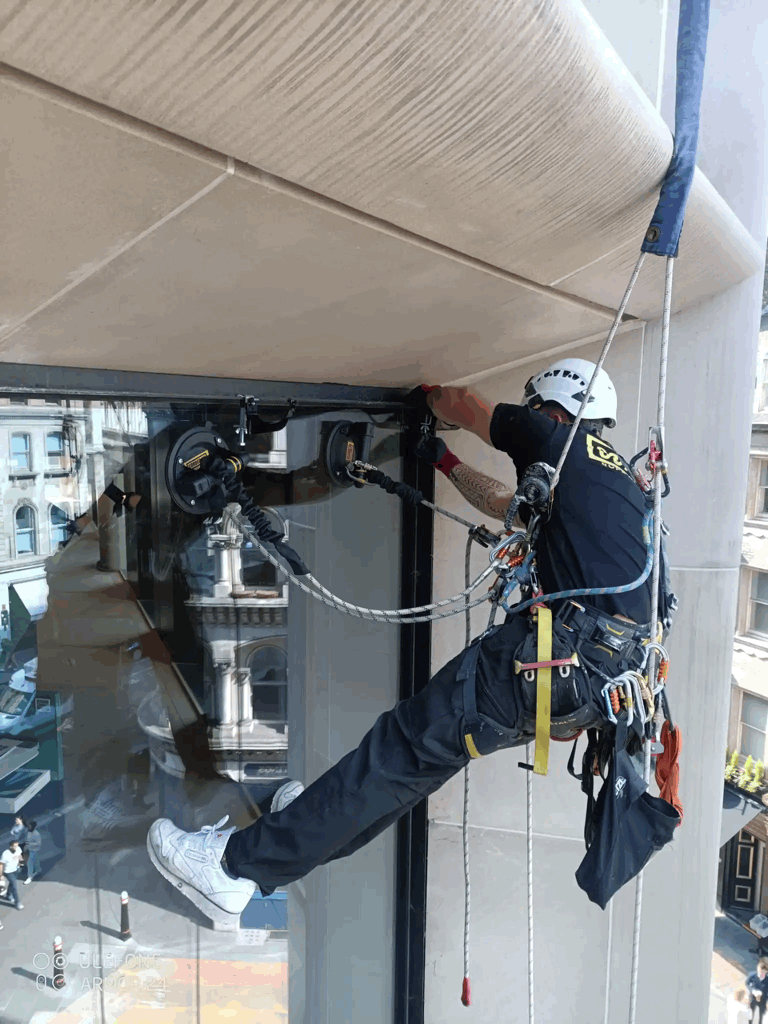
- Rope Access (Industrial Abseiling): Often the most efficient method for minor repairs and inspections, minimising the visual impact on residents.
Managing Resident Disruption
Working on an occupied residential block requires clear communication. Joint repairs, especially those involving the removal of old sealant with mechanical tools, can be noisy. We structure our work programmes to minimise these impacts, working within agreed hours and ensuring that residents are informed of the schedule well in advance.
Interfacing with Fire Safety
It is vital to remember that movement joints often sit directly in front of internal cavity barriers. During any facade movement joint repair, we must ensure that the fire-stopping integrity of the building is maintained. If a joint is widened or modified, the underlying cavity barrier must still function correctly to prevent the spread of smoke and flame in the event of a fire.
The Commercial Reality: Costs and Liabilities
Ignoring cladding movement joint failure is a false economy. The costs associated with water damage, structural deterioration, and the potential loss of building insurance far outweigh the cost of a managed inspection and repair programme.
Insurance and Warranty Claims
For buildings under ten years old, failed joints may be covered by NHBC or similar structural warranties, provided the failure is due to a design or installation defect. Detailed reports from Cladding Testing specialists are often the primary evidence used to successfuly trigger these claims.
Impact on Property Value
In the current UK market, a building with visible façade defects or known water ingress issues is difficult to sell or mortgage. Proactively addressing movement joint issues and having a certified record of the repairs provides confidence to lenders, insurers, and potential buyers.
Regulatory Compliance
Under the Building Safety Act and other recent UK legislation, the "Accountable Person" has a legal duty to ensure the building is safe. While movement joints might seem like a minor detail, their failure can lead to falling debris—a major safety hazard that falls squarely under the remit of building safety regulations.
Preventative Maintenance: Protecting Your Investment
The best way to manage cladding movement joint failure is to prevent it from reaching a critical stage. We recommend a proactive maintenance cycle for all high-rise façades.
Annual Visual Inspections
A simple "walk-around" at ground level with binoculars, combined with resident feedback, can catch 50% of issues. Look for the staining and tearing mentioned earlier.
Five-Year Technical Audits
Every five years, a more detailed survey should be conducted. This involves close-up inspection via drone or access equipment to check the elasticity of the sealants and the security of the gaskets. Sealants typically have a lifespan of 15 to 25 years, but environmental factors can shorten this significantly.
Cleaning and Clearing
Movement joints must remain clear of debris. In some designs, grit or birds' nests can lodge in the joint, effectively "locking" it and preventing movement. Regular cleaning of the façade helps ensure these gaps remain functional.
Comparison of Joint Sealant Materials
When undertaking a facade movement joint repair, selecting the right material is paramount. The table below outlines the common options used in the UK market.
Common Joint Sealant Characteristics
Material Type
Pros
Cons
Silicone (High-Modulus)
Excellent UV resistance, high durability, great for glass/metal.
Can be prone to "dirt pick-up," hard to overpaint.
Polyurethane (PU)
Tough, abrasion-resistant, can be painted.
Lower UV resistance than silicone, can become brittle over time.
Modified Silane (MS) Polymers
Combines the best of silicone and PU, eco-friendly, bonds to damp surfaces.
Generally more expensive than standard options.
Pre-compressed Foam Tapes
Excellent thermal and acoustic insulation, provides a "dry" joint.
Requires very precise joint widths to function correctly.
Why CladdingTesting.com?
Dealing with cladding movement joint failure requires a partner who understands the building as a whole system. We don't just look at the sealant; we look at the structure, the fixings, the insulation, and the fire barriers.
Our team provides a clear, step-by-step route from the initial discovery of a problem to the final sign-off of the repair. We work alongside managing agents and building owners to ensure that work is carried out to the highest technical standards, minimising disruption to residents and protecting the long-term value of the asset.
Our Approach to Major Projects
For major remediation or cladding replacement projects, we act as the technical lead. We manage the logistics of high-rise access, oversee the quality control of the installation, and provide the documentation required for building safety cases. Our focus is always on identifying the underlying defect to ensure the solution is permanent.
Frequently Asked Questions
How long do cladding movement joints usually last?
Most high-quality sealants used in cladding movement joints are designed to last between 15 and 25 years. However, this lifespan can be reduced by extreme weather exposure, poor initial installation, or excessive building movement. If a joint fails within 5 to 10 years, it usually indicates an underlying design or installation error.
Can I just put new sealant over the old failed sealant?
No. This is a common mistake that leads to rapid cladding expansion joint failure. New sealant will not bond properly to old, degraded material. The old sealant must be entirely removed, and the joint edges cleaned back to the original substrate to ensure a proper adhesive bond.
Is a failed movement joint a fire risk?
A failed joint itself is not necessarily a fire risk, but it can compromise the building's fire safety strategy. If the joint failure allows water to degrade the cavity barriers behind the cladding, or if the gap is so large that it allows flames to bypass those barriers, it becomes a serious safety concern. Inspections should always consider the state of the fire-stopping behind the joint.
How do I know if my building's movement is "normal"?
Every building moves, but "normal" movement is that which stays within the design tolerances of the cladding system. If you see cracked panels, falling sealant, or joints that have completely closed up (leaving no gap), the movement is likely exceeding the system’s capacity. Technical monitoring by a specialist is the only way to quantify this.
Will repairing the joints stop all water ingress?
While facade movement joint repair addresses one of the most common entry points for water, it may not be the only one. Water can also enter through failed window seals, roof parapets, or damaged panels. We recommend a full building envelope survey to ensure all potential sources of ingress are identified.
Are these repairs covered by the Building Safety Fund?
The Building Safety Fund and similar UK government schemes are primarily focused on the remediation of unsafe cladding systems (fire safety). However, if movement joint failure is linked to systemic defects in a non-compliant wall system that requires replacement, the costs may be part of a wider successful application. Specialist legal and surveying advice is required here.
What happens if I ignore the failed joints?
Ignoring cladding movement joint failure leads to a "cascade effect." Water ingress will eventually damage the internal structure and finishes, leading to much higher repair costs. Furthermore, the constant stress on the cladding panels can lead to mechanical failure, where panels may become detached and fall, presenting a life-safety risk and significant legal liability.
Does weather affect the timing of repairs?
Yes. Most high-performance sealants require dry conditions and specific temperature ranges for application. Attempting to repair joints in heavy rain or sub-zero temperatures will likely lead to adhesive failure. We plan our remediation programmes around the UK weather to ensure the longevity of the repair.
Cladding Movement Joint Failure