
cladding delamination
Cladding Delamination
Cladding delamination refers to the physical separation of the constituent layers within a composite cladding panel or the detachment of a finish from its substrate. This structural failure occurs when the internal bond or adhesive layer between materials—such as the aluminium skins and the core of an ACM panel—weakens or fails completely.
On this page
12 min read
Last updated
Cladding Delamination
Cladding delamination refers to the physical separation of the constituent layers within a composite cladding panel or the detachment of a finish from its substrate. This structural failure occurs when the internal bond or adhesive layer between materials—such as the aluminium skins and the core of an ACM panel—weakens or fails completely.
- Structural Integrity Risk: Delaminated layers can peel away, potentially falling from the building.
- Water Ingress: Separation allows moisture to penetrate the building envelope, damaging insulation and sub-structures.
- Aesthetic Degradation: Bubbling, blistering, and warping of panels significantly impact the building's appearance.
- Systemic Failure: Localised delamination often signals a wider manufacturing or installation defect that requires professional assessment.
Key Takeaways
- Early Detection is Critical: Visual signs like blistering or "pillowing" often precede total panel failure.
- Root Cause Analysis: Investigations must determine if failure is due to UV degradation, moisture, or manufacturing defects.
- Safety First: High-rise buildings with delaminating cladding panels pose a risk of falling debris, necessitating immediate exclusion zones.
- Repair vs. Replacement: Localised delaminated cladding repair is possible, but systemic failure usually requires full remediation.
- Professional Testing: Specialised cladding testing is required to quantify bond strength and predict future failure rates.
- Regulatory Compliance: All remedial works must align with the Building Safety Act 2022 and current UK Building Regulations.
What is Cladding Delamination?
In the context of modern façades, delamination is a form of material fatigue where the layers of a composite system stop acting as a single unit. Most contemporary high-rise buildings in the UK utilise composite materials, such as Aluminium Composite Material (ACM) or High-Pressure Laminate (HPL). These rely on high-performance adhesives or heat-bonding to stay intact.
When cladding panel delamination occurs, the external skin (often a thin metal sheet or decorative film) pulls away from the core material. This creates a pocket of air or moisture between the layers. Over time, environmental stressors such as thermal expansion and wind loading exacerbate this separation.
The Mechanics of Bond Failure
Façade systems are subjected to extreme temperature fluctuations. On a typical UK south-facing elevation, surface temperatures can fluctuate by 40°C or more in a single day. This causes the various materials in a composite panel to expand and contract at different rates.
If the adhesive layer is insufficient or has been degraded by UV radiation, the internal shear stresses exceed the bond strength. Once the bond is broken, the panel loses its structural rigidity. What was once a stiff, flat component becomes a flexible, weakened sheet prone to further damage.
Facade Delamination in Different Materials
While often associated with ACM, facade delamination can affect various systems:
- ACM/MCM Panels: The aluminium skin detaches from the polyethylene or mineral core.
- HPL Panels: The decorative paper layers or resins separate due to moisture ingress at the edges.
- Rendered Systems: The top-coat render pulls away from the base coat or insulation board.
- Glazed Units: The interlayer in laminated glass fails, causing clouding or structural weakening.
Why Delaminating Cladding Panels Are a Risk
The primary concern with delaminating cladding panels is the risk of falling debris. In high-rise environments, even a small section of a lightweight metal skin can become a dangerous projectile if it detaches during high winds. The aerodynamic properties of a partially detached skin make it unpredictable, often resulting in it being carried significant distances from the building footprint.
Structural Implications
Cladding is designed to distribute wind loads back to the building's primary structure. When a panel delaminates, it can no longer effectively manage these loads. This puts undue stress on the mechanical fixings—screws, rivets, or rails—that hold the panel in place. If a fixing was designed to hold a rigid composite, it may pull through a flexible, delaminated skin.
Moisture and "Pumping" Action
Once a skin has separated, it creates a void. As the wind blows across the building face, a pressure differential is created that can "suck" and "push" the delaminated skin. This "pumping" action draws rainwater into the heart of the cladding system. This moisture then attacks the secondary steelwork, insulation, and cavity barriers, leading to hidden rot or corrosion that may not be visible from the ground.
Common Causes of Cladding Panel Delamination
Understanding why a system is failing is the first step toward a solution. Cladding panel delamination is rarely caused by a single factor; it is usually a combination of environmental exposure and inherent material or installation weaknesses.
1. Manufacturing Defects
In some cases, the bond failure begins at the factory. If the core material was contaminated during production, or if the adhesive was applied at the wrong temperature, the panel may look perfect upon installation but fail prematurely. We often see batches of panels failing on a specific elevation, suggesting a consistency issue during the manufacturing process.
2. Edge Protection Failure
Many composite panels are sensitive to moisture at their cut edges. If the panels were not correctly capped, folded, or sealed during installation, water can wick into the adhesive layer. In the UK climate, this moisture often undergoes freeze-thaw cycles. As the water turns to ice, it expands, physically prying the layers of the panel apart.
3. UV Degradation
Ultra-violet light can penetrate thin coatings or attack the edges of a panel, breaking down the chemical bonds of the polymers used in adhesives. This is why facade delamination is frequently more prevalent on south and west-facing elevations which receive the highest levels of direct sunlight.
4. Thermal Stress and Expansion
Dark-coloured cladding panels absorb more heat, leading to greater thermal movement. If the fixing system does not allow for this movement (over-tightened rivets, for example), the panel is forced to bow. This internal tension puts immense pressure on the bond between the skin and the core.
Identifying the Signs of Delamination
Building managers should be vigilant for subtle changes in the building's exterior. Early identification can often mean the difference between a delaminated cladding repair project and a total building reclad.
Visual Indicators
- Pillowing: The panel face appears to "bulge" outwards, losing its flat, crisp profile.
- Blistering: Small bubbles appear under the surface, often indicating localized bond failure.
- Discolouration: Darker patches may indicate where moisture is trapped between layers.
- Creasing: Fine lines or creases in the metal skin where it has folded due to lack of support from the core.
- Rattling: During high winds, delaminated skins may vibrate or "clatter" against the core, creating audible noise for residents.
Physical Inspection Techniques
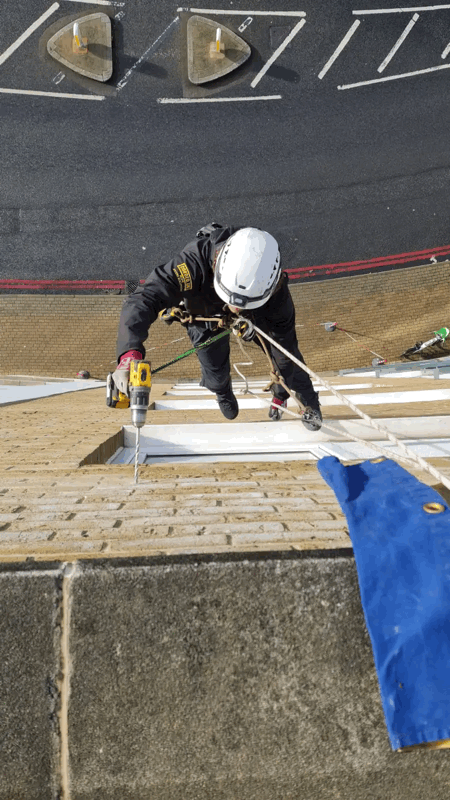
Because delamination can be hard to spot from the ground, professional cladding testing involves close-quarter inspection. Using mobile elevating work platforms (MEWPs) or industrial rope access, technicians can perform "tap tests." A hollow sound when tapping the panel surface is a definitive indicator of an internal void where the layers have separated.
The Investigation Process
At CladdingTesting.com, we follow a systematic approach to investigating cladding delamination. We do not believe in guesswork; we rely on empirical evidence to guide our recommendations.
Phase 1: Desk Study and History
We begin by reviewing the "as-built" information. Identifying the specific manufacturer, batch numbers, and installation dates helps us determine if there are known industry alerts for those materials. We also look at the building's maintenance history to see if previous repairs have been attempted.
Phase 2: Visual and Drone Surveys
High-resolution drone surveys allow us to inspect every square inch of the façade without the immediate cost of heavy access equipment. Drones can capture "oblique" angles that reveal the slight warping or pillowing characteristic of delaminating cladding panels. This helps us map the extent of the problem across the entire building envelope.
Phase 3: Intrusive Testing
To confirm our findings, we take physical samples. This involves removing a small number of affected and seemingly unaffected panels for laboratory analysis. We test the "peel strength" of the adhesive bond. If the bond strength is significantly lower than the manufacturer's original specification, it indicates a systemic failure rather than an isolated incident.
Cladding Delamination
Options for Delaminated Cladding Repair
Once the extent of the damage is known, we categorise the building's needs. We always aim for the most cost-effective solution that does not compromise safety or long-term performance.
Localised Panel Replacement
If the delamination is limited to a specific area—perhaps due to a localised heat source or a mechanical impact—we can perform a targeted delaminated cladding repair. This involves sourcing matching panels (ensuring they meet current fire safety standards) and replacing only the defective units. This is often the preferred route for minor aesthetic issues on lower-level commercial buildings.
Fixing Reinforcement
In some cases where the skin is delaminating but the panel is structurally sound in other respects, additional mechanical fixings can be used to "pin" the layers back together. However, this is often a temporary measure and must be approved by a structural engineer, as it can create new points for moisture ingress.
Edge Sealing and Remediation
If the delamination is in its very early stages and is caused by moisture ingress at the edges, we can sometimes halt the progress. By cleaning the joints and applying high-specification polymeric sealants or bespoke aluminium flashings, we can protect the core from further environmental attack.
When Full Remediation or Replacement is Required
There are scenarios where cladding panel delamination is so widespread that repair is no longer viable. If the core material itself is degrading—common in older ACM or low-quality HPL—the panels will continue to fail regardless of how many individual units are replaced.
Determining the Threshold for Replacement
We typically recommend full replacement if:
- More than 15-20% of the panels show visible signs of failure.
- Laboratory testing shows a building-wide decline in bond strength.
- The existing cladding does not meet current fire safety regulations (e.g., combustible cores).
- The cost of ongoing inspections and piecemeal repairs exceeds the cost of a planned recladding programme.
The Recladding Process
Recladding a high-rise building is a complex logistical exercise. It involves stripping the existing façade back to the building's frame or substrate. During this process, we take the opportunity to:
- Replace non-compliant insulation with non-combustible mineral wool.
- Install new, correctly positioned cavity barriers to prevent the spread of fire.
- Improve the building's thermal performance and airtightness.
- Upgrade the aesthetic of the building with modern, durable finishes.
Working on Occupied High-Rise Buildings
A significant portion of our work involves residential tower blocks and occupied commercial spaces. We understand that a major facade delamination project is disruptive to residents and tenants. Our project methodology is designed to mitigate this.
Logistics and Access
We utilise a range of access solutions, from mast climbers to traditional scaffolding, depending on the building's height and footprint. For many projects, industrial rope access (abseiling) is the most efficient method for initial delaminated cladding repair and inspection, as it requires no ground-level footprint and minimal setup time.
Resident Communication
We work closely with managing agents to ensure residents are kept informed. This includes providing clear timelines for when work will be happening outside their windows and ensuring that privacy and noise concerns are managed through strict working hours and screened access equipment.
Safety and Fire Risks During Works
Removing cladding can temporarily expose a building's inner layers. We implement strict fire safety protocols during the "open" phase of remediation. This includes enhanced fire watch procedures and ensuring that no combustible materials are left exposed overnight. Our goal is to resolve the cladding delamination issue while maintaining the safety of the building's inhabitants at every stage.
The Impact of the Building Safety Act 2022
For building owners in the UK, the legislative landscape regarding façades has changed dramatically. The Building Safety Act 2022 places greater responsibility on the "Accountable Person" to ensure the external wall system is safe. Cladding panel delamination is no longer just a maintenance issue; it is a safety and compliance matter.
Failure to address delaminating cladding panels can lead to:
- Difficulties in obtaining building insurance or high premiums.
- Refusal of mortgages for individual flat owners (EWS1 issues).
- Enforcement notices from local authorities or the Fire and Rescue Service.
- Potential legal liability if a delaminated panel causes injury or property damage.
Why Choose CladdingTesting.com?
When you discover signs of facade delamination, you need a partner who understands the technical nuances of the problem. We provide a bridge between the initial discovery of a defect and the final, certified resolution. Our approach is defined by:
- Objectivity: We are not tied to a single manufacturer or material. Our recommendations are based purely on what is best for your building.
- Technical Depth: We don't just look at the surface. We investigate the fixings, the cavity, and the sub-frame to ensure any repair addresses the root cause.
- End-to-End Service: From the first drone flight to the final rivet of a new system, we manage the entire process.
- Regulatory Expertise: We ensure all works are fully compliant with the latest UK building codes and safety standards.
Frequently Asked Questions
Is cladding delamination always a fire risk?
Not directly, but they are often linked. While delamination itself is a structural failure, it frequently occurs in older ACM panels that contain combustible polyethylene cores. Furthermore, delamination can allow fire to enter the cavity more easily by creating gaps in the external protective skin. If your building has delaminating cladding panels, a full fire safety assessment is usually recommended.
How much does it cost to repair delaminated cladding?
The cost varies significantly based on the height of the building and the access requirements. A localised delaminated cladding repair using rope access might cost a few thousand pounds. However, if the issue is systemic and requires a full reclad of a high-rise building, costs can run into the millions. We provide detailed feasibility studies to help building owners understand these costs early in the process.
Can I just glue the panels back together?
We strongly advise against "on-site" gluing of delaminated panels. The bond created in a factory environment using heat and high-pressure rollers cannot be replicated on the side of a building. Attempting to glue panels often fails within months due to thermal movement and can actually trap moisture, accelerating the degradation of the core.
Will my insurance cover delamination?
This depends on the cause. If the delamination is due to a specific insured event, like a storm or fire, it may be covered. However, most cladding panel delamination is considered "wear and tear" or a "latent defect," which insurance policies typically exclude. We can assist in providing the technical reports needed if you are pursuing a claim against the original developer or contractor.
How long does a cladding inspection take?
A preliminary visual survey using drones can often be completed in a single day. A more detailed intrusive inspection, involving sample removal and cladding testing, usually takes 3 to 5 days on-site, followed by laboratory analysis. We aim to provide a full report within two weeks of completing the site works.
What is the difference between delamination and fading?
Fading is a purely cosmetic issue where the pigment in the paint or coating breaks down due to sunlight. Facade delamination is a structural issue where the physical layers of the panel are separating. While fading might be unsightly, delamination is a safety concern that requires much more urgent attention.
If you are responsible for a building and have noticed signs of cladding delamination, or if you require a professional assessment of your external wall system, contact CladdingTesting.com today. Our team of specialists is ready to help you navigate the complexities of façade maintenance, repair, and remediation.
Cladding Delamination