
cladding staining
Cladding Staining
Exterior cladding staining refers to the visible accumulation of organic growth, atmospheric pollutants, or chemical leaching on a building's external wall system. This phenomenon manifests as streaks, patches, or uniform darkening that alters the intended aesthetic and, in some cases, indicates underlying moisture issues or material degradation.
On this page
12 min read
Last updated
Cladding Staining
Exterior cladding staining refers to the visible accumulation of organic growth, atmospheric pollutants, or chemical leaching on a building's external wall system. This phenomenon manifests as streaks, patches, or uniform darkening that alters the intended aesthetic and, in some cases, indicates underlying moisture issues or material degradation.
For building owners and managing agents, identifying the root cause of cladding discolouration is essential for maintaining asset value and ensuring the long-term performance of the façade. Left unaddressed, surface staining can mask structural defects or lead to the permanent etching of high-value cladding panels.
- Atmospheric Soiling: Accumulation of soot and traffic-related pollutants.
- Biologic Growth: Algae, lichen, and fungi thriving in damp conditions.
- Oxidation: Metallic corrosion or "chalking" of powder-coated finishes.
- Leaching: Run-off from lime, mortar, or sealants causing white streaks.
- Water Ingress: Staining that signals internal moisture within the wall cavity.
Key Takeaways
- Staining is often a symptom: While often aesthetic, discolouration can signal failed flashings, poor drainage, or water ingress.
- Material matters: ACP, stone, and render each react differently to pollutants and require specific remediation approaches.
- Early intervention saves costs: Removing atmospheric pollutants early prevents permanent cladding colour fading or surface etching.
- Professional testing is vital: Identifying whether a stain is organic, chemical, or metallic ensures the correct cleaning or repair method is used.
- Compliance and Safety: Any investigation into cladding condition should consider the integrity of the entire external wall system, especially on high-rise buildings.
Understanding the Causes of Cladding Staining
In the UK’s damp and temperate climate, facades are subjected to a constant cycle of moisture and airborne particulates. Cladding panel staining rarely occurs without a specific catalyst, and understanding these drivers is the first step toward effective remediation.
Atmospheric and Environmental Pollutants
Buildings located in dense urban environments or near major transport hubs are particularly susceptible to particulate matter. Carbon emissions from vehicles and industrial processes settle on horizontal surfaces, such as window sills and copings. When it rains, these concentrated pollutants wash down the façade, creating vertical "tear-drop" staining patterns.
Over time, these deposits can become chemically bonded to the surface. If the cladding has a porous finish, such as certain types of natural stone or high-pressure laminates (HPL), the pollutants can migrate into the substrate, making simple pressure washing ineffective.
Biologic Growth and Organic Staining
Green, red, or black staining is frequently the result of algae, fungi, or lichen. These organisms thrive on north-facing elevations or areas shaded by neighbouring structures where moisture lingers. The presence of organic growth often indicates that the façade is not drying out efficiently, potentially due to poor ventilation within the cavity.
Biological staining is not merely an aesthetic concern. Some lichen species produce acids that can micro-pit the surface of the cladding, leading to permanent damage. A thorough cladding testing regime can determine if the growth is superficial or if it has begun to compromise the panel's integrity.
Chemical Leaching and Efflorescence
White, powdery deposits on cladding—often referred to as efflorescence—are caused by salts leaching out of cementitious materials. This typically occurs when water penetrates the masonry or backing structure, dissolves internal salts, and carries them to the surface where the water evaporates, leaving the salt behind.
Similarly, "silicone shadowing" or sealant leaching occurs when plasticisers from low-quality sealants migrate into the edges of cladding panels. This creates a permanent oily stain that attracts dust and dirt, resulting in dark borders around panel joints that are notoriously difficult to remove.
The Impact of Cladding Discolouration on Building Assets
Beyond the immediate visual impact, cladding discolouration serves as a critical indicator of the building’s health. Managing agents must view staining as a data point in their ongoing facilities management strategy.
Market Perception and Property Value
For residential high-rise buildings, the exterior appearance directly correlates with market value and resident satisfaction. Persistent staining can give the impression of a poorly maintained or "distressed" asset. In commercial sectors, a stained façade can negatively impact a brand's corporate image, potentially affecting occupancy rates and rental yields.
Masking Underlying Defects
One of the primary risks of significant staining is that it can hide more serious issues. For example, heavy organic growth or thick soot deposits may obscure hairline cracks in cladding panels, failed fixings, or deteriorating joints. A clean façade allows for a much more accurate visual survey during mandatory safety inspections.
Potential for Irreversible Damage
If pollutants are left on a façade for extended periods, they can lead to cladding colour fading. UV radiation combined with chemical pollutants can cause a breakdown in the pigments of powder-coated aluminium or the resins in composite panels. Once the finish has "chalked" or faded significantly, cleaning is no longer an option, and costly recoating or replacement becomes necessary.
Investigating Cladding Staining: A Systematic Approach
At CladdingTesting.com, we advocate for a structured investigation before any cleaning or remediation work begins. Hasty cleaning without understanding the cause of the stain can often lead to further damage or the rapid return of the discolouration.
Visual Survey and Mapping
The first step is a comprehensive visual inspection, often utilizing drones or mast climbers for high-rise structures. We map the staining patterns to identify "hot spots." For instance, if staining is concentrated around specific windows, the issue likely lies with the flashings or weather-bars rather than the cladding material itself.
Surface Sampling and Laboratory Analysis
To determine the most effective treatment, we may take swabs or small scrapings of the staining material. Laboratory analysis can distinguish between different types of algae or identify specific chemical pollutants. This ensures that the biocides or cleaning agents used are targeted and will not react negatively with the cladding substrate.
Moisture Probing and Cavity Inspection
If cladding panel staining appears to be coming from behind the panels, we perform a cavity inspection. Using borescopes, we check for water ponding, damp insulation, or blocked weep holes. Staining that originates from within the wall system is a red flag for potential systemic failure and requires immediate technical attention.
Remediation Strategies: Repair vs. Replacement
Once the cause of the staining is identified, a decision must be made regarding the most appropriate course of action. This decision is based on the severity of the damage, the age of the system, and the building's long-term lifecycle plan.
Professional Cleaning and Biocidal Treatments
For superficial cladding staining, a professional cleaning programme is often sufficient. This is not a standard "jet wash." Depending on the material, we may use:
- Steam cleaning (DOFF system): Uses high temperature and low pressure to remove organic matter and paint without damaging the substrate.
- Chemical cleaning: Targeted surfactants designed to break down carbon deposits or metallic oxides.
- Biocidal washes: Treatments that kill spores deep within the material to prevent the rapid regrowth of algae.
Localised Panel Repair and Recoating
If the staining has led to cladding colour fading or surface etching, cleaning may not restore the appearance. In these cases, localised remediation might involve:
- On-site spraying: High-quality architectural coatings can be applied to restored panels to match the original RAL colour.
- Selective replacement: If only a few panels are severely stained (e.g., due to a localized leak), it is more cost-effective to replace those specific units rather than the entire façade.
Full Recladding and System Remediation
In cases where staining is a symptom of a fundamentally flawed external wall system—such as non-compliant combustible cores or systemic water ingress—full replacement may be the only viable solution. This is particularly relevant for high-rise buildings where fire safety and structural integrity are paramount. We support building owners through the entire process of remediation, from initial testing to the installation of compliant, modern systems.
The Challenges of Working on Occupied High-Rise Buildings
Remediating cladding staining on tall buildings presents unique logistical challenges. Unlike a new-build site, working on an occupied residential block requires a higher level of sensitivity and planning.
Access and Logistics
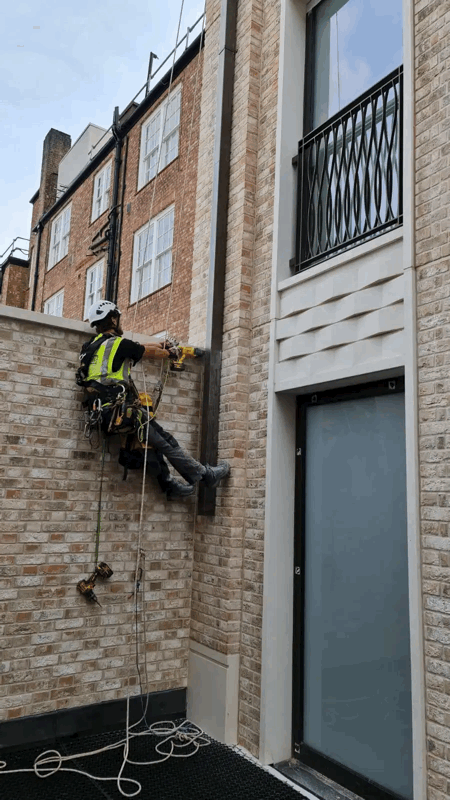
Gaining access to the entire façade of a high-rise requires specialized equipment. Whether using cradles, mast climbing work platforms (MCWPs), or industrial rope access, the choice depends on the building's height, footprint, and the nature of the work. We ensure that all access methods are safe for both workers and the public below.
Minimising Resident Disruption
Cleaning and repair works can be noisy and intrusive. We structure our programmes to minimise the time equipment spends in front of residents' windows. Effective communication with managing agents and residents is vital to ensure that everyone is aware of the schedule and any necessary precautions, such as keeping windows closed during steam cleaning.
Environmental Considerations
When cleaning large-scale facades, the run-off must be managed correctly. We employ water recovery systems and ensure that any chemicals used are compliant with UK environmental regulations, preventing hazardous substances from entering the local drainage system.
Cladding Staining
Preventing Future Cladding Staining
Once a façade has been restored, a proactive maintenance plan is essential to prevent the recurrence of cladding discolouration. Maintenance is not just about aesthetics; it is a requirement for many manufacturer warranties and insurance policies.
Design and Detailing Improvements
Sometimes, staining is caused by poor design details. During the remediation phase, we look for opportunities to improve the building's "weathering" ability. This might include:
- Installing better-designed drip edges on copings and sills to direct water away from the façade.
- Improving cavity ventilation to ensure the cladding dries out more quickly after rain.
- Replacing failing sealants with high-grade, non-staining alternatives.
Scheduled Maintenance Cycles
We recommend a scheduled cleaning and inspection cycle, typically every 2 to 5 years depending on the environment. Regular "soft washing" prevents the build-up of the aggressive pollutants that lead to cladding colour fading and permanent surface damage.
Technical Comparison: Staining by Material Type
Different cladding materials exhibit unique staining characteristics and require specific responses. The following table outlines common observations:
Material
Common Staining Type
Recommended Action
Aluminium Composite (ACM)
Atmospheric soot, chalking, joint leaching.
Neutral pH cleaning, potential recoating if faded.
Natural Stone / GRC
Efflorescence, organic growth, deep soot ingress.
Steam cleaning (DOFF), biocidal treatment, salt neutralisation.
High-Pressure Laminate (HPL)
UV fading, algae in shaded areas.
Specialised non-abrasive cleaning, UV-stable coatings.
Render Systems
Red/Green algae, cracking-related staining.
Biocidal wash, localised patch repairs, through-colour re-rendering.
Managing the Risks of DIY and Unqualified Cleaning
One of the greatest risks to a building's exterior is the use of incorrect cleaning methods. Many general cleaning contractors lack the technical understanding of complex external wall systems, which can lead to disastrous results.
Using high-pressure jet washes on modern rainscreen cladding can force water behind the panels, saturating the insulation and creating a fire risk if the cavity barriers are bypassed or damaged. Furthermore, aggressive chemicals can strip the protective lacquer from aluminium panels, accelerating cladding colour fading and leaving the metal vulnerable to corrosion.
Professional cladding testing and specialist remediation ensure that the methods used are compatible with the specific building system, protecting both the warranty and the structural integrity of the envelope.
The Legal and Compliance Landscape
In the UK, the focus on building safety—particularly following the Building Safety Act—means that the condition of the external wall is under more scrutiny than ever before. Staining that indicates moisture trapped in the cavity can be flagged during an EWS1 assessment or a Fire Risk Appraisal of External Walls (FRAEW).
Managing agents have a duty to ensure that the building envelope is performing as intended. If cladding staining is found to be a result of water ingress that could compromise fire-stopping or structural fixings, it must be addressed as a matter of priority. Ignoring these signs can lead to complications during property transactions or insurance renewals.
Advanced Insights: The Chemistry of Facade Degradation
For those managing large portfolios, understanding the chemistry behind cladding panel staining can help in predicting future maintenance costs. For example, "carbonation" in concrete-based cladding can lead to the rusting of internal reinforcement, which eventually manifests as orange/brown rust streaks on the surface.
Similarly, the "photodegradation" of polymers in certain cladding finishes is an irreversible process. Once the molecular bonds in the coating are broken by UV light, the surface becomes porous and starts to "hold" dirt. This is why a building that was easy to clean in its first ten years may suddenly seem to stay dirty regardless of how often it is washed.
Frequently Asked Questions
Is cladding staining always a sign of a structural problem?
No, many instances of cladding staining are purely aesthetic, caused by atmospheric soot or surface algae. However, because staining can also be caused by internal leaks or failing components, it should always be professionally investigated to rule out underlying defects.
Can all types of cladding discolouration be cleaned?
Most organic and atmospheric stains can be cleaned using the correct techniques. However, cladding colour fading due to UV damage or chemical etching usually requires the panels to be professionally recoated or replaced, as the pigment itself has been altered.
How much does it cost to remediate cladding panel staining?
Costs vary significantly based on the building height, the access required, and the severity of the staining. A simple biocidal wash for a low-rise block is relatively inexpensive, whereas a full steam-cleaning programme for a high-rise requiring mast climbers involves higher logistical costs. We provide detailed quotes following an initial site survey.
Will cleaning my cladding affect the manufacturer's warranty?
If done correctly using approved methods, cleaning actually helps maintain the warranty by preventing the build-up of corrosive pollutants. However, using unapproved chemicals or high-pressure water can void warranties. Always ensure your contractor uses methods compliant with the cladding manufacturer’s guidelines.
How often should high-rise cladding be inspected for staining and damage?
We recommend a professional visual inspection every year and a more detailed technical survey every 3 to 5 years. Regular inspections allow you to catch cladding discolouration early, before it becomes a more expensive remediation project.
Does red algae staining mean my building has a damp problem?
Red algae (often *Trentepohlia*) thrives in high-humidity environments. While its presence doesn't always mean there is a leak, it does mean the surface is staying wet for long periods. This could be due to the local microclimate or a sign that the façade drainage is not working as intended.
What is the difference between staining and efflorescence?
Staining is typically an external deposit (dirt, algae). Efflorescence is a white, salty crust that migrates from *inside* the building materials (like brick or concrete) to the surface. Efflorescence usually indicates that water is getting into the structure itself, which requires a different remediation approach than simple surface cleaning.
Can I just paint over stained cladding?
Painting over cladding without addressing the cause of the staining is generally not recommended. If the stain is caused by moisture or algae, the paint will likely peel or blister within a short time. Furthermore, any coating applied must be fire-rated and compatible with the original material to maintain building safety compliance.
Identifying and resolving cladding staining requires a balance of aesthetic restoration and technical investigation. By treating discolouration as a potential indicator of building health rather than just a cosmetic flaw, property professionals can ensure their buildings remain safe, compliant, and visually appealing for the long term. If you are concerned about the appearance or performance of your building's façade, CladdingTesting.com provides the expertise needed to diagnose the issue and deliver a practical, effective solution.
Cladding Staining