
Glossary · Single word
Removal
In short
the action of taking something away from its current position
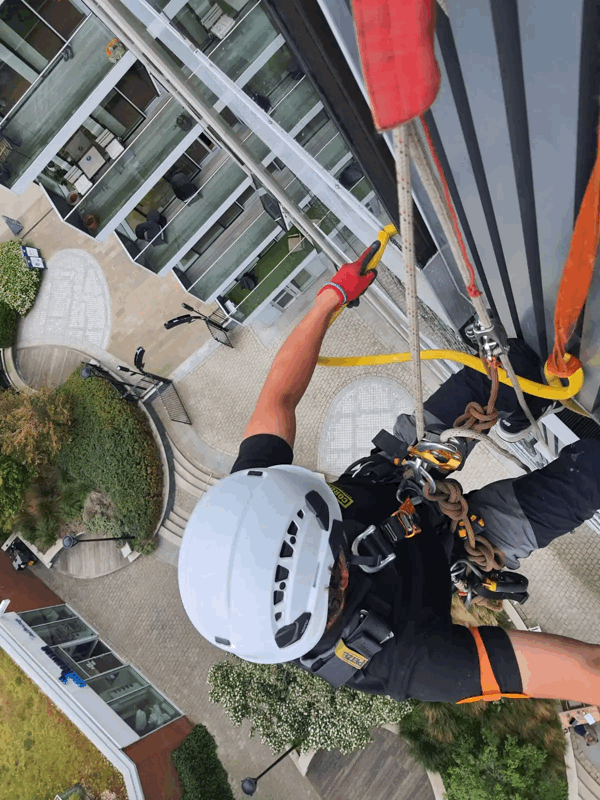
Removal is the technical process of taking away components from a building’s external wall system. It is a critical phase in cladding investigation and remediation, requiring careful management of structural integrity, weatherproofing, and regulatory compliance in the UK.
Last updated
On this page
Removal
Definition and Scope of Removal
In the context of the United Kingdom’s external wall industry, the term ‘removal’ refers to the action of taking something away from its current position. Within the specialised field of building envelopes, this encompasses the physical detachment and extraction of components such as outer rainscreen panels, insulation materials, cavity barriers, sub-frame rails, and various ancillary fixings from the structural substrate of a building.
The process is a fundamental phase in the lifecycle of building remediation and maintenance. It is distinct from demolition, as it typically involves the systematic stripping of the external wall system (EWS) while preserving the integrity of the underlying structure. Removal may be localized, involving the extraction of specific samples for laboratory analysis, or wholesale, involving the total clearance of the facade to facilitate a complete system replacement.
Removal in the Context of Testing and Investigation
The initial application of removal often occurs during the investigative stage of building assessment. To understand the composition of an existing wall system, competent professionals frequently require ‘intrusive’ inspections. This involves the removal of a small, representative portion of the cladding to view the build-up of the internal cavities.
During this phase, removal must be handled with precision to ensure that the samples extracted are representative of the wider elevation. It is standard practice for these samples to be documented in their original state before being detached. Once removed, components may be sent to accredited laboratories to undergo physical testing or chemical analysis to determine their material properties. In these instances, the term refers to a diagnostic necessity, providing the evidentiary basis for subsequent technical reports and risk assessments.
Relation to Building Fabric and External Wall Systems
Removal directly impacts the performance of the building fabric. The external wall system is a complex assembly designed to manage thermal performance, moisture ingress, and fire spread. When a component is removed, the continuity of these protections is temporarily or permanently altered.
For instance, the removal of rainscreen panels exposes the secondary line of defence—typically the insulation and breather membrane—to ultraviolet light and direct precipitation. If insulation is removed, the thermal envelope is breached, potentially leading to localized cold bridging and condensation issues within the internal living spaces. Consequently, when removal is undertaken as part of a remediation programme, it necessitates careful consideration of temporary weatherproofing and the structural stability of the remaining components. The weight distribution of the facade may also shift as large-scale removal progresses, requiring structural engineers to monitor the building’s response to the reduced dead load.
Regulatory and Process Context in England and Wales
The regulatory framework in England and Wales, governed primarily by the Building Regulations and the Building Safety Act 2022, places significant emphasis on the processes surrounding the removal of cladding. For buildings over a certain height or those defined as 'higher-risk', removal activities often trigger specific statutory requirements.
Before large-scale removal begins, it is common practice to submit a Building Control application. Authorities typically require detailed plans outlining how the removal will be managed to ensure the safety of both the building occupants and the public. This includes the management of the 'golden thread' of information, where the removal of old materials must be as meticulously documented as the installation of new ones.
Furthermore, the waste generated from removal must be handled according to environmental regulations. Many cladding components, particularly those containing certain polymers or treated minerals, require classification as specific waste streams. The process of removal, therefore, extends beyond the physical site to include the legal chain of custody for the discarded materials.
Removal
Technical Considerations for Building Owners and Managers
Building owners, managing agents, and Resident Management Company (RMC) directors must understand that removal is rarely an isolated event. It is the precursor to either repair or replacement and involves significant logistical planning. The technical implications of removal include the potential for 'latent discoveries'; once the outer layers are removed, the condition of the underlying substrate or the original workmanship may reveal issues that were not visible during non-intrusive surveys.
Financial and insurance considerations also intersect with the removal process. Professional indemnity insurance for the parties involved often hinges on the methodology used for removal, particularly regarding the protection of the building while it is in a stripped or 'exposed' state. Managing agents must also consider the impact on residents, as removal frequently involves the erection of scaffolding or the use of mast climbers, which can affect the amenity and privacy of the building’s occupants for the duration of the works.
Common Misunderstandings
A frequent misunderstanding is the assumption that removal is synonymous with replacement. In many technical scenarios, removal is a temporary measure used to facilitate the repair of underlying components, after which the original panels may be reinstated. Conversely, some assume that removal only applies to the visible outer panels, whereas a comprehensive removal process often includes the deeper layers of insulation and cavity barriers that are integral to the system’s performance.
Another misconception relates to the speed of the process. Removal is often perceived as a rapid 'demolition-style' activity. In practice, technical removal is a methodical deconstruction. Panels must often be removed in a specific sequence to maintain the structural equilibrium of the rail system and to ensure that fixings are not damaged, especially if they are to be reused or if the substrate requires specific protection.
Closely Related Terminology
To understand removal fully, it should be distinguished from several related industry terms:
| Term | Distinction from Removal |
|---|---|
| Remediation | The holistic process of correcting defects; removal is one phase within this. |
| Stripping | Often used interchangeably with removal, but typically implies the total clearance of a facade. |
| Reinstatement | The act of putting back the same or similar components after they have been removed. |
| Substitution | The specific act of replacing one material with another; removal is the prerequisite. |
| Decommissioning | Generally refers to taking a system out of service, which may involve removal. |
In summary, removal is a precise technical operation within the UK cladding industry. Whether conducted for the purposes of sampling, investigative surveying, or as the initial stage of a large-scale remediation project, it requires a structured approach that accounts for structural integrity, regulatory compliance, and the ongoing protection of the building fabric.
Removal