
metal cladding remediation
Metal Cladding Remediation
Metal cladding remediation refers to the professional process of identifying, investigating, and resolving defects within metal-based building envelope systems. It encompasses a range of actions from localised repairs and component replacement to full-system overhauls. This process ensures the structure remains weather-tight, aesthetically sound, and fully compliant with current UK fire safety and building regulations.
Independent
UK-wide coverage
Survey options
Clear reporting
On this page
Book a metal cladding remediation survey
Metal cladding remediation refers to the professional process of identifying, investigating, and resolving defects within metal-based building envelope systems. It encompasses a range of actions from localised repairs and component replacement to full-system overhauls. This process ensures the structure remains weather-tight, aesthetically sound, and fully compliant with current UK fire safety and building regulations.
For building owners and managing agents, the remediation process is rarely a simple case of "replace all." Instead, it is a systematic approach to restoring the façade's performance through evidence-based interventions. Whether dealing with metal cladding sheet replacement due to impact damage or complex metal facade remediation to address systemic fire safety issues, the goal is always long-term structural integrity.
- Assessment: Identifying specific failures in panels, fixings, or insulation.
- Compliance: Aligning the building with the Building Safety Act 2022 and updated fire standards.
- Execution: Implementing repairs or replacements with minimal disruption to occupants.
- Certification: Providing documented proof that the remedial works meet required standards.
Key Takeaways
- Remediation vs. Replacement: Not every metal cladding issue requires a full tear-down; targeted metal cladding refurbishment can often extend the life of a building.
- Regulatory Compliance: Remediation is frequently driven by the need to replace non-compliant combustible materials within the wall cavity.
- Systemic Focus: Effective remediation looks beyond the surface to check cavity barriers, insulation, and support rails.
- Expert Investigation: A professional cladding testing process is the only way to accurately determine the scope of work needed.
- Access Logistics: High-rise remediation requires specialist planning for scaffolding, mast climbers, or industrial rope access.
Understanding Metal Cladding Systems
Metal cladding is a popular choice for UK high-rise and commercial buildings due to its durability, lightweight nature, and modern aesthetic. However, these systems are complex assemblies. They are not merely "sheets of metal" but multi-layered systems comprising the outer skin, a ventilated cavity, fire breaks, insulation, and a vapor barrier.
Common materials include Aluminium Composite Material (ACM), Zinc, Copper, Stainless Steel, and pre-coated Steel. Each material has unique thermal expansion properties and reacts differently to environmental stressors like coastal salt spray or urban pollution.
The Components of a Façade System
To understand metal cladding remediation, one must understand what lies beneath the visible surface. A typical modern rainscreen system includes:
- Outer Cladding Panels: The primary aesthetic and weather-shielding layer.
- Support Framework: Usually aluminium or steel rails (helping-hand brackets) that create the cavity.
- Cavity Barriers: Intumescent strips designed to prevent the spread of fire and smoke within the void.
- Insulation: Often mineral wool or PIR boards, depending on the building's age and height.
- Fixings: Rivets, screws, or secret-fix clips that hold the panels to the framework.
Why Metal Cladding Requires Remediation
The need for remediation typically arises from three main factors: safety compliance, material degradation, or poor initial installation. In the UK, the legislative landscape following the Grenfell Tower tragedy has significantly shifted the requirements for external wall systems (EWS) on buildings over 11 metres.
Identifying the root cause of a failure is essential. If a building owner simply opts for metal cladding sheet replacement without addressing why the original sheets failed—such as galvanic corrosion or trapped moisture—the new panels will likely suffer the same fate.
1. Fire Safety and Regulatory Compliance
Many older metal cladding systems, particularly those using ACM with a polyethylene (PE) core, are now known to be high-risk. Metal facade remediation in this context involves removing these combustible components and replacing them with A1 or A2-s1, d0 rated materials. This work is often necessary to secure an EWS1 (External Wall System) form, which is vital for the sale or remortgaging of flats.
2. Water Ingress and Thermal Performance
Metal rainscreen systems are designed to manage water, not necessarily to be perfectly waterproof. If the internal drainage or ventilation paths are blocked by poor installation, water can become trapped. This leads to internal damp, rot in the sub-structure, and a breakdown of thermal insulation performance.
3. Structural Integrity and Fixings
High-rise buildings are subject to significant wind loads. Over time, metal cladding replacement may be required because the original fixings have fatigued or the panels have begun to "oil-can" (buckle slightly), leading to stress fractures. Remediation ensures that the system is structurally capable of withstanding peak wind pressures.
The Remediation Process: A Step-by-Step Approach
At CladdingTesting.com, we advocate for a logical, evidence-led approach. Rushing into a metal cladding replacement project without a full understanding of the existing wall build-up can lead to massive cost overruns and technical failures.
Phase 1: Investigative Survey
We begin with a comprehensive inspection. This usually involves "intrusive" testing, where small sections of the cladding are removed to inspect the cavity, insulation, and fire barriers. We look for signs of corrosion, missing components, or incorrectly installed fire stops that could compromise the entire building's safety.
Phase 2: Technical Assessment and Report
Once the data is gathered, we provide a detailed report. This identifies whether the building needs metal cladding refurbishment (restoring what is there) or a more intensive metal rainscreen replacement. This report serves as the foundation for the remediation strategy and is often used to support funding applications, such as through the Building Safety Fund.
Phase 3: Design and Specification
Remediation is not a "like-for-like" swap. The new system must be engineered to interface correctly with existing windows, balconies, and roof lines. During this phase, material selection is finalised, ensuring all components meet current UK building regulations (Approved Document B).
Phase 4: Site Execution and Logistics
Performing metal cladding remediation on an occupied high-rise building is a logistical challenge. It requires careful sequencing to ensure the building remains weather-tight during the works. We prioritise resident safety and minimal disruption, often using a "zone-by-zone" approach to stripping and re-fixing panels.
Options for Metal Cladding Remediation
Not every building requires the same level of intervention. The strategy depends entirely on the condition of the existing system and the specific defects identified during testing.
Localised Repair and Refurbishment
If the overall system is compliant and structurally sound, but specific areas are damaged, metal cladding refurbishment is the most cost-effective route. This might include:
- Replacing dented or scratched panels.
- Re-coating panels that have suffered UV degradation or chalking.
- Upgrading fire barriers in specific zones.
- Cleaning and treating surface corrosion.
Partial Remediation
In some cases, the metal panels themselves are safe, but the insulation or cavity barriers behind them are non-compliant. Here, panels can be carefully removed, the internal components replaced, and the original panels re-installed. This approach reduces material waste and lowers the overall carbon footprint of the project.
Full Metal Cladding Replacement
When a system is fundamentally unsafe or has reached the end of its design life, a full metal cladding replacement is necessary. This involves stripping the building back to the substrate (usually concrete or steel frame) and installing an entirely new, modern façade system. This is common for buildings in Ft Saskatchewan or UK coastal regions where salt air has caused systemic failure of the metal skin.
Logistics and Access in High-Rise Remediation
One of the most complex aspects of metal facade remediation is how to reach the work area. The choice of access equipment significantly impacts the project timeline and cost.
- Traditional Scaffolding: Provides the most stable work platform but is expensive to erect and can lead to privacy and security concerns for residents.
- Mast Climbers (MCWPs): Ideal for tall, flat elevations. They allow for heavy loads of panels and insulation to be moved efficiently.
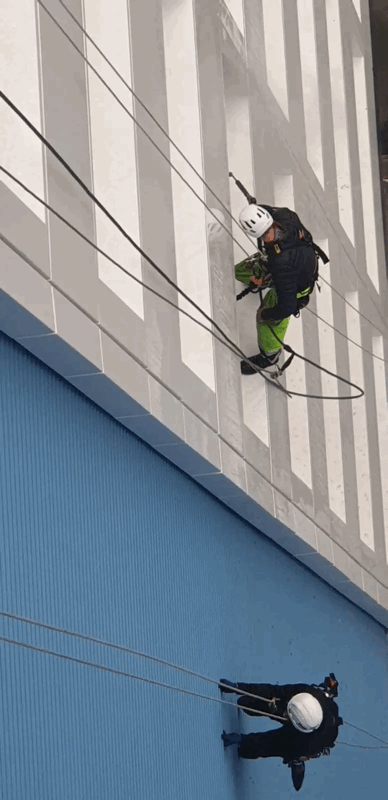
- Rope Access (Abseiling): Often used for the investigative phase or for localized metal cladding sheet replacement. It is fast to deploy and causes minimal disruption.
- Cranage: Necessary for moving large volumes of material on major recladding sites.
Managing these logistics requires a deep understanding of the local environment. For example, projects involving metal cladding replacement ft saskatchewan or London city centres must account for high wind speeds at height and strict local authority permits for road closures or pavement hoarding.
Book a metal cladding remediation survey
The Importance of Fire Barriers in Metal Systems
A critical part of metal cladding remediation is the inspection and installation of cavity barriers. In a rainscreen system, the cavity acts like a chimney; without effective barriers, fire can spread rapidly behind the metal panels, bypassing fire-rated floors.
During remediation, we ensure that:
- Horizontal Barriers: Are placed at every floor level to stop vertical fire spread.
- Vertical Barriers: Are placed at compartment walls to stop lateral fire spread.
- Intumescent Strips: Are correctly rated to expand and close the ventilated gap in the event of heat exposure.
Financial and Legal Considerations
Remediation projects are significant investments. Building owners must navigate a complex landscape of funding and liability. In the UK, the "polluter pays" principle is increasingly being applied through the Building Safety Act, potentially allowing owners to recover costs from original developers or contractors.
Furthermore, the metal cladding remediation process is often a prerequisite for obtaining insurance. Many insurers now refuse to cover buildings with certain types of metal cladding until a professional remediation plan is in place and validated by a specialist firm like CladdingTesting.com.
Building Safety Fund (BSF)
For residential buildings over 18 metres, the BSF can provide critical funding for the removal of unsafe cladding. Navigating the technical requirements of a BSF application requires precise data, which is why the initial testing phase is so important. We help clients provide the evidence needed to satisfy the fund's stringent criteria.
Choosing the Right Materials for Replacement
When performing metal rainscreen replacement, selecting the right material is vital for both aesthetics and longevity. The "new" façade must be fit for the next 30 to 50 years of the building's life.
- Solid Aluminium: A popular choice for its A1 fire rating and versatility. It can be powder-coated in almost any colour.
- Pre-coated Steel: Often used in industrial or commercial metal cladding sheet replacement projects due to its cost-effectiveness and strength.
- Zinc and Copper: High-end materials that develop a natural patina over time. They are extremely durable but require specialist installation techniques.
- A2 ACM: A safer alternative to standard ACM, utilizing a mineral-filled core that meets modern fire safety standards.
Common Challenges in Metal Facade Remediation
Remediation is rarely straightforward. Every building presents unique challenges that require bespoke engineering solutions.
Interface Complications
The façade does not exist in isolation. It meets windows, doors, balconies, and roofs. During metal cladding remediation, ensuring these interfaces remain water-tight is a common challenge. Often, the original window flashing is inadequate, requiring new bespoke details to be manufactured.
Substrate Condition
We often find that the substrate (the wall the cladding is attached to) is in poor condition once the old panels are removed. This can include crumbling masonry or rusted steel studs. A professional remediation strategy must include a "contingency for the unknown" to address these issues without derailing the project schedule.
Resident Disruption
Unlike new-build construction, remediation usually happens while people are living or working inside the building. This requires strict noise control, dust management, and clear communication. Managing the "resident experience" is just as important as the technical execution of the metal cladding replacement.
Sustainability in Remediation
Modern metal cladding refurbishment emphasizes sustainability. Metal is one of the most recyclable materials in the construction industry. During a replacement project, we aim to:
- Recycle Old Panels: Aluminium and steel panels removed from buildings are sent to specialized recycling facilities.
- Improve Thermal Efficiency: Adding modern, high-performance insulation during remediation significantly reduces the building's carbon footprint and energy costs for residents.
- Reduce Waste: By opting for targeted remediation rather than wholesale replacement where safe to do so.
The Role of CladdingTesting.com
As specialists in the field, CladdingTesting.com provides the bridge between identifying a problem and completing a successful metal cladding remediation project. We do not just look at the surface; we understand the entire external wall system.
We work alongside:
- Fire Engineers: To ensure the proposed remediation meets safety goals.
- Architects: To maintain or improve the building's visual appeal.
- Surveyors: To provide accurate costings and condition reports.
- Managing Agents: To coordinate works with minimal impact on building operations.
Case Study: A High-Rise Metal Facade Remediation
Consider a 20-storey residential block in a major UK city. Initial testing revealed that while the aluminium panels were non-combustible, the insulation behind them was flammable, and the cavity barriers were missing in key locations.
The remediation strategy involved a systematic metal rainscreen replacement. Working elevation by elevation, the team removed the panels, replaced the insulation with non-combustible mineral wool, installed fire-rated cavity barriers, and then re-installed new, compliant panels. The project was completed while the building remained fully occupied, eventually securing a clear EWS1 B1 rating for the residents.
Future Trends in Metal Cladding
The industry is moving toward "smart" façades and even more stringent monitoring. We are seeing an increase in the use of sensors within the cladding cavity to monitor for moisture build-up or temperature spikes. Furthermore, metal cladding remediation is increasingly incorporating "biophilic" elements or integrated solar panels (BIPV), turning the building envelope into an energy-generating asset.
FAQs
How long does metal cladding remediation take?
The duration depends on the building's size and the scope of work. A localized metal cladding sheet replacement might take a few weeks, while a full recladding of a high-rise tower can take 12 to 24 months. The investigative and planning phases typically take 3-6 months before site works begin.
Is my building safe if it has metal cladding?
Metal cladding itself is not inherently dangerous. The risk usually depends on the core material of the panels (in the case of composites) and the presence of combustible insulation or missing fire breaks behind the panels. Only a professional cladding testing survey can confirm the safety of your specific system.
What is the difference between remediation and replacement?
Remediation is the broad term for fixing the issues, which could include repairs, cleaning, or partial upgrades. Replacement (or recladding) is a specific type of remediation where the old system is completely removed and a new one is installed. Metal facade remediation aims for the most efficient path to safety and compliance.
Can I get funding for metal cladding remediation?
In the UK, residential buildings over 11 metres may be eligible for government funding through the Building Safety Fund or the Cladding Safety Scheme. Commercial building owners generally must fund the works themselves, though they may have legal recourse against original developers or through insurance claims.
Will remediation work affect the value of my property?
Proactively addressing cladding issues usually has a positive impact on property value. A building with a "hidden" cladding defect is often unmortgageable. Once metal cladding remediation is complete and certified, it restores buyer confidence and allows for normal lending to resume.
What happens if I ignore damaged metal cladding?
Ignoring damage can lead to serious consequences, including structural failure of panels during high winds, extensive water damage to the building's interior, and significantly higher repair costs in the future. Furthermore, failing to address known fire safety defects can lead to legal action under the Building Safety Act.
The Path Forward
The complexities of metal cladding remediation require a steady, expert hand. Whether you are dealing with an aging commercial warehouse requiring metal cladding refurbishment or a high-rise residential block needing a total metal rainscreen replacement, the first step is always the same: gaining a clear, technical understanding of the current state of your building.
At CladdingTesting.com, we provide that clarity. Our investigative processes are designed to strip away the uncertainty, providing building owners with a practical, compliant, and cost-effective route to a safer building envelope. By focusing on the underlying defects rather than just the visible symptoms, we ensure that every remediation project we support is a long-term success.
If you are concerned about the condition of your façade or have been advised that your building requires intervention, contact us today for a professional assessment. We help you move from the problem stage to a fully resolved, safe, and compliant building.
Book a metal cladding remediation survey
What it costs
Pricing depends on building height, access and scope
Reviews
What clients say
Verified 5-star Google reviews from building owners, managing agents and contractors.