
FRAEW assessment
FRAEW Assessment
Understanding the safety and compliance profile of a building’s exterior is now a central requirement for property professionals across the United Kingdom. A FRAEW assessment is a specialised technical evaluation of the external wall construction of a multi-storey, multi-occupied residential building. Its purpose is to assess the fire risk contributed by the wall system and determine whether remediation or mitigation is necessary to ensure resident safety.
Independent
UK-wide coverage
Survey options
Clear reporting
On this page
Book a fraew assessment survey
Understanding the safety and compliance profile of a building’s exterior is now a central requirement for property professionals across the United Kingdom. A FRAEW assessment is a specialised technical evaluation of the external wall construction of a multi-storey, multi-occupied residential building. Its purpose is to assess the fire risk contributed by the wall system and determine whether remediation or mitigation is necessary to ensure resident safety.
The requirement for a Fire Risk Appraisal of External Walls was formalised through the introduction of PAS 9980:2022. This code of practice provides a methodology for competent professionals to assess the risk of fire spread across external walls. Unlike a standard fire risk assessment, this appraisal requires a deep technical understanding of building morphology, material performance, and the interaction between various components within a façade system.
At CladdingTesting.com, we recognise that the results of these assessments carry significant weight. They influence building insurance, property valuations, and the safety of those living within the structure. Our approach focuses on technical accuracy, ensuring that building owners receive a clear, evidence-based pathway for managing their assets, whether that involves minor repairs or a full recladding programme.
Key Takeaways
- Regulatory Standard: All assessments must follow the PAS 9980 methodology to be considered valid and compliant.
- Competency is Critical: The appraisal must be conducted by qualified professionals with expertise in fire engineering and façade construction.
- Risk-Based Approach: Not every building with combustible materials requires full replacement; the assessment determines if the risk is tolerable or requires action.
- Holistic Evaluation: The process looks beyond just the cladding panels, investigating insulation, cavity barriers, and the building’s overall fire strategy.
- Actionable Outcomes: A robust report will categorise risk as Low, Medium, or High, dictating the urgency and scale of any necessary remediation.
- Legal Obligation: Under the Fire Safety Act 2021, the "Responsible Person" is legally required to account for external walls in their fire risk assessments.
What is a FRAEW Assessment?
A FRAEW assessment stands for Fire Risk Appraisal of External Walls. It is a comprehensive review of a building’s outer envelope, focusing on the potential for fire spread. The assessment is not a simple "pass or fail" test; rather, it is a nuanced evaluation of how a fire might behave if it reached the exterior of the building.
The appraisal considers the materials used in the wall system, including the outer cladding, the insulation behind it, and the presence (or absence) of effective cavity barriers. Crucially, it also evaluates the building's height, the number of storeys, and the fire-fighting facilities available on-site. The goal is to determine if the external wall system poses an unacceptable risk to life safety.
For many building owners, this process begins with a cladding testing phase to identify exactly what materials are present. Once the composition is known, the FRAEW report provides the professional judgement needed to decide if those materials can stay in place or if they must be remediated.
The Role of PAS 9980
PAS 9980:2022 is the British Standards Institution (BSI) code of practice that governs these assessments. It was developed to provide a consistent, structured methodology for fire engineers and building surveyors. Before PAS 9980, there was significant inconsistency in how external wall risks were reported, often leading to overly cautious recommendations for full replacement when it may not have been strictly necessary.
The PAS 9980 framework allows for a more proportional response. It moves away from the binary "combustible vs. non-combustible" mindset and instead focuses on "risk to life." This means a building with some combustible elements might still receive a "Low Risk" rating if other safety features, such as advanced sprinkler systems or excellent cavity barrier installation, mitigate the danger sufficiently.
When is a FRAEW Report Required?
The primary trigger for a FRAEW report is the Fire Safety Act 2021, which clarified that for any building containing two or more sets of domestic premises, the Responsible Person must include the external walls in their Fire Risk Assessment (FRA). If the initial FRA identifies that the external walls are of unknown composition or pose a potential risk, a detailed FRAEW is commissioned.
Beyond legal compliance, there are several commercial and operational reasons why an assessment becomes necessary:
- Property Transactions: Buyers and lenders often require a completed assessment to confirm the building is a safe investment.
- Insurance Renewals: Insurers increasingly demand detailed evidence of external wall safety before providing or renewing cover.
- Remediation Planning: If a building is known to have defects, the assessment defines the scope of work, helping to avoid unnecessary costs.
- Funding Applications: Accessing government funds, such as the Building Safety Fund, requires a PAS 9980 compliant assessment to prove the need for financial assistance.
Which Buildings are Covered?
While the focus is often on high-rise blocks (over 18 metres), the requirement for a FRAEW survey applies to all multi-occupied residential buildings regardless of height. However, the complexity of the assessment typically increases with the height and occupancy level of the building. A three-storey block of flats with a simple masonry exterior will require a much less intensive appraisal than a 20-storey tower with a complex multi-material rainscreen system.
The Methodology: How a FRAEW Survey is Conducted
A FRAEW survey is a multi-stage process that combines archival research, physical inspection, and engineering analysis. It is not something that can be completed from a desk; it requires boots-on-the-ground investigation to verify that what was designed is actually what was built.
1. Information Gathering and Desktop Study
The process begins by reviewing all available documentation. This includes "as-built" drawings, operation and maintenance (O&M) manuals, and previous fire safety records. We look for specifications of the cladding panels, insulation types, and the fire-stopping details planned during construction.
2. On-Site Physical Inspection
Since documentation is often incomplete or inaccurate, a physical inspection is essential. This usually involves "intrusive" investigations. We may remove small sections of the cladding—often referred to as "opening up" works—to see what lies beneath the surface. We check for the presence of cavity barriers, the type of insulation used, and the method of fixing the panels to the building’s substrate.
3. Material Identification and Testing
If the materials cannot be identified through documentation or visual inspection, samples are taken for laboratory analysis. A FRAEW cladding assessment relies on knowing the exact fire performance characteristics of the materials. This might involve identifying whether a panel is an Aluminium Composite Material (ACM) with a polyethylene core or a more fire-resistant High-Pressure Laminate (HPL).
4. Risk Analysis and Appraisal
Once all data is collected, the fire engineer applies the PAS 9980 methodology. They evaluate the likelihood of a fire starting, the likelihood of it spreading across the exterior, and the potential consequences for the residents. This takes into account the building’s internal fire strategy, such as whether it operates a "Stay Put" policy or a simultaneous evacuation plan.
Interpreting the Results: Risk Categories
The conclusion of a FRAEW report is a risk rating. This rating is the most important piece of information for the building owner, as it dictates the next steps. The PAS 9980 framework generally categorises findings into three levels:
Low Risk
A Low Risk rating indicates that the external wall system, while it may contain some combustible materials, does not pose an undue threat to life safety. In these cases, no remediation is typically required. The building is considered safe for continued occupation, and the report serves as evidence for insurers and lenders that the risk is managed.
Medium Risk
A Medium Risk rating suggests that there are concerns regarding the external walls, but they may not require immediate or total replacement. Often, this risk can be mitigated through "interim measures," such as upgrading fire alarm systems, or through targeted remediation, such as installing missing cavity barriers or replacing cladding only in high-risk areas like exit routes.
High Risk
A High Risk rating means the external wall system poses a significant threat of rapid fire spread. In these scenarios, urgent action is required. This often leads to a recommendation for full recladding or significant structural remediation. Building owners may also need to implement temporary safety measures, such as a "Waking Watch," until the physical defects are corrected.
Book a fraew assessment survey
Common Findings in External Wall Appraisals
Through our extensive experience at CladdingTesting.com, we have identified several recurring issues during the FRAEW assessment process. Understanding these common defects helps building owners prepare for the potential outcomes of a survey.
- Defective Cavity Barriers: One of the most frequent issues is the incorrect installation or total absence of cavity barriers. These are designed to close the gap behind the cladding in the event of a fire, preventing the "chimney effect" that allows flames to spread vertically.
- Combustible Insulation: Many buildings constructed prior to recent regulation changes utilised expanded polystyrene (EPS) or other combustible foam insulations. Depending on the cladding type, this can significantly increase fire risk.
- Inappropriate Cladding Panels: Materials like Category 3 ACM or certain types of HPL are now known to be highly flammable and are frequently identified as high-risk elements in a FRAEW report.
- Poor Workmanship: Even when compliant materials were specified, poor installation—such as leaving gaps in fire stopping or using the wrong fixings—can compromise the entire system's safety.
The Path to Remediation: Beyond the Assessment
An assessment is a diagnostic tool; it identifies the problem but does not, in itself, fix it. Once a FRAEW cladding assessment has identified a high or medium risk, the focus shifts to how to resolve that risk efficiently and safely.
Our role at CladdingTesting.com is to bridge the gap between assessment and resolution. We don't just tell you what is wrong; we help you determine the most practical way to fix it. This involves looking at several options:
Targeted Repair and Mitigation
If the risk is localised, it may be possible to carry out specific repairs. For example, if the cladding panels themselves are safe but the cavity barriers are missing, we can often perform targeted interventions to install the necessary fire stopping without stripping the entire building. This is significantly less disruptive for residents and more cost-effective for the owner.
Systemic Remediation
In cases where the risk is more widespread but doesn't require a total overhaul, remediation might involve replacing specific sections of the façade. This could mean replacing cladding on the lower floors to prevent fire initiation or upgrading materials around windows and doors where fire is most likely to break out from the interior.
Full Recladding
For high-risk buildings where the external wall system is fundamentally unsafe, complete recladding is the only viable solution. This involves the systematic removal of the existing façade and the installation of a fully compliant, non-combustible system. These are complex projects, especially in occupied high-rise buildings, requiring expert logistics and resident management.
Challenges in High-Rise and Occupied Buildings
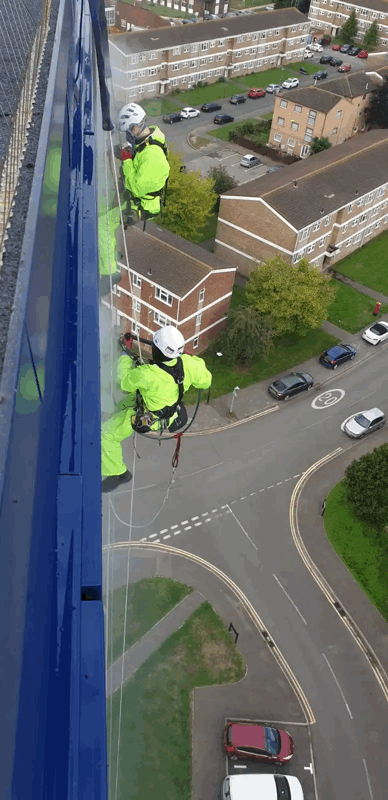
Carrying out a FRAEW assessment or subsequent remediation on a high-rise building presents unique challenges. At CladdingTesting.com, we specialise in these complex environments. The height of the building necessitates specialist access equipment, such as mast climbers or suspended cradles, which must be managed with strict safety protocols.
Working on occupied buildings adds another layer of complexity. Resident safety, privacy, and noise disruption must be carefully managed. A successful project requires clear communication with tenants and a sequenced approach to work that ensures the building remains weather-tight and secure throughout the process.
Furthermore, the interface between the new façade and the existing building structure—such as window seals and balcony attachments—requires meticulous detailing to prevent future issues like water ingress or thermal bridging. A technically sound FRAEW survey will identify these potential complications early, allowing for better planning and more accurate budgeting.
Choosing the Right Specialist for your FRAEW
The quality of a FRAEW report is entirely dependent on the expertise of the person writing it. Because these documents are used to justify multi-million-pound decisions, "good enough" is not an option. Building owners should look for specialists who possess a deep understanding of both fire engineering principles and the practicalities of cladding construction.
At CladdingTesting.com, we pride ourselves on a professional, technical approach. We don't rely on alarmist language; we rely on evidence. Our reports are designed to be used by all stakeholders—from the board of a housing association to the site manager overseeing repairs. We provide the clarity needed to navigate the complex world of UK building safety regulations.
Frequently Asked Questions
Is a FRAEW the same as an EWS1 form?
No, they are different but related. An EWS1 (External Wall System) form is a valuation tool created by RICS to help lenders assess whether to provide a mortgage on a flat. A FRAEW assessment is a much more detailed technical appraisal conducted under PAS 9980. The findings of a FRAEW are often used to inform the completion of an EWS1 form, but the FRAEW is the comprehensive safety document required by law.
How much does a FRAEW report cost?
The cost varies significantly depending on the size, height, and complexity of the building. A small masonry block will be much cheaper than a large, multi-faceted tower block with various cladding systems. The cost typically includes the desktop study, the physical site investigation (including access equipment), and the final engineering analysis. Contacting a specialist for a site-specific quote is the only way to get an accurate estimate.
Do I need an assessment for a building under 11 metres?
While the most stringent regulations apply to buildings over 11 or 18 metres, the Fire Safety Act 2021 applies to all multi-occupied residential buildings. If the Responsible Person has reason to believe the external walls of a building under 11 metres pose a risk, they should commission a FRAEW survey to ensure they are meeting their legal obligations for resident safety.
Can I still sell my flat if the building has a Medium Risk rating?
Yes, but it depends on the lender. Many lenders are now willing to provide mortgages on buildings with a Medium Risk rating, provided there is a clear, funded plan in place for remediation. The FRAEW report is the document that provides this clarity, showing what needs to be done and how the risk is being managed in the interim.
How long does the assessment process take?
A typical FRAEW assessment can take anywhere from a few weeks to several months. The timeline is influenced by the availability of existing building information, the time needed to arrange safe access for site inspections, and the complexity of the material analysis. Once the site work is complete, the engineering appraisal and report writing usually take 2-4 weeks.
What happens if my building is found to be High Risk?
If a building receives a High Risk rating, the Responsible Person must act immediately. This usually involves notifying the local Fire and Rescue Service and implementing interim safety measures (like a fire alarm upgrade). The next step is to commission a detailed remediation strategy to fix the defects identified in the FRAEW cladding assessment. CladdingTesting.com can assist in moving from the assessment phase into the planning and execution of these repairs.
Who is qualified to carry out a Fire Risk Appraisal of External Walls?
The appraisal should be carried out by a "competent person." In the context of PAS 9980, this usually means a professional with significant experience in fire engineering, façade engineering, or a closely related field. They should be registered with a relevant professional body, such as the Institution of Fire Engineers (IFE), and have specific experience in assessing external wall systems.
Will a FRAEW assessment always recommend recladding?
Absolutely not. The purpose of the PAS 9980 methodology is to avoid unnecessary recladding. The assessment looks for ways to manage and mitigate risk proportionately. In many cases, the report may recommend smaller-scale remediation, such as improving fire stopping or changing the fire evacuation strategy, rather than a full-scale replacement of the façade.
The Regulatory Landscape and Future Trends
The UK’s approach to building safety is still evolving. With the Building Safety Regulator (BSR) now overseeing high-rise buildings, the scrutiny on FRAEW reports will only increase. We are seeing a shift towards more digitised building records—the "Golden Thread" of information—which will make future assessments easier but also sets a higher bar for current reporting.
For building owners, the message is clear: compliance is not a one-time event but an ongoing responsibility. Ensuring your FRAEW assessment is robust, technical, and based on the latest standards is the best way to protect your residents and your investment. At CladdingTesting.com, we remain at the forefront of these changes, providing the technical competence required to manage complex building envelopes in a changing regulatory environment.
If you are responsible for a building and need to understand the condition of its external walls, the first step is a clear, expert investigation. Whether it leads to simple maintenance or a comprehensive recladding project, having a technically accurate starting point is essential. We help property professionals navigate this process, providing a direct and practical route to compliance and safety.
Book a fraew assessment survey
What it costs
Pricing depends on building height, access and scope
Reviews
What clients say
Verified 5-star Google reviews from building owners, managing agents and contractors.