
aluminium cladding remediation
Aluminium Cladding Remediation
Aluminium cladding remediation refers to the systematic process of investigating, repairing, or replacing aluminium-based external wall systems that have been identified as defective, non-compliant, or deteriorating. This technical intervention ensures that the building envelope meets current UK Building Regulations, particularly regarding fire safety, structural stability, and moisture management.
Independent
UK-wide coverage
Survey options
Clear reporting
On this page
Book a aluminium cladding remediation survey
Aluminium cladding remediation refers to the systematic process of investigating, repairing, or replacing aluminium-based external wall systems that have been identified as defective, non-compliant, or deteriorating. This technical intervention ensures that the building envelope meets current UK Building Regulations, particularly regarding fire safety, structural stability, and moisture management.
For many high-rise and multi-storey buildings, this process involves moving from an initial FRAEW (Fire Risk Appraisal of External Walls) to a physical programme of works that addresses specific failures in the facade assembly. These failures often include the presence of combustible cores in composite panels, inadequate cavity barriers, or failing support structures that compromise the building's long-term integrity.
Key Takeaways
- Safety First: Remediation prioritises the removal of fire risks and the restoration of structural integrity.
- Individual Assessment: Not every building requires full replacement; targeted repairs may be viable depending on the specific defect.
- Regulatory Compliance: All works must align with the Building Safety Act 2022 and updated Approved Document B.
- Systematic Approach: Success relies on thorough testing, precise specification, and experienced project management.
- Resident Focus: Managing logistics in occupied buildings is critical to minimising disruption and maintaining safety during works.
- Long-term Value: Correct remediation protects the asset value and ensures the building remains insurable and mortgageable.
The Necessity of Aluminium Cladding Remediation
In the UK, the landscape of building safety has shifted significantly. Aluminium cladding systems, which were widely specified for their lightweight properties and aesthetic versatility, are now under intense scrutiny. The primary driver for aluminium cladding remediation is the discovery of systemic failures within the external wall assembly.
These issues are not limited to the panels themselves but often extend to the hidden components of the facade, such as the insulation, vapour membranes, and fire stopping.
Building owners and managing agents often face pressure from insurers, mortgage lenders, and the Fire and Rescue Service to address these risks. The remediation process is not merely about aesthetic updates; it is a critical requirement for life safety. When a building’s external wall system is found to be non-compliant, the path forward must be determined by technical evidence rather than guesswork.
Common Drivers for Remedial Action
- Combustible Cores: The presence of Polyethylene (PE) or other flammable fillers in Aluminium Composite Material (ACM).
- Inadequate Cavity Barriers: Missing or incorrectly installed barriers that fail to prevent the spread of fire within the facade void.
- System Deterioration: Corrosion of the aluminium skin or failure of the mechanical fixings due to environmental exposure.
- Water Ingress: Poorly designed interfaces or failed sealants leading to moisture trapped behind the cladding, risking structural rot or mould.
- Regulatory Changes: The need to bring older buildings in line with the latest safety standards for high-rise residential structures.
Investigation and Technical Assessment
Before any physical work begins, a comprehensive investigation is required. At CladdingTesting.com, we advocate for a "test-first" methodology. This involves a detailed cladding testing and inspection phase to identify exactly what is happening behind the aluminium panels.
Intrusive inspections involve the removal of small sections of the cladding to view the build-up of the wall. This allows surveyors to check the type of insulation used, the presence (or absence) of fire breaks, and the condition of the sub-frame. Without this data, any remediation strategy risks being either insufficient or unnecessarily expensive.
The Role of the FRAEW
A Fire Risk Appraisal of External Walls (FRAEW), conducted to the PAS 9980 standard, is typically the trigger for remediation. This document provides a risk rating for the building. If the risk is deemed "High" or "Medium," a strategy for aluminium cladding replacement or targeted remediation must be developed. The goal is to move the building toward a "Low" risk status, providing peace of mind for residents and stakeholders.
Determining the Remediation Strategy
One of the most frequent questions property managers ask is whether the entire facade needs to be stripped. The answer depends on the specific system installed and the underlying defects identified during the testing phase. We categorise interventions into three main streams: Repair, Remediation, and Replacement.
1. Localised Cladding Repairs
In some instances, the primary cladding panels are safe, but specific components have failed. This might include replacing individual damaged panels, refreshing failed gaskets and sealants, or tightening mechanical fixings that have worked loose over time. This approach is common when the building has suffered from minor impact damage or environmental wear rather than systemic fire safety issues.
2. Aluminium Facade Remediation
Aluminium facade remediation is a middle-ground approach. It involves keeping the primary aesthetic panels but upgrading the internal components. For example, if the aluminium panels are non-combustible but the cavity barriers are missing or the insulation is flammable, a remediation programme might involve temporarily removing panels to install compliant fire stopping before reinstating the original cladding. This can be a cost-effective solution for buildings that do not require a full visual overhaul.
3. Solid Aluminium Cladding Replacement
Where the existing panels are identified as high-risk—such as ACM with a PE core—a full solid aluminium cladding replacement is often the only viable path. This involves a complete strip-back to the building’s structural frame or masonry. The new system typically utilises A1 or A2-s1, d0 rated materials, such as solid aluminium sheets or mineral-cored panels, alongside non-combustible mineral wool insulation and robust cavity barrier systems.
Technical Considerations for Replacement Systems
When selecting a new system for aluminium rainscreen replacement, technical performance must be balanced with the building’s original design intent. The choice of materials will affect the building’s thermal performance, acoustic properties, and weight loading.
Material Selection: Solid vs. Composite
Solid aluminium panels (typically 2mm or 3mm thick) are favoured for their inherent non-combustibility. They are durable and can be powder-coated or anodised to match almost any colour. Alternatively, modern Aluminium Composite Materials (ACM) with mineral-filled cores (FR or A2 grades) offer high levels of flatness and are often used for larger panel spans where solid aluminium might be prone to "oil-canning" or slight surface distortion.
Fixing Systems and Sub-frames
The remediation process often requires a new sub-frame. Helping hand brackets and rail systems must be engineered to support the specific weight of the new cladding while also accounting for thermal expansion. In many aluminium cladding replacement projects, we find that the original sub-frame was either poorly installed or incompatible with new non-combustible insulation depths, requiring a complete redesign of the support structure.
The Logistics of High-Rise Remediation
Remediating a tall building presents unique logistical challenges. The work is often carried out while the building remains fully occupied, requiring a delicate balance between construction progress and resident welfare. Professional planning is essential to ensure the site remains safe and functional throughout the project duration.
Access Requirements
Choosing the right access method is a critical decision in any aluminium cladding remediation project. The height of the building, its footprint, and the surrounding environment will dictate the choice:
- Mast Climbers: Ideal for tall, linear elevations, providing a stable platform for heavy material handling.
- Scaffolding: Offers full coverage of the facade but can be intrusive for residents and carries a higher visual impact.
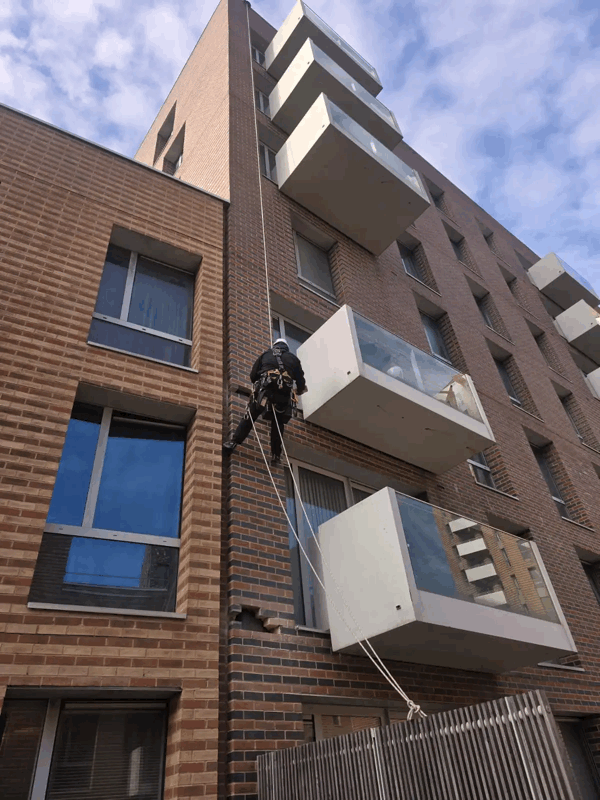
- Rope Access: Suitable for minor repairs or inspections, but rarely used for large-scale panel replacement due to weight limitations.
- Cradle Systems: Often used on buildings where ground space is limited and mast climbers cannot be installed.
Resident and Tenant Management
Communication is as important as the engineering itself. Residents need to know when work will be happening outside their windows, how long their balconies will be out of use, and what measures are being taken to protect their privacy and security. A structured remediation programme includes regular updates and clear signage to manage expectations and reduce the stress associated with major works.
The Remediation Process: Step-by-Step
A successful aluminium cladding remediation project follows a logical sequence to ensure no detail is overlooked. At CladdingTesting.com, we help clients navigate this journey from start to finish.
Step 1: Initial Appraisal and Testing
We begin by reviewing existing O&M manuals and fire safety reports. If information is missing, we conduct intrusive testing to confirm the material composition of the external wall system.
Step 2: Design and Specification
Working with architects and fire engineers, a remedial design is produced. This includes detailed drawings of interfaces, window surrounds, and cavity barrier layouts. The goal is to create a "golden thread" of information that proves the new system is compliant.
Step 3: Planning and Procurement
Securing planning permission (if the building appearance is changing) and procuring materials. Given the current demand for non-combustible aluminium, lead times must be managed carefully to avoid project delays.
Step 4: The Strip-Back Phase
Careful removal of the existing cladding. This is a critical stage where hidden defects in the building’s substrate—such as damp or structural cracks—are often uncovered and must be addressed before the new system is installed.
Step 5: Installation of Compliant Components
Installing new non-combustible insulation, breathable membranes, and fire breaks. This stage is subject to rigorous quality control and photographic evidencing to ensure every barrier is correctly positioned.
Step 6: Fitting the New Aluminium Facade
The final layer of the building is installed. Whether it is a like-for-like aluminium rainscreen replacement or a new design, the focus is on precision and weather-tightness.
Step 7: Certification and Handover
Upon completion, the building is inspected and signed off. Building owners receive a comprehensive pack of evidence, including manufacturer warranties and EWS1 certification where applicable, confirming the building is now safe.
Book a aluminium cladding remediation survey
Financial and Regulatory Frameworks
Remediation is a significant financial undertaking. In the UK, several mechanisms exist to help building owners fund these works. The Building Safety Fund (BSF) and the Cladding Safety Scheme (CSS) are primary sources of government funding for eligible residential buildings over 11 metres.
Understanding the eligibility criteria for these funds is complex. We work alongside clients to provide the technical data required for funding applications, ensuring that the proposed aluminium cladding remediation works meet the strict safety criteria set by the Department for Levelling Up, Housing and Communities (DLUHC).
The Importance of the EWS1 Form
For many residential blocks, the ultimate goal of remediation is to achieve a satisfactory External Wall System (EWS1) rating. An 'A1' or 'B1' rating indicates that the fire risk is low enough for lenders to provide mortgages. Without professional remediation, many apartments remain effectively unsellable, leaving leaseholders in a difficult position.
Common Challenges in Aluminium Remediation
No two buildings are identical, and remediation projects often encounter unforeseen obstacles. Being aware of these challenges allows for better contingency planning.
- Complex Interfaces: Joining new cladding systems to existing windows, balconies, and rooflines requires bespoke flashing designs.
- Weather Dependency: High winds can halt work on mast climbers, while heavy rain can complicate the installation of membranes.
- Material Shortages: Global supply chain issues can impact the availability of specific aluminium finishes or specialised insulation.
- Structural Limitations: Older buildings may require reinforcement to support the weight of modern, heavier non-combustible cladding systems.
- Managing "Hidden" Defects: Discovering that the original building structure does not match the original plans once the cladding is removed.
Advanced Insights: Future-Proofing Your Building
Remediation should not just be about meeting today's minimum standards; it should be an opportunity to improve the building's performance for the next 30 years. When planning an aluminium cladding replacement, consider the following:
Improving Thermal Performance
While the panels are off, there is an opportunity to increase the thickness or quality of the insulation. This can significantly reduce the building's carbon footprint and lower energy bills for residents, adding long-term value to the property.
Enhancing Durability
Selecting high-grade powder coatings or pre-painted finishes that offer superior UV resistance will ensure the building looks good for longer. In coastal environments, specifying marine-grade finishes for aluminium components is essential to prevent salt-spray corrosion.
Integrated Fire Safety
Modern remediation allows for the integration of smarter cavity barrier technology, including intumescent strips that allow for ventilation under normal conditions but expand rapidly in the event of a fire to seal the cavity completely.
Choosing a Competent Remediation Partner
The complexity of aluminium cladding remediation means that choosing the right partner is vital. A specialist should demonstrate more than just the ability to hang panels; they must understand the physics of the building envelope and the intricacies of UK fire legislation.
At CladdingTesting.com, we focus on providing a clear, evidence-based route to compliance. We don't guess—we investigate. Our approach ensures that every pound spent on remediation is targeted at a specific, identified risk, providing the most efficient path to a safe and compliant building.
Questions to Ask a Specialist
- How will you verify the performance of the new cavity barriers?
- What experience do you have managing mast climber logistics on occupied sites?
- How do you ensure the "Golden Thread" of information is maintained throughout the project?
- Can you provide examples of buildings where you have successfully navigated the BSF funding process?
- What is your strategy for managing resident queries and complaints during the works?
FAQs: Aluminium Cladding Remediation
Is all aluminium cladding dangerous?
No. Aluminium itself is non-combustible. The risk primarily arises from Aluminium Composite Material (ACM) which contains a combustible polyethylene (PE) core. Solid aluminium panels and modern A2-rated composite panels are generally considered safe. The danger is often not the aluminium, but the overall system build-up, including insulation and fire stopping.
How long does a typical remediation project take?
Timeline varies based on building size and the extent of the works. A medium-sized residential block might take 6 to 12 months, while large-scale multi-block developments can span several years. The investigation and design phase usually takes 3-4 months before work starts on site.
Can I stay in my flat during the cladding replacement?
In the vast majority of cases, residents can remain in their homes. The work is external, meaning there is no need for contractors to enter individual flats except for window-side inspections. However, there will be noise disruption during working hours and access to balconies may be restricted for safety reasons.
Will remediation affect my building's insurance?
Yes, positively. Once aluminium cladding remediation is complete and certified, insurers are typically more willing to offer competitive premiums. In many cases, insurance companies require proof of a remediation plan before they will even consider renewing a policy for a building with known cladding defects.
What is the difference between A1 and A2 rated cladding?
A1 materials are "non-combustible" and do not contribute to a fire at any stage. A2-s1, d0 materials are "limited combustibility," meaning they have a very low contribution to fire and produce little to no smoke or flaming droplets. Both are typically acceptable for use on high-rise buildings under current UK regulations.
Who pays for the remediation?
This is a complex area involving the Building Safety Act 2022. Costs may be covered by the original developer, through government grants like the Building Safety Fund, or in some cases, via service charges (though there are strict legal protections for qualifying leaseholders to prevent them from bearing the full cost of fire safety works).
Is a building permit required for cladding replacement?
Yes. Any major aluminium cladding replacement will require Building Control approval to ensure the new system complies with all current safety and thermal regulations. If the external appearance of the building changes significantly, Planning Permission may also be required from the local authority.
What happens if we find more problems once the cladding is removed?
This is common. If structural defects or unexpected moisture issues are found, the remediation plan must be adjusted. This is why having an experienced specialist like CladdingTesting.com is important; we can quickly assess new findings and integrate them into the works without derailing the entire project timeline.
Conclusion: The Path to a Safer Building
The journey of aluminium cladding remediation is one of technical precision and rigorous safety standards. For building owners and managers, the process can seem daunting, but it is a necessary step to protect both the people inside the building and the value of the asset itself. By moving systematically from investigation to design and execution, even the most complex facade challenges can be resolved.
Focusing on quality materials, proven fire safety measures, and minimal resident disruption ensures that the final result is a building that is not just compliant, but durable and fit for the future. If you are responsible for a building with cladding concerns, the first step is always to seek a professional, intrusive assessment to understand exactly what is required to make your building safe.
Book a aluminium cladding remediation survey
What it costs
Pricing depends on building height, access and scope
Reviews
What clients say
Verified 5-star Google reviews from building owners, managing agents and contractors.