
steel cladding remediation
Steel Cladding Remediation
Steel cladding remediation is the process of inspecting, repairing, or replacing external metal wall systems to ensure they meet modern fire safety, structural, and thermal standards. In the UK, this work is essential for high-rise residential and commercial buildings where existing steel façades may have deteriorated or were originally installed without adequate cavity barriers and non-combustible insulation.
Independent
UK-wide coverage
Survey options
Clear reporting
On this page
Book a steel cladding remediation survey
Steel cladding remediation is the process of inspecting, repairing, or replacing external metal wall systems to ensure they meet modern fire safety, structural, and thermal standards. In the UK, this work is essential for high-rise residential and commercial buildings where existing steel façades may have deteriorated or were originally installed without adequate cavity barriers and non-combustible insulation.
- Safety Compliance: Bringing buildings in line with the Building Safety Act 2022 and updated Building Regulations.
- Structural Integrity: Addressing corrosion in fixings, rails, and panels to prevent cladding detachment.
- Fire Performance: Replacing combustible components within the external wall build-up.
- Moisture Management: Rectifying water ingress issues that lead to internal damage and mould.
- Asset Protection: Extending the lifecycle of the building envelope through targeted repairs or replacement.
Key Takeaways
- Remediation is not always a full replacement; localised repairs are often viable if the underlying system is compliant.
- Investigation is the first step; intrusive surveys are necessary to understand what lies behind the steel panels.
- Regulatory adherence is mandatory; all works must comply with current UK fire safety legislation for buildings over 11 metres.
- Logistics are critical; managing works on occupied high-rise buildings requires specialist access and resident communication strategies.
- Holistic approach: Remediation must address the entire wall system, including insulation, cavity barriers, and fire stopping.
Understanding Steel Cladding Systems in the UK
Steel cladding has been a staple of UK construction for decades, valued for its durability, cost-effectiveness, and speed of installation. These systems typically consist of pre-finished steel sheets—often coated in Plastisol or PVDF—fixed to a sub-frame of galvanised steel or aluminium rails.
While the steel panels themselves are non-combustible (Class A1), the external wall system as a whole often presents risks. Problems frequently arise from the materials used behind the steel, such as combustible PIR insulation or the absence of effective fire cavity barriers.
At CladdingTesting.com, we distinguish between decorative surface issues and systemic failures. A building may require steel cladding remediation because of aesthetic weathering, but more often, the driver is a requirement to satisfy EWS1 (External Wall System) assessments or to rectify historic installation defects.
Common Types of Steel Façades
- Built-up Systems: Consisting of a liner sheet, insulation, spacer system, and the outer steel profile.
- Composite Panels: Factory-bonded sandwiches of two steel skins with an insulating core (e.g., mineral wool or PIR).
- Steel Rainscreen: Decorative panels fixed to a support system with a ventilated cavity behind them.
- Standing Seam: Often used for both roofing and walling, providing a continuous metal skin with hidden fixings.
Identifying the Need for Steel Cladding Remediation
Determining whether a building needs steel cladding repair or a more intensive intervention starts with a clear identification of symptoms. In many cases, the most dangerous defects are not visible from the ground.
Managing agents and building owners should be alert to "red flags" such as panels rattling in high winds, visible rust at the lap joints, or water staining on internal walls. However, the most significant driver for steel cladding remediation in the current UK market is the presence of combustible materials within the cavity.
Key Drivers for Remedial Action:
- Fire Safety Non-Compliance: Identification of combustible insulation or missing cavity barriers during an Cladding Testing survey.
- Corrosion: Edge peel or "cut-edge corrosion" where the protective coating fails, leading to the degradation of the steel substrate.
- Water Ingress: Failure of sealants, flashings, or gaskets allowing moisture to bypass the primary weather screen.
- Structural Fatigue: Weakening of the secondary support structure or primary fixings due to galvanic corrosion or poor original design.
The Investigation Process: Intrusive Surveys and Testing
You cannot remediate what you do not fully understand. At CladdingTesting.com, we advocate for a "fabric-first" investigative approach. This involves more than a simple visual check; it requires opening up the façade to inspect the hidden layers.
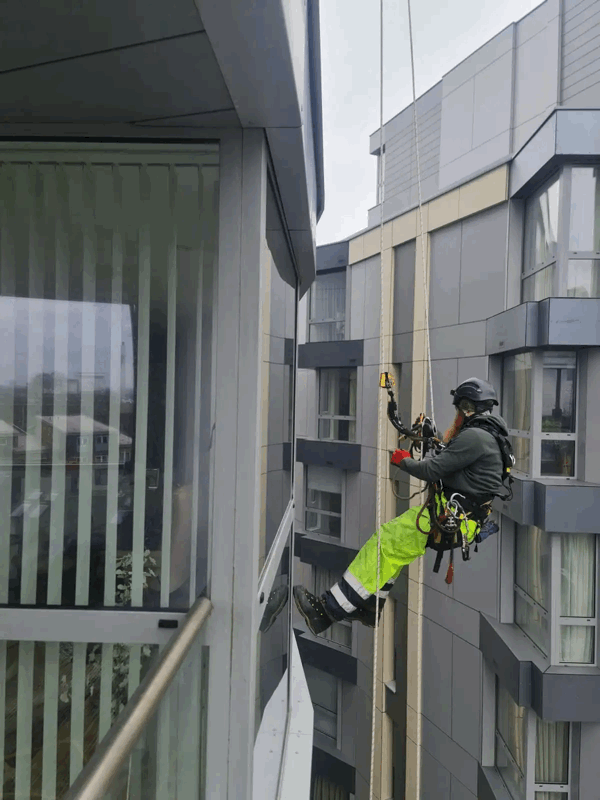
An intrusive survey involves removing specific steel panels to inspect the condition of the rails, the type of insulation present, and the existence of fire-stopping measures at floor levels and around openings (windows and doors).
Technical Assessment Criteria
- Material Identification: Testing the core of composite panels or the type of insulation boards used.
- Cavity Barrier Verification: Checking if intumescent barriers are correctly installed to prevent the spread of fire.
- Fixing Pull-out Tests: Ensuring the existing structure can safely support the weight of the cladding, especially if steel cladding replacement is planned.
- Borescope Inspections: Using cameras to see into cavities with minimal disruption to the building skin.
Steel Cladding Repair vs. Full Remediation
A common misconception is that any defect requires a total strip-and-replace approach. This is not always the case. The decision between steel cladding repair and full steel cladding replacement depends on the extent of the systemic failure.
If the steel panels are in good condition and the fire safety issues are localised—such as missing fire breaks at window reveals—targeted remediation may be possible. This is often more cost-effective and less disruptive for residents in multi-storey blocks.
When to Opt for Steel Cladding Repair
Repair is suitable when the primary concern is localized damage or maintenance-related issues. This might include:
• Treating cut-edge corrosion with specialist liquid-applied membranes.
• Replacing individual damaged or dented panels.
• Renewing failed silicone sealants or EPDM gaskets.
• Strengthening specific fixing points that have worked loose over time.
When Steel Cladding Remediation is Required
Remediation involves fixing a systemic problem without necessarily replacing every element. For instance, if the insulation is non-combustible but the cavity barriers were never installed, the panels can be removed, barriers fitted, and the original panels reinstalled.
This approach is sustainable and reduces waste, but it requires high levels of precision to ensure the original panels are not damaged during removal and that the weather-tightness is maintained upon reinstatement.
Steel Cladding Replacement and Recladding
When a system is found to be fundamentally unsafe or at the end of its functional life, steel cladding replacement becomes the only viable path. This is frequently the case for buildings featuring older composite panels with combustible cores or systems where the corrosion is too widespread for economical repair.
A full steel rainscreen replacement involves stripping the building back to the substrate—be it masonry, concrete, or a Steel Insert Frame (SFS). From here, a completely new, compliant system is designed and installed.
The Replacement Methodology
- Design and Specification: Working with fire engineers and architects to ensure the new system meets Class A1 or A2-s1, d0 fire ratings.
- Access Logistics: Utilising mast climbers, cradles, or traditional scaffolding, depending on the building's height and footprint.
- Removal of Hazardous Materials: Safe disposal of combustible insulation and old steel panels.
- Installation of New Envelope: Fitting new non-combustible mineral wool insulation, fire barriers, and high-performance steel or aluminium rainscreen panels.
Managing Logistics in Occupied High-Rise Buildings
Remediating a high-rise residential block presents unique challenges compared to a new-build site. The building remains the home of many people, and their safety and comfort must be prioritised throughout the steel facade refurbishment.
Noise, dust, and privacy are significant concerns. At CladdingTesting.com, we focus on meticulous sequencing to ensure that sections of the building are not left exposed to the elements for longer than necessary. We also implement strict fire safety protocols during the "open" phase of the works.
Operational Considerations
- Vertical Sequencing: Working in "drops" to minimise the amount of scaffolding or mast climber movement.
- Weather Protection: Ensuring the building remains watertight once the external steel skin is removed.
- Resident Liaison: Keeping occupants informed of scheduled works to manage expectations regarding noise and access to balconies.
- Fire Safety During Construction: Enhanced fire detection and evacuation plans while the façade is undergoing remediation.
Book a steel cladding remediation survey
Technical Challenges in Steel Façade Refurbishment
Every steel facade refurbishment project encounters specific technical hurdles that require specialist engineering input. One of the most common is the "interface" problem—how the new cladding meets existing windows, doors, and rooflines.
If the new insulation is thicker than the old material to meet updated U-value requirements, the entire "line" of the building changes. This requires new flashings and potentially new window surrounds to ensure the building remains aesthetically pleasing and functionally sound.
Key Technical Obstacles:
- Thermal Bridging: Ensuring that the new support rails do not create "cold spots" that lead to internal condensation.
- Structural Loading: Verifying that the existing building frame can handle the weight of modern, often heavier, fire-rated materials.
- Air Tightness: Improving the building's energy performance while ensuring adequate ventilation of the cladding cavity.
- Galvanic Corrosion: Preventing reactions between different metals (e.g., aluminium rails and steel fixings) by using appropriate isolators.
The Role of Regulations: Building Safety Act and EWS1
In the UK, the regulatory environment for steel cladding remediation is rigorous. The Building Safety Act 2022 has introduced the "Golden Thread" of information, meaning every stage of the remediation—from design to completion—must be documented and verifiable.
Building owners must also consider the EWS1 process. While not a legal requirement for all, most lenders require a satisfactory EWS1 form before they will provide mortgages on apartments in high-rise blocks. A successful remediation project should result in a rating that allows for the free sale and re-mortgaging of the properties.
Cladding Testing provides the necessary documentation to support these requirements, ensuring that all steel cladding repair or replacement work is fully certified upon completion.
Cost Considerations and Funding
The cost of steel cladding remediation can vary significantly. Factors include the height of the building, the type of access required, the extent of the hidden defects, and the current price of raw materials like steel and mineral wool.
In the UK, various funding streams may be available for residential buildings, such as the Building Safety Fund (BSF) or the Cladding Safety Scheme (CSS). These funds are designed to cover the costs of remediating unsafe cladding for leaseholders, but the application process is complex and requires detailed technical evidence.
Cost Factors Checklist:
- Access Costs: Scaffolding is often the most expensive preliminary item; mast climbers may be more cost-effective for tall, simple geometries.
- Disposal Fees: Costs associated with skip hire and the disposal of potentially hazardous or combustible waste.
- Professional Fees: Including fire engineers, structural engineers, and project managers.
- Material Specifications: The difference in cost between standard steel panels and specialist finishes or high-performance coatings.
Environmental and Sustainability Benefits
Remediating a steel façade is not just a safety requirement; it is an opportunity to improve the building's environmental footprint. By upgrading insulation during a steel rainscreen replacement, building owners can significantly reduce carbon emissions and lower energy bills for tenants.
Steel is also a highly recyclable material. During a replacement project, the old steel panels can often be sent for recycling rather than to landfill, contributing to a more circular construction economy.
Improving Energy Efficiency
Modern remediation projects often include:
• Upgrading from 50mm of old insulation to 100mm+ of high-performance mineral wool.
• Improving the air barrier to reduce heat loss through draughts.
• Installing high-performance coatings that reflect solar heat, reducing the need for air conditioning in summer.
Standard Remediation Workflow
To ensure a successful outcome, CladdingTesting.com follows a structured methodology for every steel cladding remediation project. This systematic approach reduces risk and ensures that the final result is both safe and durable.
- Initial Desktop Review: Examining original O&M manuals and drawings to identify the suspected build-up.
- Site Investigation: Conducting intrusive surveys and taking material samples for laboratory testing.
- Risk Assessment: Categorising the urgency of the works based on fire safety and structural risk.
- Option Appraisal: Presenting the client with a choice between repair, remediation, or replacement where appropriate.
- Design Development: Creating a detailed specification that complies with all relevant UK building regulations.
- Tendering and Procurement: Engaging with specialist contractors and sourcing high-quality materials.
- Site Execution: Managing the physical works, including access, stripping, and installation.
- Quality Assurance: Regular inspections throughout the build to ensure the "Golden Thread" of information is maintained.
- Handover and Certification: Providing all final documentation, including updated fire safety certificates and warranties.
The Importance of Professional Oversight
Attempting to manage a steel facade refurbishment without specialist expertise is a high-risk strategy. The complexity of modern fire safety requirements means that even small errors in installation—such as a 10mm gap in a cavity barrier—can render the entire project non-compliant.
Professional oversight ensures that the work is not only done but is proven to be done correctly. This provides peace of mind for building owners and legal protection for managing agents who hold the responsibility for building safety.
Why Expertise Matters
- Regulatory Knowledge: Staying abreast of the frequent changes in UK building legislation.
- Technical Accuracy: Understanding the nuances of façade engineering, such as wind loading and thermal expansion.
- Financial Protection: Ensuring that the works qualify for insurance and government funding schemes.
- Long-term Performance: Choosing materials and methods that will protect the building for another 30 to 50 years.
Future-Proofing Your Building Envelope
Remediation should not be viewed as a temporary fix. A well-executed steel cladding replacement project should future-proof the building against further regulatory changes and the increasing severity of UK weather patterns.
This involves choosing high-grade steel with superior coatings that resist UV degradation and salt-air corrosion (particularly in coastal cities like Liverpool, Southampton, or London's Docklands). It also means designing for easy maintenance, allowing for future inspections without the need for major disruptive works.
Frequently Asked Questions
Does all steel cladding need to be replaced?
No. Steel panels themselves are typically non-combustible. The need for steel cladding replacement usually stems from what is behind the panels (like combustible insulation) or if the panels are structurally compromised by corrosion. If the internal components are safe, the steel can often be retained or repaired.
How long does a steel cladding remediation project take?
Timeline varies by building size. A medium-sized residential block might take 6 to 12 months from initial investigation to completion. Factors include the complexity of the design, lead times for new steel panels, and weather conditions during the installation phase.
Can we stay in the building during the works?
Yes, most steel facade refurbishment projects are carried out while the building is occupied. We implement specific measures to manage noise, maintain safety, and ensure that residents' daily lives are disrupted as little as possible.
What is the difference between remediation and recladding?
Steel cladding remediation is a broad term for fixing defects, which can include repairs. Recladding specifically refers to the total removal of the existing system and the installation of a completely new façade. Recladding is a form of remediation.
Is steel cladding still a good choice for new façades?
Absolutely. When designed correctly with non-combustible insulation and proper cavity barriers, modern steel rainscreen systems are highly safe, durable, and sustainable. They remain one of the most effective ways to protect and insulate high-rise buildings in the UK.
Will remediation increase the value of my property?
While "value" is subjective, remediation is often essential for making a property saleable. By securing a clear EWS1 rating and ensuring compliance with the Building Safety Act, you remove the primary obstacles to selling or lending against apartments in high-rise blocks.
How do I know if my building's steel cladding is safe?
The only way to be sure is to commission a professional inspection. CladdingTesting.com provides detailed assessments that look beyond the surface to verify the safety and integrity of the entire external wall system.
If you are responsible for a building with a steel façade and have concerns about its condition, safety, or compliance, contact CladdingTesting.com today. Our team provides the technical expertise needed to investigate the problem and deliver a practical, permanent solution.
Book a steel cladding remediation survey
What it costs
Pricing depends on building height, access and scope
Reviews
What clients say
Verified 5-star Google reviews from building owners, managing agents and contractors.