
terracotta cladding remediation
Terracotta Cladding Remediation
Terracotta cladding remediation refers to the specialist process of identifying, managing, and resolving defects within external wall systems that utilise fired-clay tiles or rainscreen panels. This technical intervention ensures that the building envelope remains structurally sound, weather-tight, and compliant with current UK fire safety regulations and Building Regulations (specifically Approved Document B).
Independent
UK-wide coverage
Survey options
Clear reporting
On this page
Book a terracotta cladding remediation survey
Terracotta cladding remediation refers to the specialist process of identifying, managing, and resolving defects within external wall systems that utilise fired-clay tiles or rainscreen panels. This technical intervention ensures that the building envelope remains structurally sound, weather-tight, and compliant with current UK fire safety regulations and Building Regulations (specifically Approved Document B).
Remediation strategies for terracotta facades typically involve the following steps:
- Technical Surveying: Intrusive inspections to assess the condition of the support rails, fixings, and sub-frame.
- Safety Assessment: Evaluating the fire performance of the insulation and cavity barriers behind the terracotta panels.
- Structural Repair: Replacing failed mechanical fixings or corroded support structures.
- Targeted Replacement: Removing damaged or non-compliant units and installing new, compatible terracotta cladding replacement components.
- System Upgrades: Implementing improved drainage, ventilation, and fire-stopping within the existing façade footprint.
Key Takeaways
- Safety First: Modern remediation focuses heavily on the hidden components behind the tiles, such as cavity barriers and insulation.
- Investigation is Crucial: You cannot fix what you haven't seen; intrusive surveys are essential to identify systemic failures.
- Regulatory Compliance: All works must align with the Building Safety Act 2022 and updated fire safety standards for tall buildings.
- Maintenance Matters: While terracotta is durable, the mechanical fixings and seals often require periodic attention.
- Tailored Solutions: Remediation does not always mean full replacement; localized repairs can be effective if the underlying system is sound.
- Professional Oversight: High-rise projects require specialist access and logistical planning to ensure resident safety.
Understanding Terracotta Facades in the UK
Terracotta has been a popular choice for UK developments for decades, favoured for its natural aesthetic, thermal performance, and longevity. However, even the most robust materials are subject to the rigours of the British climate and the complexities of modern construction techniques.
A terracotta rainscreen is more than just the visible tile. It is a complex assembly comprising the terracotta panel, a clip or rail support system, an air cavity, insulation, and a weather-resistant barrier. When one element fails, the entire system is compromised, necessitating professional terracotta cladding remediation.
Common Causes of Deterioration
Problems rarely stem from the terracotta itself, which is inherently weather-resistant. Instead, issues usually arise from the interface between the panels and the building structure. Over time, thermal expansion and contraction can put stress on mechanical fixings, leading to loose or rattling panels.
Water ingress is another significant factor. If the rainscreen is not properly ventilated or if the drainage channels become blocked, moisture can become trapped. In colder months, this leads to freeze-thaw cycles that can crack the tiles or accelerate the corrosion of the aluminium or steel support rails.
The Impact of Fire Safety Legislation
Following recent legislative changes in the UK, many terracotta systems are being scrutinised not for the tiles—which are generally non-combustible—but for what lies beneath. If a system was installed with combustible insulation or lacks adequate cavity barriers, a full terracotta rainscreen remediation programme may be required to bring the building up to current safety standards.
For building owners, this means that even if the façade looks perfect, it may still require significant intervention to meet the requirements of the EWS1 (External Wall System) process or the Building Safety Fund.
The Remediation Process: From Inspection to Completion
At CladdingTesting.com, we believe that successful remediation starts with a clear understanding of the existing wall build-up. We do not advocate for "one-size-fits-all" solutions, as the requirements for a 20-storey residential block differ vastly from a low-rise commercial office.
Phase 1: Detailed Cladding Inspection
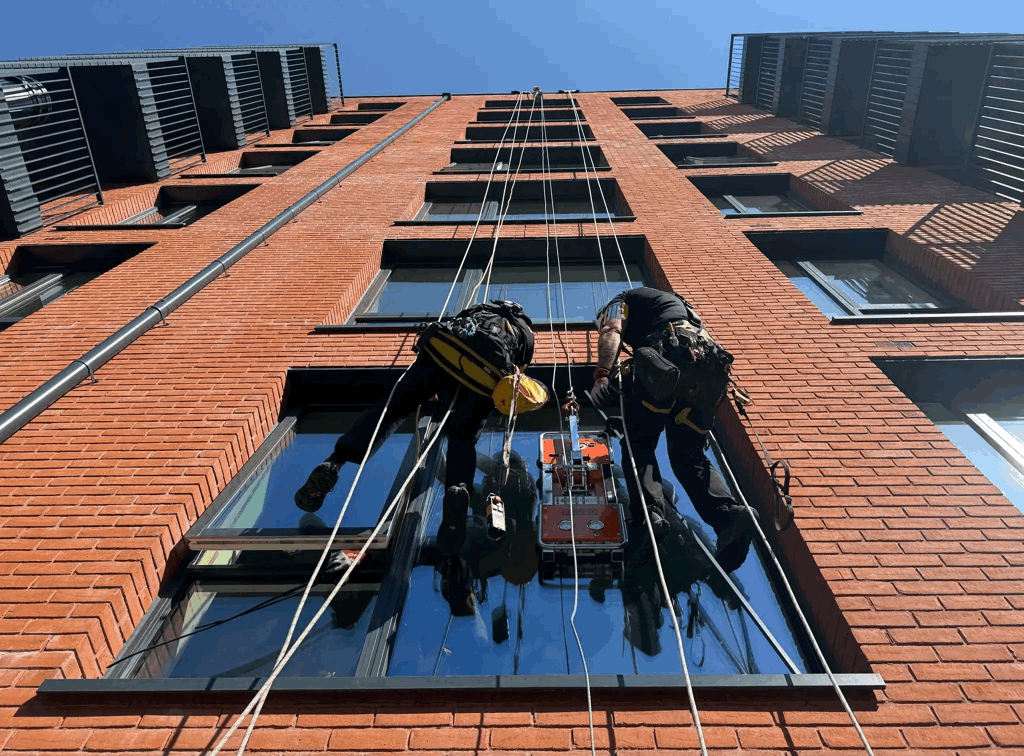
The first step is always a thorough investigation. This involves more than just a visual check from ground level. Our teams use high-level access, such as MEWPs (Mobile Elevating Work Platforms) or industrial rope access, to conduct "tap tests" and visual checks for hairline fractures.
Intrusive inspections are then performed. We remove specific panels to inspect the cavity, checking for:
• The presence and integrity of cavity barriers.
• The condition of the mineral wool or PIR insulation.
• Signs of galvanic corrosion on the support brackets.
• The security of the primary fixings into the building substrate.
Phase 2: Data Analysis and Reporting
Once the data is collected, we provide a technical report that categorises the risks. This helps managing agents and developers understand whether they need a terracotta panel replacement for a few damaged units or a systemic overhaul. This phase is critical for budgeting and for securing insurance or government funding.
Phase 3: Developing a Remediation Strategy
Based on our findings, we outline the best course of action. This might include:
• Localised Façade Repair: Addressing specific areas of damage or loose fixings.
• System Remediation: Replacing non-compliant insulation and installing new fire-stopping while retaining the original terracotta tiles where possible.
• Full Cladding Replacement: A complete strip-back and install of a new, fully compliant system.
Terracotta Facade Repair vs. Full Replacement
One of the most common questions we receive is whether a building needs a total reclad. The answer depends entirely on the condition of the sub-frame and the fire rating of the internal components. Terracotta facade repair is often a viable and cost-effective route if the structural integrity of the system is intact.
When Repair is Appropriate
If the issues are limited to aesthetic damage—such as impact chips or minor cracking—individual terracotta panel replacement is the logical step. Similarly, if the support rails are in good condition but some fixings have loosened, a targeted tightening and replacement programme can extend the life of the façade by decades.
Repair is also suitable for addressing minor water ingress issues caused by failed sealants at junctions with windows or doors. These "interface" details are often the weakest point of a cladding system and can be remediated without stripping large sections of the building.
When Full Replacement is Necessary
Replacement becomes necessary when the underlying system is fundamentally flawed. This is common in buildings where:
• The support rails are severely corroded and can no longer safely hold the weight of the tiles.
• The insulation is highly combustible (e.g., certain types of expanded polystyrene or non-FR rated PIR).
• The original installation was so poor that the "as-built" drawings bear no resemblance to the actual construction, making localized repairs impossible.
In these cases, terracotta cladding replacement allows for the installation of modern, high-performance materials that improve the building's thermal efficiency and safety profile simultaneously.
Technical Challenges in High-Rise Remediation
Remediating a high-rise building presents unique logistical hurdles. Unlike a new-build project, we are working on occupied buildings where residents' lives must continue with minimal disruption. This requires a sophisticated approach to site management and technical execution.
Access and Logistics
Tall buildings often have limited footprints. We must determine the most efficient way to reach the façade—whether through mast climbers, scaffolding, or cradles. Each has its pros and cons regarding cost, speed, and the level of privacy for residents. Terracotta cladding remediation projects must also account for wind loads, which are significantly higher at altitude and can impact the safety of panel removal.
Managing Resident Disruption
Living in a building undergoing remediation can be stressful. We prioritise clear communication and structured working hours. By sequencing the works—for example, completing one elevation at a time—we ensure that the impact on natural light and balcony access is kept to a minimum for the shortest possible duration.
Interface Complexity
A terracotta façade does not exist in isolation. It meets windows, balconies, rooflines, and ground-floor masonry. During a terracotta rainscreen remediation, these interfaces must be carefully managed to ensure the continuity of the weather seal and the fire barrier. Failure to get these details right can lead to leaks or fire-safety breaches in the future.
The Role of Fire Cavity Barriers
In the context of modern UK safety standards, the cavity barrier is perhaps the most important part of the terracotta cladding remediation process. These barriers are designed to close the gap between the cladding and the building wall in the event of a fire, preventing the "chimney effect" that allows flames to spread rapidly upward.
Many older terracotta systems were installed with insufficient barriers or with gaps around service penetrations. Our remediation works focus heavily on:
• Installing intumescent "open-state" barriers that allow for ventilation during normal use but expand to seal the cavity during a fire.
• Ensuring barriers are correctly fixed to the inner leaf of the building.
• Verifying that no gaps exist where the barrier meets the vertical support rails.
Book a terracotta cladding remediation survey
Choosing the Right Materials for Replacement
When terracotta panel replacement is required, sourcing the correct materials is vital. Terracotta is a natural product, and colours can vary between production batches. We work closely with manufacturers to colour-match new tiles to the existing ones, ensuring the building’s aesthetic remains consistent.
Beyond aesthetics, we also consider:
• Impact Resistance: Using higher-grade tiles for ground-floor areas where accidental damage is more likely.
• Weight Constraints: Ensuring new tiles do not exceed the load-bearing capacity of the existing or new support structure.
• Sustainability: Opting for tiles with high recycled content and those manufactured in energy-efficient kilns.
Comparison: Repair vs. Replacement
Remediation Strategy Comparison
Feature
Targeted Repair
Full Replacement
Cost
Lower - focus on specific defects.
Higher - capital intensive project.
Disruption
Minimal - localized access.
Significant - full scaffolding likely.
Longevity
Extends life of current system.
Restarts lifecycle with new warranty.
Compliance
Addresses specific safety gaps.
Ensures 100% modern compliance.
Legal and Financial Considerations
Terracotta cladding projects often involve complex legal and financial layers. In the UK, the Building Safety Act 2022 has changed how these projects are funded and who is responsible for the costs. Whether you are a freeholder, a developer, or part of a Right to Manage (RTM) company, understanding these dynamics is essential.
The Building Safety Fund (BSF)
For residential buildings over 18 metres, the BSF may provide funding for the terracotta cladding remediation if the system is deemed unsafe. We assist clients by providing the technical evidence and costings required for these applications, ensuring that the proposed works meet the fund's strict criteria.
Professional Indemnity and Warranties
Any remediation work must be backed by robust warranties. At CladdingTesting.com, we ensure that every stage of the project—from the initial cladding inspection to the final sign-off—is documented and compliant with insurance requirements. This provides peace of mind for building owners and is vital for future property transactions.
Best Practices for Terracotta Maintenance
Once remediation is complete, a proactive maintenance regime is the best way to prevent future issues. Terracotta is often marketed as "maintenance-free," but while the material is durable, the system as a whole requires care.
- Annual Inspections: Check for loose panels, especially after high-wind events.
- Gutter and Drainage Cleaning: Ensure that the rainscreen's drainage path is clear of debris to prevent water build-up.
- Sealant Reviews: Check the condition of expansion joints and window seals every 5–7 years.
- Cleaning: Use only pH-neutral cleaners if the façade requires washing, as harsh chemicals can damage the natural glaze or finish of the terracotta.
By following these steps, you can significantly reduce the likelihood of needing major terracotta facade repair in the future. A well-maintained building not only looks better but also retains its value and ensures the safety of its inhabitants.
Frequently Asked Questions
Is terracotta cladding a fire risk?
The terracotta tiles themselves are usually A1 or A2-s1, d0 fire-rated, meaning they are non-combustible. However, the "system" as a whole can be a risk if the insulation, vapour membranes, or cavity barriers behind the tiles do not meet current safety standards. Terracotta cladding remediation often focuses on these hidden components rather than the tiles themselves.
How much does terracotta cladding replacement cost?
Costs vary significantly based on building height, access requirements, and the extent of the damage. A targeted terracotta panel replacement might cost a few thousand pounds, whereas a full reclad of a high-rise block can run into the millions. A detailed site investigation is the only way to get an accurate estimate.
How long does a remediation project take?
A typical terracotta rainscreen remediation for a mid-sized apartment block can take anywhere from 6 to 18 months. This includes the initial survey, design phase, material procurement, and the physical works on site. Working on occupied buildings requires a slower, more careful pace to ensure resident safety.
Can you match the colour of my old terracotta tiles?
Yes, we work with specialist manufacturers to provide a terracotta panel replacement that matches the original colour, texture, and profile. Even if the original manufacturer is no longer in business, we can often source compatible alternatives that blend seamlessly with the existing façade.
Do I need to move out during the remediation?
In the vast majority of cases, no. Terracotta cladding remediation is designed to be carried out while the building is occupied. We use external access methods like scaffolding or mast climbers, meaning work is performed from the outside. We take great care to manage noise, dust, and privacy for all residents.
What is the difference between remediation and repair?
Repair usually refers to fixing a specific, localised problem, such as a cracked tile or a leaking joint. Remediation is a more comprehensive process aimed at fixing a systemic issue—like non-compliant fire barriers—to ensure the building meets modern safety and performance standards.
Why Technical Expertise Matters
Choosing a partner for terracotta cladding remediation is a decision that impacts the safety and financial health of your building for years to come. At CladdingTesting.com, we don't just look at the surface; we investigate the entire wall assembly to provide solutions that last.
Our approach is rooted in technical excellence and practical experience. We understand the nuances of different terracotta systems, from early "heavyweight" panels to modern lightweight rainscreens. This knowledge allows us to identify the most efficient route to compliance, whether that involves minor repairs or a complete system overhaul.
If you are concerned about the condition of your building's façade, the first step is a professional assessment. We provide the clarity and technical detail you need to make informed decisions about your property’s future. Contact our team today to discuss your requirements and begin the process of securing your building’s envelope.
Book a terracotta cladding remediation survey
What it costs
Pricing depends on building height, access and scope
Reviews
What clients say
Verified 5-star Google reviews from building owners, managing agents and contractors.