
Glossary · Single word
Replacing
In short
The action of removing and installing new components, materials, or systems
Replacing involves the complete removal of existing cladding components and the installation of new materials to ensure an external wall system meets current performance and regulatory standards, typically following a detailed technical assessment of the building fabric.
Last updated
On this page
Replacing
Definition and Core Concept
In the context of the UK built environment, "replacing" refers to the comprehensive removal of existing external wall components and the subsequent installation of new materials. While often used interchangeably with "remediation" or "rectification" in casual discourse, the term carries specific technical weight within the cladding industry. It denotes a process where the original assembly—which may include the outer rainscreen, insulation, cavity barriers, and support systems—is deemed unsuitable for retention, necessitating a full substitution.
Replacing is distinct from repair or maintenance. Where a repair might involve fixing a specific localized defect or replacing a small number of damaged panels, replacing typically involves a large-scale or systemic change to the building’s envelope. This process is undertaken to align the building’s external wall system with contemporary performance standards, structural requirements, or updated regulatory frameworks. The objective is to provide a new, fully integrated system that performs the intended functions of weatherproofing, thermal insulation, and fire safety for the remainder of the building's design life.
Application in Cladding Testing and Remediation
The decision to move from testing to replacing is typically informed by a series of technical assessments. In the UK, this often begins with a PAS 9980 appraisal or an EWS1 (External Wall System) assessment. If the findings of these reports indicate that the existing materials do not meet the necessary performance criteria, a strategy for replacing the system is developed. This is common in scenarios where the core material of a composite panel or the type of insulation present is identified as having a performance profile that requires mitigation.
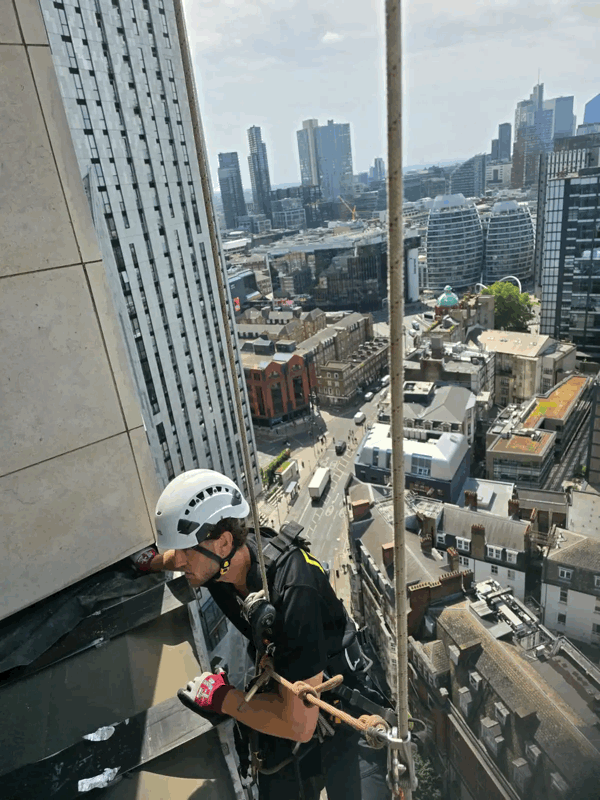
The process of replacing involves significant technical oversight. It begins with the safe stripping of the original materials, which often requires complex access solutions such as mast climbers or integrated scaffolding. Once the building substrate is exposed, it is inspected for secondary issues, such as moisture ingress or substrate degradation, before the new system is installed. Each component of the replacement system—ranging from the mechanical fixings to the fire-stopping measures—must be verified as compatible with the specific structural and environmental requirements of the building in question.
Integration with Building Fabric and External Walls
Replacing a cladding system is not merely an aesthetic exercise; it is a fundamental intervention in the building fabric. The external wall is a multi-layered system where each element must function in harmony. When replacing components, professionals must consider how new materials interact with the existing structural frame, whether that frame is concrete, steel, or timber.
| Component Category | Role in Replacement Process |
|---|---|
| External Facade | The visible layer (e.g., ACM, HPL, or mineral panels) replaced for performance or durability. |
| Insulation Layer | Materials replaced to meet specific thermal and fire performance requirements. |
| Cavity Barriers | Essential safety components installed at specific intervals to prevent the spread of smoke and flame. |
| Support Substructure | The rails and brackets that must be assessed for structural integrity before new panels are hung. |
The replacement process provides an opportunity to address "hidden" defects within the building fabric. For instance, if the original installation lacked adequate vapour membranes or if the original cavity barriers were misaligned, the act of replacing the entire system allows these deficiencies to be corrected. This ensures that the new external wall system functions as a cohesive unit, managing moisture, heat, and air pressure as intended.
Replacing
Regulatory and Process Context in England and Wales
The regulatory landscape for replacing cladding in England and Wales is governed primarily by the Building Regulations and the Building Safety Act 2022. Any significant replacement of an external wall system constitutes a "material alteration," meaning the new work must comply with current Building Regulations, particularly Requirement B4 regarding external fire spread.
For "Higher-Risk Buildings" (typically those over 18 metres or seven storeys), the process is subject to the gateway regime managed by the Building Safety Regulator (BSR). Before replacing can commence, a Building Control approval application must be submitted at Gateway 2, detailing the proposed materials and how they meet functional requirements. Upon completion, a further application at Gateway 3 is required to demonstrate that the work was carried out in accordance with the approved plans. Building owners must ensure that all replacement work is documented through a "golden thread" of information, providing a transparent record of the materials used and the competence of those who installed them.
Considerations for Building Owners and Managers
For Responsible Persons, such as Freeholders, Resident Management Companies (RMCs), and Right to Manage (RTM) directors, the concept of replacing represents a major capital project. It requires a structured approach involving multi-disciplinary teams, including fire engineers, facade consultants, and quantity surveyors. Understanding the difference between a "like-for-like" replacement and a system upgrade is vital, as modern standards may require different thicknesses of insulation or different types of mechanical fixings than were originally used.
Management teams must also navigate the procurement and insurance aspects of replacing cladding. Professional indemnity insurance for designers and contractors, as well as the provision of warranties for the new system, are standard requirements. Because replacing involves significant disruption to residents, including the presence of scaffolding and potential noise, clear communication strategies and robust project management are essential to ensure the project moves from the testing phase to the completion phase effectively.
Common Misunderstandings
A frequent misunderstanding is that replacing is a simple "skin-deep" procedure. In reality, the facade is only the outermost part of a complex assembly. Replacing the facade without addressing the underlying insulation or fire-stopping may result in a system that still fails to meet modern safety or thermal standards. Consequently, the term usually implies a "full-system" replacement unless specifically stated otherwise.
Another misconception is that replacing must always result in an identical appearance. While planning permissions often dictate that the replacement cladding should be visually similar to the original, the technical specifications of the materials will often differ. For example, replacing a combustible composite panel with a non-combustible A1-rated alternative may involve changes in panel weight or fixing methods, which can subtly alter the external appearance or the depth of the wall assembly.
Related Terminology
To understand "replacing" fully, it is helpful to distinguish it from related industry terms:
- Remediation: A broad term covering any work required to address defects. Replacing is a specific method of remediation.
- Retrofitting: Often refers to adding new systems (like insulation) to an existing building to improve energy efficiency, though it overlaps with replacing when the facade is involved.
- Rectification: The act of correcting specific installation errors or defects, which may or may not involve replacing the entire system.
- Reinstatement: Often used in an insurance context, referring to returning a building to its original state following damage.
- Overcladding: The practice of installing a new cladding system over an existing one. This is distinct from replacing, as the original materials are not removed.
In the current UK climate, the emphasis remains on ensuring that replacing is carried out by competent professionals using materials that have been rigorously tested as a complete system, rather than as individual, isolated components.
Replacing