
Glossary · Single word
Initial
In short
the first stage or point of commencement for an inspection, assessment or works
The term "initial" describes the commencement phase of cladding inspections and assessments, providing a baseline for UK building safety evaluations, material identification, and the definition of subsequent intrusive or remedial technical work.
Last updated
On this page
Initial
Definition and Technical Scope
In the context of the UK cladding and external wall sectors, the term "initial" refers to the first stage or point of commencement for an inspection, assessment, or remediation project. It denotes the baseline phase where data is first gathered, existing conditions are documented, and the scope of subsequent technical interventions is defined.
This term is rarely used in isolation; rather, it serves as a prefix to critical procedural steps such as "initial appraisal," "initial site visit," or "initial assessment." In a professional capacity, the initial phase represents the transition from a passive state of management to an active state of investigation. It is the period during which a competent professional—typically a fire engineer, building surveyor, or specialist cladding consultant—establishes the fundamental characteristics of the building’s external wall system (EWS) before more intrusive or detailed evaluative work begins.
Initial Assessments in the UK Regulatory Framework
The regulatory environment in England and Wales, significantly shaped by the Building Safety Act 2022 and the Fire Safety Act 2021, necessitates a structured approach to building safety. The "initial" phase is often the gateway to compliance with these legislative requirements. For instance, under the Fire Safety (England) Regulations 2022, responsible persons for high-rise residential buildings must undertake certain checks; the initial assessment determines whether the building falls within specific risk categories and what level of further investigation is required.
In the EWS1 (External Wall System) process, the initial stage involves a desk-top review of "as-built" drawings, operation and maintenance (O&M) manuals, and previously issued certificates. This preliminary review informs the professional whether the building’s fabric can be verified through documentation alone or if it necessitates a physical site inspection. The initial findings dictate the trajectory of the entire safety case, influencing insurance premiums, mortgageability, and the legal obligations of the Accountable Person.
Application to Building Fabric and External Wall Systems
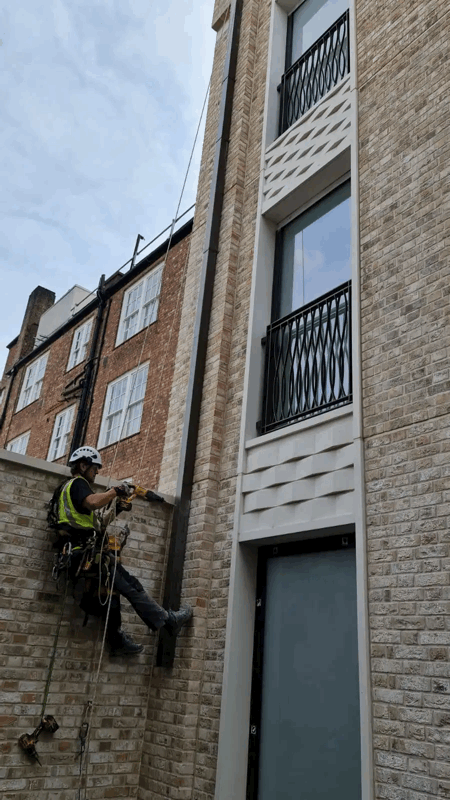
When applied to the building fabric, "initial" pertains to the first physical contact with the cladding assembly. This is often characterised by non-intrusive methods. A professional might conduct an initial visual survey from ground level or using drones to identify obvious signs of degradation, improper installation, or the presence of specific materials such as Aluminium Composite Material (ACM) or High-Pressure Laminate (HPL).
This phase is distinct from "detailed" or "intrusive" investigations. The initial stage aims to identify "what" is there, whereas subsequent stages identify "how" it is performing or how it is fixed to the substrate. The initial data set typically includes:
- Identification of cladding types and insulation materials.
- The presence and apparent condition of fire breaks and cavity barriers.
- General condition of the external leaf, including fixings and joints.
- Accessibility constraints for future high-level inspections.
The Role of Initial Surveys in Remediation
For buildings requiring repair or replacement of cladding systems, the initial survey acts as the foundation for the specification of works. In the UK, remediation projects often begin with an initial feasibility study. This study assesses the viability of different repair strategies, considering the existing structural capacity of the building and the compatibility of new materials with the remaining substrate.
During this stage, the project team establishes the "initial design intent," which serves as a benchmark for the final replacement system. Without a robust initial assessment, there is a risk that the scope of work may be incorrectly defined, leading to variations in cost and timeline once the project reaches the construction phase. In the context of the Building Safety Fund (BSF) or the Cladding Safety Scheme (CSS), the initial application and technical submission are pivotal in securing government funding for remediation.
Initial
Responsibilities for Building Owners and Managers
Building owners, managing agents, and Resident Management Company (RMC) directors must understand that the initial phase is an information-gathering exercise, not a final determination. It is a common requirement for professional indemnity (PI) insurance that a structured, phased approach is taken to building assessments.
Managing agents often oversee the procurement of initial reports. It is vital to ensure that the scope of these reports is clearly defined. An initial assessment may conclude that no further action is required, or it may act as a trigger for a more complex Stage 2 intrusive survey. Directors should be aware that the initial findings are often used to communicate with leaseholders regarding the status of their building’s external wall safety.
| Phase | Primary Objective | Typical Output |
|---|---|---|
| Initial | Identification of materials and systems | Preliminary report / Desk-top study |
| Intrusive | Verification of internal composition | Sampling / Borescope records |
| Remedial | Correction of identified defects | Completion certificate / EWS1 form |
Common Misunderstandings and Clarifications
A frequent misunderstanding is the belief that an "initial assessment" provides a definitive fire safety rating. In reality, the initial stage often results in a recommendation for further, more granular testing. It is a screening tool designed to filter out buildings that clearly do not pose a risk and to prioritise those that require urgent attention.
Another misconception involves the validity of "initial" documentation. Over time, as regulations evolve and materials age, an initial assessment conducted several years ago may no longer be considered sufficient by lenders or insurers. The UK industry increasingly views safety as a continuous management process rather than a one-time event. Therefore, an initial assessment is the start of a lifecycle of monitoring, rather than a final conclusion.
Related Terminology and Process Context
The term "initial" is closely linked to several other technical descriptors in the cladding sector:
- Preliminary: Often used interchangeably with initial, though "preliminary" sometimes implies a less formal or draft status.
- Baseline: The established state of the building at the point of the first inspection, used to measure future deterioration or the impact of repairs.
- Intrusive: The stage following an initial assessment where the building fabric is physically opened to inspect internal cavities and fire stopping.
- Desktop Study: A specific type of initial assessment that relies solely on existing documentation and photographic evidence without a site visit.
- Appraisal: The broader process of evaluation, of which the initial stage is the commencement.
In summary, the initial stage is the foundational element of any cladding-related activity in the UK. It requires technical competence and a clear understanding of the regulatory landscape to ensure that the subsequent phases of testing, repair, or replacement are based on accurate and comprehensive data.
Initial