
GRP cladding remediation
GRP Cladding Remediation
Glass Reinforced Plastic (GRP), often referred to as fibreglass, has been a staple in the UK construction industry for decades. Its lightweight nature, versatility in moulding, and durability made it a popular choice for architectural features, decorative cornices, and modular wall panels. However, as building safety standards evolve and the long-term performance of these materials becomes clearer, many property owners now face the technical challenge of GRP cladding remediation.
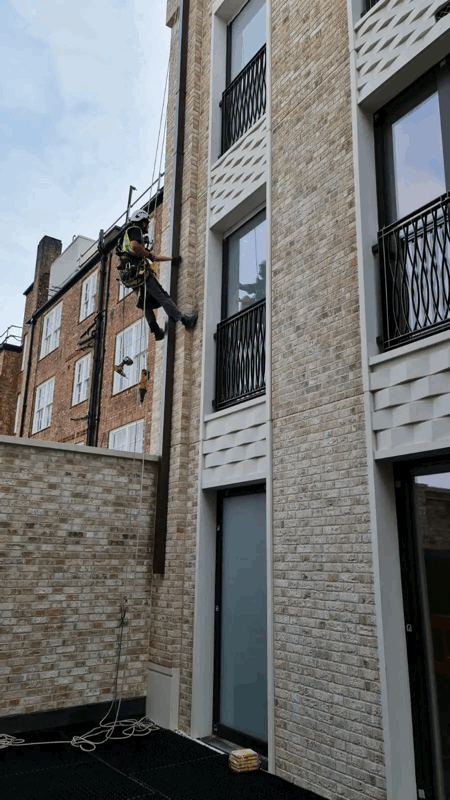
Independent
UK-wide coverage
Survey options
Clear reporting
On this page
Book a grp cladding remediation survey
Glass Reinforced Plastic (GRP), often referred to as fibreglass, has been a staple in the UK construction industry for decades. Its lightweight nature, versatility in moulding, and durability made it a popular choice for architectural features, decorative cornices, and modular wall panels. However, as building safety standards evolve and the long-term performance of these materials becomes clearer, many property owners now face the technical challenge of GRP cladding remediation.
Remediation is not a one-size-fits-all process. Depending on the age of the building, the fire rating of the original resin, and the condition of the underlying fixings, the necessary action could range from localised repairs to a complete façade overhaul. At CladdingTesting.com, we focus on identifying the specific failure points of a GRP system to ensure that any intervention is both safe and cost-effective.
Key Takeaways
- Fire Safety Compliance: Many older GRP panels do not meet modern fire performance standards (specifically regarding combustibility and smoke production) and require urgent assessment.
- Structural Integrity: GRP is prone to UV degradation and micro-cracking over time, which can lead to water ingress and the failure of internal fixings.
- Investigation First: Successful GRP cladding remediation begins with intrusive surveys to determine if the issue is aesthetic, structural, or safety-related.
- Repair vs. Replacement: Localised GRP facade repair is often viable for decorative elements, but systemic fire safety failures usually necessitate GRP panel replacement.
- Logistical Complexity: Remediation on high-rise buildings requires specialist access solutions and careful management of resident safety during the works.
Understanding the complexities of GRP systems is essential for managing agents and building owners. This material behaves differently than traditional masonry or modern aluminium composites, requiring a specialist approach to both testing and physical remediation works.
What is GRP Cladding Remediation?
GRP cladding remediation is the process of inspecting, upgrading, or replacing Glass Reinforced Plastic building components to ensure they meet modern safety and performance standards. In the UK, this work is frequently driven by the need to comply with updated Building Regulations and fire safety legislation, such as the Building Safety Act 2022.
Remediation differs from simple maintenance because it addresses fundamental defects in the external wall system. This may involve:
- Improving the fire retardancy of existing panels.
- Replacing non-compliant GRP with non-combustible alternatives.
- Fixing structural failures where panels have become detached from the building substrate.
- Remediating the cavity behind the GRP, including the installation of fire breaks and cavity barriers.
Common Reasons for Remediation
Building owners usually seek GRP cladding remediation for three main reasons: fire safety, structural failure, or water ingress. Older GRP resins were often highly flammable, and even those treated with fire retardants can lose their effectiveness over decades of exposure to the elements.
Furthermore, GRP is a composite material. If the ratio of glass fibre to resin is incorrect, or if the gel coat (the protective outer layer) fails, the panel can become brittle. This leads to cracking, which allows water to reach the timber or metal sub-frame, causing secondary structural issues.
Assessing the Risk: Why GRP Requires Specialist Attention
Unlike metal cladding, GRP is an organic composite. This means its reaction to fire and its ageing process are unique. When assessing a building, we look at several critical factors that determine the scope of the remediation project.
Combustibility and Fire Performance
The primary concern with GRP in the current UK regulatory climate is fire spread. Many GRP panels installed in the 1990s and early 2000s were Class 3 or Class 0 rated under old British Standards. However, modern requirements for high-rise residential buildings (over 11 or 18 metres) often demand materials that are non-combustible or of limited combustibility (Euroclass A1 or A2-s1, d0).
A GRP cladding replacement programme is often the only way to bring a building into compliance if the existing panels are found to be highly flammable. During our Cladding Testing procedures, we take samples for laboratory analysis to determine the exact fire classification of the material currently in situ.
UV Degradation and "Fibre Bloom"
Over time, the gel coat on GRP panels can wear away due to UV exposure. This exposes the glass fibres beneath, a phenomenon known as "fibre bloom." Not only does this look unsightly, but it also makes the panel porous. Once moisture enters the composite matrix, freeze-thaw cycles can cause the material to delaminate, significantly weakening the façade.
Fixing and Substructure Failure
GRP panels are often large and lightweight, but they are subject to significant wind loading. We frequently find that GRP facade repair is needed not because of the panel itself, but because the original fixings were insufficient. Expansion and contraction caused by temperature changes can stress the fixing points, leading to elongated holes and, in extreme cases, panels becoming detached from the building.
The Process of GRP Cladding Remediation
A systematic approach is required to ensure that remediation is effective and long-lasting. We follow a clear methodology to move from initial concern to a certified, safe building envelope.
1. Desktop Study and Initial Survey
We begin by reviewing the "as-built" drawings and Operation and Maintenance (O&M) manuals. We look for the manufacturer’s specifications for the GRP resin and the fire safety certifications provided at the time of construction. This helps identify potential red flags before we even arrive on site.
2. Intrusive Inspection and Testing
Physical inspection is the only way to confirm the condition of the external wall system. This involves:
- Opening up works: Removing small sections of cladding to inspect the cavity, insulation, and cavity barriers.
- Material sampling: Taking GRP coupons for independent fire and structural testing.
- Borescope inspections: Using cameras to view the condition of fixings behind panels without full removal.
3. Remediation Strategy Development
Once the data is collected, we determine the best course of action. If the panels are structurally sound and fire-compliant but suffer from surface degradation, a GRP cladding refurbishment may be recommended. This involves cleaning, repairing cracks, and applying a new specialist UV-resistant coating.
If the material is non-compliant or structurally compromised, we develop a plan for GRP panel replacement or a full recladding scheme. This strategy will include detailed costings, timelines, and access requirements.
Repair vs. Replacement: Making the Right Decision
One of the most common questions we receive is whether a building needs a full GRP cladding replacement or if GRP facade repair is sufficient. The answer depends entirely on the underlying cause of the issue.
When to Choose Repair and Refurbishment
- Surface damage: Scratches, minor impact damage, or localized gel coat failure.
- Failed sealants: When the panels are fine, but the joints between them have perished, leading to water ingress.
- Minor structural issues: Where a few fixings have loosened but the overall system is secure.
- Aesthetic fading: When the building needs a visual refresh but the panels meet fire safety standards.
When Replacement is Necessary
- Fire safety failure: If the GRP is found to be combustible and is used on a high-rise residential building.
- Systemic delamination: If the glass fibres are visible across large areas and the structural integrity is compromised.
- Widespread water ingress: If the GRP system has allowed moisture to rot the underlying timber frame or corrode the light-gauge steel frame (LGSF).
- Regulatory compliance: When an EWS1 assessment or fire risk appraisal of external walls (FRAEW) identifies the GRP as a significant risk.
Book a grp cladding remediation survey
Technical Challenges in GRP Replacement Projects
Replacing GRP is more complex than simply "swapping out" panels. Because GRP is often used for complex shapes—such as curved corners, ornate fascias, or deep window reveals—replacing it requires high levels of technical skill.
Interface Details
GRP often interfaces with other materials, such as brickwork, aluminium windows, or roofing membranes. When undertaking GRP panel replacement, these interfaces must be carefully managed to ensure the building remains watertight and that the fire barriers are continuous across different materials.
Weight and Structural Loading
If we are replacing GRP with a different material, such as Glass Reinforced Concrete (GRC) or aluminium, we must consider the weight difference. GRP is incredibly light. Replacing it with a heavier material may require reinforcements to the building’s primary structure or a completely new secondary rail system.
Access in Occupied Buildings
Most GRP cladding remediation projects take place while the building is occupied. This requires meticulous planning. Whether using mast climbers, cradles, or traditional scaffolding, we must ensure the safety of residents and the public. We also work to minimise noise and dust, especially when removing old panels or drilling into the building substrate.
Fire Barriers and the "Hidden" Remediation
A significant part of GRP cladding remediation involves what you can't see. Even if the GRP panels themselves are replaced with A1-rated materials, the remediation is not complete without addressing the cavity behind them.
In many older buildings, cavity barriers are either missing, incorrectly installed, or made of inappropriate materials. During a GRP cladding replacement project, we ensure that:
- Horizontal and vertical cavity barriers are installed to prevent the "chimney effect" in the event of a fire.
- Intumescent seals are used around penetrations, such as vents and pipes.
- Non-combustible insulation (usually mineral wool) replaces any flammable foam boards found in the cavity.
The Role of GRP Cladding Refurbishment
For buildings where the GRP is fire-compliant and structurally sound, GRP cladding refurbishment offers a sustainable and cost-effective way to extend the life of the façade. GRP is a resilient material, and with the right care, it can last for many more decades.
Refurbishment typically involves a deep chemical clean to remove atmospheric pollutants and biological growth. Following this, any structural cracks are "vee-ed out" and filled with compatible resin and matting. Finally, a high-performance architectural coating is applied. These coatings are not standard paints; they are engineered to bond with the resin, provide UV protection, and often carry warranties of 10 to 15 years.
Navigating Regulations and Compliance
The regulatory landscape for cladding in the UK is stringent. Any GRP cladding remediation work must be carried out in accordance with:
- The Building Safety Act 2022: Providing a clear "golden thread" of information regarding building safety.
- Approved Document B: Covering fire safety requirements for building envelopes.
- BS 8414: The standard for fire performance of external cladding systems (where full-scale testing is required).
At CladdingTesting.com, we assist managing agents in compiling the necessary documentation to prove compliance, which is essential for insurance purposes and for the eventual sale or remortgage of individual units within the building.
Logistics and Project Management
Successful remediation requires more than just construction skill; it requires expert project management. High-rise projects involve complex logistics, from securing pavement licenses for scaffolding to managing the delivery and storage of large replacement panels in tight urban environments.
We provide a single point of contact for the duration of the project. Our team coordinates with fire engineers to ensure the design is safe, with surveyors to ensure it is accurate, and with residents to ensure they are kept informed of progress. Our goal is to move the project from the "investigation" phase to "completion" with as little friction as possible.
Frequently Asked Questions
Is all GRP cladding flammable?
Not necessarily, but many older GRP systems contain resins that are combustible. The fire performance of GRP depends on the specific additives and fillers used during manufacture. Only an intrusive survey and laboratory testing can confirm the fire rating of the GRP on your building.
How long does GRP cladding remediation take?
The timeline varies significantly based on the building size and the scope of work. A localised GRP facade repair might take a few weeks, whereas a full GRP cladding replacement on a high-rise block can take several months. We provide detailed programmes of work following our initial assessment.
Can I just paint over old GRP to fix it?
Painting is an aesthetic fix, not a remedial one. While a GRP cladding refurbishment includes specialist coatings, these are applied only after the structural integrity and fire safety of the panels have been verified. Applying standard paint will not address underlying issues like delamination or non-compliant fire performance.
Do I need to move residents out during remediation?
In the vast majority of cases, no. We are experienced in working on occupied buildings. We use methods that allow residents to remain in their homes, though there may be temporary restrictions on balcony use or the presence of scaffolding outside windows.
What is the difference between GRP and GRC?
GRP (Glass Reinforced Plastic) uses a plastic resin matrix, while GRC (Glass Reinforced Concrete) uses a cement-based matrix. GRC is naturally non-combustible (A1 rated), making it a popular choice for GRP panel replacement projects where fire safety is the primary concern.
How much does GRP remediation cost?
Costs are project-specific. Factors include the height of the building, the method of access, the extent of the damage, and whether the cavity insulation needs replacing. We provide transparent, itemised quotes after completing a site survey.
Will remediation help with my EWS1 form?
Yes. GRP cladding remediation is often the direct result of a building receiving a B2 rating on an EWS1 form. Completing the recommended remediation works is the path to achieving a B1 or A1 rating, which is often required by mortgage lenders.
Next Steps for Building Owners
If you are responsible for a building with GRP elements and have concerns about its condition or compliance, the first step is a professional evaluation. Ignoring signs of degradation or failing to address fire safety concerns can lead to increased costs and legal liabilities in the future.
At CladdingTesting.com, we provide the technical expertise needed to navigate the complexities of the building envelope. We don't just identify problems; we provide the roadmap to solve them. Whether your building requires targeted GRP facade repair or a large-scale GRP cladding replacement, we ensure the work is done to the highest standards of safety and quality.
Contact our team today to discuss your building and arrange an initial site walk-around or a detailed intrusive survey. We are here to help you understand exactly what is wrong with your cladding and, more importantly, how to fix it.
Book a grp cladding remediation survey
What it costs
Pricing depends on building height, access and scope
Reviews
What clients say
Verified 5-star Google reviews from building owners, managing agents and contractors.