
Glossary · Two-word term
Targeted Remediation
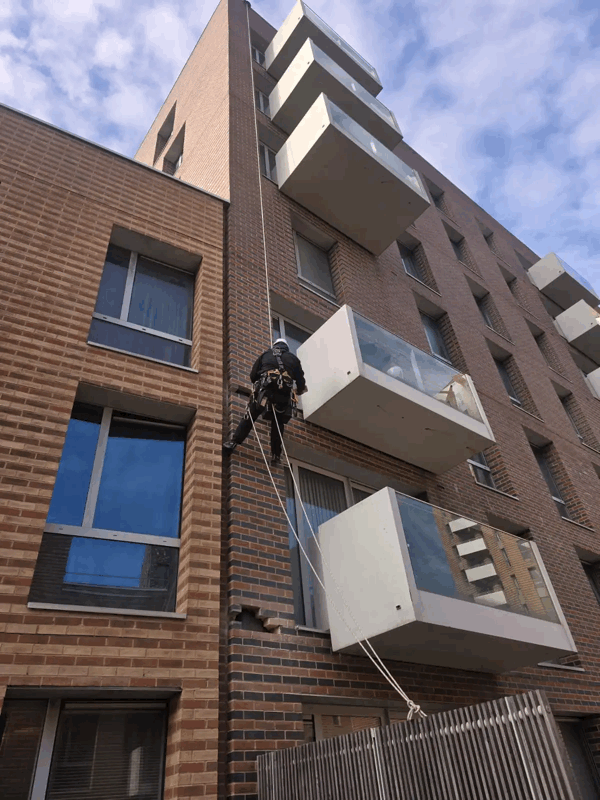
In short
repair work focusing on specific areas or components of a building's facade
Targeted remediation is a precise engineering approach focused on repairing or replacing specific high-risk components of a building's facade rather than a full replacement, often utilised when a risk assessment identifies localised defects that can be proportionately mitigated.
Last updated
On this page
Targeted Remediation
Definition and Scope of Targeted Remediation
Targeted remediation refers to repair work focusing on specific areas or components of a building’s facade rather than the wholesale removal and replacement of the entire external wall system. In the context of UK cladding and fire safety, this approach is predicated on the principle that fire risks can sometimes be mitigated to a tolerable level by addressing localised defects, missing components, or specific high-risk elements.
Unlike full-scale remediation, which involves stripping a building back to its structural frame or inner leaf, targeted interventions aim to rectify identified non-conformities while retaining as much of the existing functional fabric as possible. This might involve the installation of cavity barriers where they are missing, the replacement of specific combustible decorative features, or the reinforcement of fire-stopping around window apertures. The scope is defined strictly by the findings of technical assessments and the requirements of the chosen fire safety strategy for the specific premises.
Role in Technical Assessment and Testing
The feasibility of targeted remediation is usually determined following a comprehensive appraisal of the external wall system, often documented through an EWS1 (External Wall System) survey or a PAS 9980 Fire Risk Appraisal of External Walls (FRAEW). These assessments do not merely identify the presence of materials; they evaluate how those materials, the building’s height, and its overall geometry contribute to fire spread risk.
During the testing phase, intrusive inspections—often involving the creation of 'sampling holes'—reveal whether the as-built construction matches the original design drawings. If a surveyor finds that the primary cladding panels are acceptable but the underlying fire-stopping is defective, the recommendation may shift from 'full replacement' to 'targeted remediation'. In this scenario, the remediation focuses solely on the internal cavity voids rather than the external aesthetic layer, provided the overall system performance meets the necessary risk benchmarks.
Interaction with External Wall Systems (EWS)
External wall systems are complex assemblies comprising multiple layers, including the outer rainscreen, insulation, breather membranes, cavity barriers, and the supporting sub-frame. Targeted remediation requires a granular understanding of how these components interact. For example, replacing a highly combustible insulation material while retaining a non-combustible outer leaf is a form of targeted remediation that addresses the primary fuel load without altering the building’s appearance.
The technical challenge of this approach lies in ensuring that the partial intervention does not compromise the weatherproofing or thermal performance of the building. Because the facade functions as a holistic system, any targeted removal of components must be handled with precision to avoid creating thermal bridges or water ingress points. Professionals must ensure that the transition points between the remediated sections and the original fabric are correctly detailed and compatible.
Regulatory Context in England and Wales
In England and Wales, the regulatory landscape is defined by the Building Safety Act 2022 and the Fire Safety Act 2021. These pieces of legislation place a significant emphasis on the 'proportionality' of remediation works. The introduction of PAS 9980:2022 provided a methodology for competent professionals to move away from a binary 'pass/fail' assessment of cladding materials toward a risk-based evaluation.
Under this framework, targeted remediation is often proposed when a holistic risk assessment concludes that the risk to life safety can be reduced to an acceptable level without total replacement. The Building Safety Regulator (BSR) and local building control bodies oversee these works to ensure that once the targeted repairs are completed, the building complies with the functional requirements of the Building Regulations, specifically Requirement B4 (External Fire Spread). It is important to note that the suitability of a targeted approach is subject to the scrutiny of the Relevant Authority and, where applicable, the requirements of the Building Safety Fund or the Responsible Actors Scheme.
Targeted Remediation
Considerations for Building Management
For building owners, Resident Management Companies (RMC), and Right to Manage (RTM) directors, the decision to pursue targeted remediation over full replacement involves several technical and logistical variables. While a targeted approach may result in less disruption for residents and a shorter construction programme, it requires high-level design coordination.
| Factor | Full Remediation | Targeted Remediation |
|---|---|---|
| Occupant Disruption | High; often requires extensive scaffolding and total window enclosure. | Variable; may be restricted to specific elevations or internal access. |
| Material Retention | Low; most facade components are discarded. | High; functional and compliant elements are preserved. |
| Design Complexity | High; requires a complete new facade design. | Very High; requires intricate detailing at interfaces of new/old. |
| Certification | New warranties for the entire system. | Reliance on a mix of new warranties and existing system integrity. |
Managing agents must ensure that all targeted works are fully documented in the building’s 'Golden Thread' of information. This includes precise records of what was replaced, what was retained, and the justification for the intervention. Failure to maintain these records can complicate future insurance renewals or the sale of individual leasehold units.
Common Misunderstandings
A frequent misconception is that targeted remediation is a 'cheaper' or 'lower quality' version of full replacement. In reality, the engineering required to integrate new fire-stopping or components into an existing, aged facade can be more complex than starting from scratch. It is not an aesthetic choice, but a technical one based on life safety risk.
Another misunderstanding is that targeted remediation always involves 'patching' the exterior. In many cases, the external panels are removed and then reinstated after the internal cavity defects have been corrected. To the casual observer, the building may look the same before and after the works, despite significant improvements to the internal fire safety infrastructure. Finally, it is often wrongly assumed that any building with combustible materials must undergo full replacement; current UK guidance allows for these materials to remain if the overall risk is assessed as sufficiently low or if targeted measures can adequately mitigate the risk.
Related Terminology
- Proportionality: The principle that fire safety measures should be commensurate with the level of risk identified.
- Mitigation Measures: Temporary or permanent actions (such as enhanced alarm systems or sprinkler installations) that reduce risk while awaiting or instead of physical facade works.
- Cavity Barrier Remediation: A specific type of targeted work focusing exclusively on the internal fire breaks within the wall system.
- Life Safety Risk: The primary metric used in PAS 9980 to determine if remediation is necessary, focusing on the protection of occupants rather than the preservation of the building structure itself.
- Holistic Assessment: An evaluation that considers the whole building, including its management, fire systems, and evacuation strategy, rather than just the cladding materials.
Targeted Remediation