
Glossary · Two-word term
Panel Replacement
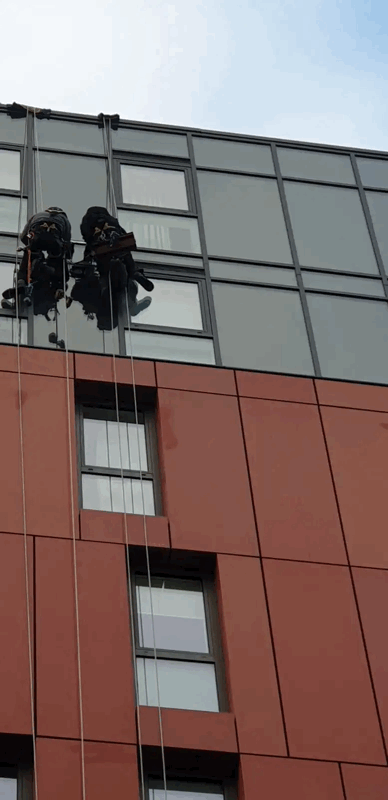
In short
the process of removing existing cladding panels and installing new ones
Panel replacement is the technical process of removing existing cladding components and installing new panels to maintain or improve a building's external wall system. This procedure is central to UK building remediation, requiring strict adherence to current regulatory standards.
Last updated
On this page
Panel Replacement
Definition and Scope of Panel Replacement
Panel replacement is the process of removing existing cladding panels and installing new ones. Within the context of the UK’s built environment, this term refers to the targeted or comprehensive substitution of external cladding components within a larger external wall system (EWS). While the term may imply a simple mechanical swap, in a technical and regulatory capacity, it encompasses the assessment, specification, procurement, and installation phases required to ensure the new components integrate correctly with the remaining building fabric.
The necessity for panel replacement typically arises from several factors, including material degradation, mechanical damage, or the requirement to align the building’s external envelope with updated performance standards. It is distinct from minor repairs, such as localized filling or recoating, as it involves the full detachment of the panel from its supporting subframe and its replacement with a new unit.
Role in Cladding Testing and Remediation
Panel replacement is a central component of remediation strategies following professional inspections. In the UK, the process often follows a detailed assessment of the external wall system, which may include intrusive inspections or laboratory testing of existing materials. If a specific component is identified as not meeting the performance requirements specified in a building’s original design or current regulatory expectations, a replacement strategy is formulated.
In many instances, panel replacement is not an isolated activity but part of a broader programme of works. For example, during a remediation project, testing may reveal that while the primary cladding panels require replacement, the underlying cavity barriers or insulation also necessitate upgrading. Consequently, the replacement of a panel often serves as the primary point of access for addressing deeper systemic issues within the external wall assembly.
Integration with External Wall Systems
An external wall system is a complex assembly comprising various layers, including the internal substrate, insulation, vapour membranes, cavity barriers, and the external cladding panels. Panel replacement must account for the interface between these layers. A replacement panel cannot be treated as a standalone item; its weight, thickness, thermal performance, and reaction to fire must be compatible with the existing subframe and fixings.
| Component | Interaction with Panel Replacement |
|---|---|
| Subframe | Must be inspected for corrosion and structural integrity before new panels are attached. |
| Cavity Barriers | Often replaced or adjusted during panel removal to ensure fire stopping is continuous. |
| Insulation | The thickness of new panels may require adjustments to the insulation layer to maintain the cavity. |
| Fixings | New panels may require different rivet or rail configurations depending on their material composition. |
The technical success of panel replacement depends on maintaining the "line of defense" against water ingress and ensuring that the replacement does not negatively alter the building's thermal bridge profile or moisture management (hygrothermal) performance.
Regulatory Context in England and Wales
In England and Wales, panel replacement is governed by the Building Regulations, specifically regarding the fire performance of external walls and structural stability. Following significant legislative shifts, including the introduction of the Building Safety Act 2022, the process for replacing cladding on high-rise residential buildings (HRBs) involves stringent oversight.
For buildings over a certain height, panel replacement is often considered a "material alteration." This means the work must be notified to and approved by the relevant building control body—increasingly the Building Safety Regulator (BSR) for HRBs. The replacement materials must meet the specific classifications set out in Approved Document B, which dictates the required reaction to fire performance for components of the external wall. Furthermore, the "Golden Thread" of information requires that all records of the replacement—including material data sheets and records of installation—are maintained throughout the building’s lifecycle.
Panel Replacement
Considerations for Building Stakeholders
For building owners, managing agents, and Right to Manage (RTM) or Residents' Management Company (RMC) directors, panel replacement represents a significant technical undertaking. It is rarely a matter of like-for-like replacement in terms of brand or specific product, as older products may no longer be manufactured or may no longer meet current performance criteria.
Professional guidance is essential to navigate the following areas:
- Specification: Ensuring the new panels are compatible with the existing wind load calculations and structural capacity of the building.
- Procurement: Managing the lead times for specialist materials, which can be extensive.
- Compliance: Ensuring that the replacement process is documented sufficiently to satisfy future EWS1 (External Wall System Fire Review) requirements or building insurance renewals.
- Logistics: Addressing the practicalities of site access, such as the use of mast climbers or cradles, which may be required for the duration of the replacement works.
Stakeholders must also recognize that panel replacement may be phased. In some scenarios, a "partial replacement" might be recommended for specific elevations or sections of a building, depending on the findings of a qualified surveyor or engineer.
Common Misunderstandings
A frequent misunderstanding is that panel replacement is purely an aesthetic exercise. While new panels may improve the appearance of a facade, the primary drivers in the current UK climate are typically performance-related. Another misconception is that any panel of the same colour and size is an appropriate replacement. In reality, shifting from one material (such as a composite) to another (such as solid aluminium) changes the weight and thermal expansion characteristics of the facade, necessitating a re-evaluation of the fixing system.
Furthermore, it is often assumed that replacing the panels alone will resolve all issues related to the external wall. However, if the underlying cavity barriers were incorrectly installed or are missing, replacing the outer panels without addressing these internal defects will not bring the wall system up to the required standard. Panel replacement is the most visible part of the process, but the technical integrity of the hidden layers is of equal importance.
Related Terminology
Understanding panel replacement requires familiarity with several related industry terms:
- Remediation: The broader process of rectifying defects in a building’s construction, of which panel replacement is often a subset.
- Overcladding: The practice of installing new cladding over an existing system, which differs from replacement as the original materials remain in situ.
- Subframe/Rainscreen Rail: The metal grid system attached to the building structure that supports the panels.
- Reaction to Fire: The measurement of how a material contributes to the development of a fire, usually denoted by an A1 or A2-s1, d0 classification in the UK for high-rise contexts.
- Facade Refurbishment: A general term for improving or repairing a building's exterior, which may include panel replacement alongside window repairs and masonry cleaning.
Panel Replacement