
Glossary · Single word
Find
In short
to discover or identify specific conditions or components during an assessment
In the UK cladding industry, a "find" refers to the discovery of specific materials or conditions during an intrusive building assessment. This identification forms the evidence base for fire safety appraisals and remedial design work.
Last updated
On this page
Definition and Scope of the Term
In the context of the UK external wall systems (EWS) industry, the term "find" refers to the discovery or identification of specific conditions, materials, or structural components during a physical assessment or intrusive investigation. Unlike a general observation, a find typically involves the uncovering of information that was not previously documented, was inaccurately recorded in "as-built" drawings, or was obscured by the outer decorative layers of the building fabric.
Within professional reporting, a find represents a verified empirical data point. It may pertain to the presence of specific insulation types, the configuration of cavity barriers, the method of mechanical fixing, or the state of the underlying substrate. The process of making a find is fundamental to the transition from a desk-based review of documentation to a physical validation of a building’s actual construction.
Application in Testing and Investigation
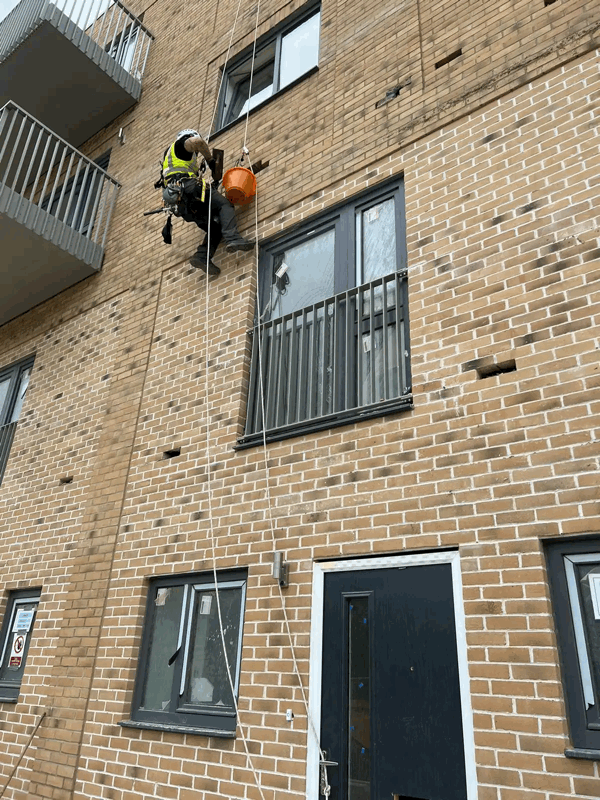
The identification of finds is central to several stages of cladding work, most notably during PAS 9980 appraisals and the production of EWS1 (External Wall System) forms. During these processes, surveyors and engineers perform intrusive inspections—often involving the removal of small sections of cladding panels—to observe the internal composition of the wall.
A find in this stage might include:
- The identification of combustible materials within the cavity that were not noted in the original specification.
- The discovery of missing or incorrectly installed fire stopping at floor slab levels.
- Observations regarding the corrosion of support rails or the degradation of moisture membranes.
Once a find is documented, it serves as the evidence base for the subsequent fire risk appraisal of the external wall (FRAEW). Because cladding systems are complex assemblies of multiple components, a single find regarding one element (such as the presence of a specific foil tape) can significantly alter the professional’s understanding of how the entire system might perform.
Relationship to Building Fabric and Systems
The external wall system is rarely a monolithic entity; it is a layered assembly where the performance of the whole depends on the correct interaction of the parts. Consequently, a find is rarely interpreted in isolation. When a surveyor identifies a specific component, they must consider its relationship to the building fabric as a whole.
For example, a find relating to the thickness of a masonry leaf or the type of sheathing board used behind the insulation provides the context for how the cladding system is supported. In repair and replacement projects, the identification of unexpected finds can necessitate a revision of the remedial design. If a find reveals that the substrate is not as robust as anticipated, the replacement cladding system may require a different fixing method to ensure structural integrity. This iterative process ensures that the technical solution is tailored to the actual, rather than the assumed, condition of the building.
Regulatory and Process Context
In England and Wales, the regulatory landscape—governed largely by the Building Safety Act 2022 and the revised Building Regulations—places a high burden of proof on the accuracy of building information. The process of documenting finds is a critical component of the "Golden Thread" of information, which aims to ensure that the physical reality of a building is accurately reflected in its digital and documentary records.
For buildings over 11 metres (or 18 metres in specific legislative contexts), the Accountable Person or Principal Accountable Person is responsible for managing building safety risks. The identification of finds during mandatory inspections provides the necessary data to fulfil these legal obligations. While the regulations do not use the word "find" as a defined legal term, the concept is inherent in the requirement for "thorough evidence" and "factual reporting" mandated by professional bodies such as the Royal Institution of Chartered Surveyors (RICS) and the Institution of Fire Engineers (IFE).
| Stage of Process | Role of the Find |
|---|---|
| Initial Assessment | Establishes the baseline physical reality of the wall system. |
| FRAEW (PAS 9980) | Provides the evidence for the risk rating assigned by the professional. |
| Remedial Design | Informs the technical specification for replacement materials. |
| Final Certification | Confirms that the "as-built" state matches the approved design. |
Guidance for Building Owners and Managers
Building owners, managing agents, and Residents' Management Company (RMC) directors must understand that the process of identifying finds is inherently exploratory. It is common for intrusive investigations to uncover finds that contradict original building plans. Such discrepancies do not necessarily indicate negligence in the current management but rather reflect historical variations in construction practices or documentation.
When a professional reports a find, it should be viewed as a technical clarification. Stakeholders should ensure that all finds are documented with photographic evidence and precise locations within the building’s elevation. This documentation is vital for future insurance renewals, mortgage valuations for leaseholders, and potential claims against warranties or developers. Understanding the nature of a find helps managers communicate clearly with residents about why certain investigations are necessary and why remedial plans may evolve as more information is discovered.
Common Misunderstandings
A frequent misunderstanding is that a find is synonymous with a defect. In technical terms, a find is simply an identified fact. Whether that fact represents a deficiency, a deviation from design, or a standard condition depends entirely on the professional assessment and the relevant building standards applicable at the time of construction or refurbishment.
Another misconception is that a single find in one location applies to the entire building. External walls can be highly non-uniform, especially in buildings that have undergone phased construction or previous repairs. A find at one "sampling point" may not be representative of the whole elevation. Therefore, professional methodology typically requires multiple intrusive openings to determine if a find is a systemic feature or a localised anomaly.
Related Terminology
To accurately categorise and act upon information discovered during an inspection, several related terms are often used alongside "find":
- Observation: A general note made during a site visit that may not involve intrusive investigation or specific component identification.
- Anomaly: A find that deviates significantly from the expected construction or the rest of the building's fabric.
- Sample Point: The specific physical location where the investigation was conducted to produce the find.
- As-Built Record: The documentation supposed to reflect the finished building, which is often corrected or updated based on new finds.
- Intrusive Inspection: The methodology used to reveal the components that lead to a find.
By maintaining a clear distinction between the raw data of a find and the subsequent professional judgement, the industry ensures a rigorous and evidence-based approach to building safety and maintenance.