
Does All Acm Cladding Need To Be Replaced
Short answer
The question of whether does all acm cladding need to be replaced is one of the most pressing concerns for building owners, managing agents, and residents across the United Kingdom. Following the Grenfell Tower tragedy, the focus on Aluminum Composite…
Last updated
On this page
Does All Acm Cladding Need To Be Replaced
Key Takeaways
- Not all ACM requires immediate removal: The necessity for replacement depends on the core material filler, the building's height, and the overall fire strategy.
- Core Composition is Critical: ACM panels with a polyethylene (PE) core are generally deemed high-risk, whereas fire-rated cores (FR or A2) may be safe to remain in specific contexts.
- Regulatory Compliance: In the UK, the Building Safety Act 2022 and revised Approved Document B dictate the standards for external wall systems, particularly for buildings over 11 or 18 meters.
- Professional Assessment: A definitive answer requires a FRAEW (Fire Risk Appraisal of External Walls) conducted by a competent professional under PAS 9980.
- Holistic View: Safety is not just about the panel; it involves cavity barriers, insulation types, and the quality of the original installation.
The question of whether does all acm cladding need to be replaced is one of the most pressing concerns for building owners, managing agents, and residents across the United Kingdom.
Following the Grenfell Tower tragedy, the focus on Aluminum Composite Material (ACM) has been intense, leading to widespread anxiety regarding property safety and financial liability.
However, the reality of façade remediation is nuanced, and a "one size fits all" approach to replacement is rarely the most technically or commercially sound strategy.
Understanding the specific risks associated with your building requires moving beyond the general label of "ACM."
ACM refers to a sandwich panel consisting of two thin aluminum sheets bonded to a central core.
It is the chemical composition of this core, rather than the aluminum itself, that determines the fire performance and, ultimately, the legal requirement for remediation or replacement.
At CladdingTesting.com, we emphasize that every building must be assessed on its own merits.
Factors such as the height of the building, the presence of other combustible materials behind the cladding, and the effectiveness of internal fire safety systems all play a role.
This guide provides a comprehensive technical overview to help property professionals navigate the complex landscape of ACM assessment and remediation.
What is ACM Cladding and Why is it Under Scrutiny?
Aluminum Composite Material (ACM) became a popular choice for UK construction in the late 20th and early 21st centuries due to its versatility, lightweight nature, and aesthetic appeal.
It allowed architects to create sleek, modern façades at a relatively low cost compared to solid aluminum or natural stone.
The panels are typically 3mm to 6mm thick and can be finished in a vast array of colors and textures.
The scrutiny arises from the combustibility of the core material.
While the outer aluminum skins do not burn, they have a low melting point (approximately 660°C).
During a fire, the aluminum can melt or deform, exposing the inner core to heat and oxygen, which, in certain ACM types, leads to rapid fire spread across the building envelope.
The Three Primary Types of ACM Cores
- ACM-PE (Unmodified Polyethylene): Often referred to as "Category 3" in earlier testing, this core consists primarily of polyethylene. It is highly combustible and is the type most associated with rapid fire spread.
- ACM-FR (Fire Retardant): Also known as "Category 2," these cores contain a mix of polyethylene and mineral filler designed to inhibit combustion. Their performance varies significantly depending on the mineral content.
- ACM-A2 (Limited Combustibility): These panels have a high mineral content (usually over 90%) and are classified as A2-s1, d0 under European standards. They are generally considered safe for use on high-rise buildings.
Does All ACM Cladding Need To Be Replaced?
No, not all ACM cladding needs to be replaced. The requirement for replacement is determined by the fire performance category of the panel core and how the entire wall system performs as a whole.
Under current UK government guidance and the PAS 9980 methodology, panels with a limited combustibility core (Class A2) are typically acceptable to remain in place, provided the rest of the wall system is compliant.
Determining the need for replacement involves a three-step criteria:
- Core Identification: Is the core PE, FR, or A2?
- System Performance: How does the cladding interact with the insulation, cavity barriers, and substrate?
- Risk Appraisal: Does the building height and occupancy type make the presence of the material an unacceptable risk to life safety?
Buildings over 18 meters (or those with specific risk profiles over 11 meters) face the strictest regulations.
If a building in this category is found to have ACM-PE, the government's position is clear: it must be replaced.
However, for ACM-FR, the decision may depend on large-scale fire testing (such as BS 8414) or a detailed cladding testing and risk assessment process.
Understanding the UK Regulatory Framework
The landscape of cladding safety is governed by several key pieces of legislation and guidance.
For building managers, staying compliant means understanding how these rules apply to their specific assets.
The transition from "advice notes" to formal legislation has clarified the responsibilities of the "Accountable Person" under the Building Safety Act 2022.
The Building Safety Act 2022
This landmark legislation introduced a new regime for "higher-risk buildings" (those at least 18 meters high or at least 7 stories).
It places a legal duty on owners to manage safety risks, including the fire performance of the external wall system.
Failure to address known risks associated with ACM can lead to severe legal and financial consequences.
Approved Document B (Fire Safety)
Approved Document B has been updated to significantly restrict the use of combustible materials on the external walls of high-rise buildings.
Specifically, for relevant buildings over 18 meters, most external wall components must achieve European Class A2-s1, d0 or Class A1.
This effectively bans the installation of new ACM-PE and most ACM-FR panels on tall buildings.
PAS 9980:2022
PAS 9980 provides a methodology for competent professionals to carry out a Fire Risk Appraisal of External Walls (FRAEW).
Unlike earlier binary "pass/fail" tests, PAS 9980 allows for a more proportioned, risk-based approach.
It acknowledges that the risk posed by a small amount of ACM-FR on a low-rise building is different from a fully clad ACM-PE high-rise.
The Role of Core Testing and Lab Analysis
You cannot determine the safety of an ACM panel simply by looking at it from the ground.
Many panels look identical on the surface, meaning intrusive investigation is essential.
This process typically involves taking physical samples from the building for laboratory analysis.
Laboratory testing involves measuring the heat of combustion (bomb calorimetry) and identifying the mineral content of the core.
This identifies whether the panel is a high-risk PE core or a more fire-resistant FR or A2 version.
At CladdingTesting.com, we coordinate these tests to ensure building owners have empirical evidence before making multi-million-pound decisions.
What happens during an inspection?
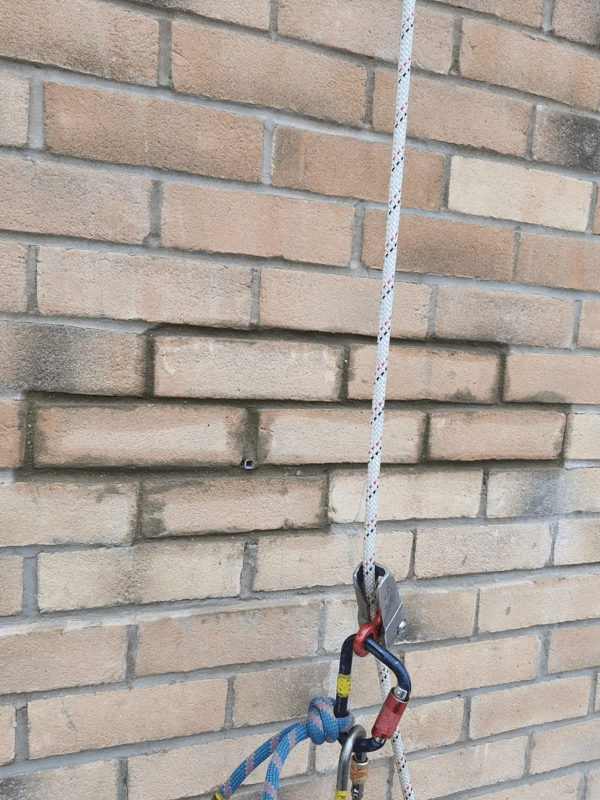
- Visual Survey: Using MEWPs (Mobile Elevating Work Platforms) or industrial rope access to inspect the condition of the panels.
- Sample Extraction: Carefully removing small sections of the cladding from various locations on the building.
- Cavity Inspection: Using endoscopes or opening up sections to check for cavity barriers and the type of insulation used.
- Documentation Review: Checking O&M (Operation and Maintenance) manuals, though these are often found to be inaccurate or incomplete.
When is Remediation Possible Without Full Replacement?
A common misconception is that the discovery of ACM automatically necessitates a total recladding project.
In reality, remediation—the act of fixing or mitigating the risk—can sometimes be achieved through less invasive means.
This is particularly true for buildings where the ACM usage is limited or where the core material has some fire-retardant properties.
Localised Repairs and Replacement
If ACM panels are only present in small areas, such as decorative features, window surrounds, or spandrel panels, it may be possible to replace only those specific elements.
This targeted approach significantly reduces costs and resident disruption.
However, this is only viable if the remaining wall system is proven to be safe and compliant.
Improving Fire Stops and Cavity Barriers
In some instances, the risk posed by the cladding is exacerbated by the absence of proper cavity barriers.
Cavity barriers are designed to close the gap between the cladding and the inner wall in the event of a fire, preventing the "chimney effect."
Retrofitting high-quality fire stops can sometimes lower the overall risk rating of a façade to an acceptable level, though this rarely negates the risk of ACM-PE.
The "System" Approach
It is important to remember that fire behaves according to the entire wall assembly.
An ACM-FR panel combined with non-combustible mineral wool insulation and robust cavity barriers performs very differently than the same panel over combustible PIR (polyisocyanurate) foam insulation.
Expert assessment looks at these components in unison to determine if the risk can be managed without full removal.
The Challenges of Full Cladding Replacement
When the assessment concludes that does all acm cladding need to be replaced applies to your building, the project transitions into a major construction operation.
Replacing the façade of a high-rise, often while it remains occupied, is a logistical and technical challenge that requires specialist management.
Logistics and Access
Tall buildings in dense urban environments pose significant access challenges.
Deciding between mast climbers, traditional scaffolding, or rope access depends on the building's footprint, height, and the weight of the replacement materials.
Effective planning must account for public safety, pavement licenses, and the protection of adjacent properties.
Resident Disruption
For residential blocks, the impact on occupants is a primary concern.
Recladding involves noise, loss of privacy, and often the removal of balconies or external fixtures.
A professional contractor will implement a communication strategy to keep residents informed and minimize the duration of the most disruptive works.
Interface Complexity
The façade is not an isolated component; it interfaces with windows, doors, roof systems, and structural slabs.
Replacing the cladding often reveals underlying issues, such as water ingress or structural corrosion, that were previously hidden.
A successful project ensures that the new system is not only fire-safe but also weather-tight and thermally efficient.
Does All Acm Cladding Need To Be Replaced
Financial Implications and Funding
The cost of cladding remediation is substantial, often running into millions of pounds for a single tower block.
Who pays for these works is a subject of ongoing legal and political debate in the UK.
Building owners and managing agents must be familiar with the available funding routes to avoid passing excessive costs onto leaseholders.
The Building Safety Fund (BSF)
The UK government established the Building Safety Fund to cover the cost of replacing unsafe cladding on high-rise residential buildings (over 18 meters).
The application process is rigorous, requiring detailed evidence of the cladding type and a professional cost plan.
Securing this funding is often the only way to make a large-scale remediation project financially viable.
Developer Pledges and Recoveries
Under the Building Safety Act, many large developers have signed pledges to remediate "life-safety" defects in buildings they constructed over the last 30 years.
Before committing to high costs, building owners should investigate whether the original developer or contractor can be held responsible for the remediation costs.
Insurance and Valuation Issues
Buildings with identified ACM issues often face soaring insurance premiums or a complete withdrawal of cover.
Furthermore, properties can become "unmortgageable" without an EWS1 (External Wall System) form.
Completing the necessary remediation is often the only way to restore the commercial value and insurability of the asset.
Risk Management During the Interim Period
Between the discovery of ACM and the completion of remediation works, there is an "interim period" that must be managed.
The priority during this time is the safety of the occupants.
Fire engineers may recommend "interim measures" to mitigate the risk while the permanent solution is designed and funded.
- Simultaneous Evacuation: Moving from a "Stay Put" policy to one where the whole building evacuates if a fire is detected.
- Waking Watch: Employing trained fire wardens to patrol the building 24/7 to detect fire and assist in evacuation.
- Fire Alarm Upgrades: Installing common fire alarm systems that can alert all residents simultaneously.
- Clearing Common Areas: Strict enforcement of "zero tolerance" policies regarding combustible items in hallways or on balconies.
While effective, these measures are expensive and intended only as temporary solutions.
The goal should always be to progress toward a permanent, non-combustible façade solution as quickly as possible.
Technical Considerations for New Cladding Systems
When replacement is necessary, the choice of new material is critical to ensure long-term compliance and performance.
The industry has largely moved toward solid metal or mineral-based products that offer the highest levels of fire safety.
Solid Aluminum Panels
Unlike ACM, solid aluminum panels are typically 2mm or 3mm thick and contain no plastic core.
They are naturally non-combustible (Class A1) and provide excellent durability.
They can be polyester powder coated (PPC) or anodized to match the original aesthetic of the building.
A1 and A2-rated ACM
Modern ACM panels with highly mineralized cores (Class A2-s1, d0) are still used in many remediation projects.
They offer the flatness and ease of fabrication of traditional ACM while meeting the stringent fire requirements for tall buildings.
Stone, Terracotta, and Brick Slip Systems
For buildings that require a different aesthetic, non-combustible options like terracotta rainscreen, natural stone, or GRC (Glass Reinforced Concrete) are popular.
These systems are often heavier than ACM, requiring a detailed structural assessment of the building's frame to ensure it can carry the new load.
The Importance of a Methodical Approach
Rushing into cladding replacement without a clear understanding of the problem can lead to wasted expenditure and inadequate safety improvements.
A structured methodology ensures that every pound spent contributes to a safer, more compliant building.
- Discovery: Initial review of building records and visual inspection.
- Investigation: Intrusive surveys, material sampling, and laboratory testing.
- Appraisal: A PAS 9980 FRAEW to determine the actual risk to life safety.
- Design: Engineering a remediation or replacement solution that addresses fire, thermal, and moisture performance.
- Delivery: Executing the works with a specialist façade contractor, ensuring quality control at every stage.
At CladdingTesting.com, we guide our clients through this entire lifecycle.
Our focus is on providing the technical clarity needed to make informed decisions, whether that means localized remediation or a complete recladding programme.
FAQ: Common Questions Regarding ACM Replacement
How long does ACM cladding replacement usually take?
The timeline for a full replacement depends on the building size and complexity.
A typical high-rise tower can take anywhere from 12 to 24 months from the start of site works to completion.
This does not include the 6–12 months often required for the investigation, design, and procurement phases.
Can I sell my flat if the building has ACM cladding?
Selling a property with ACM can be difficult until a clear remediation plan is in place.
Lenders usually require an EWS1 form with a satisfactory rating (A1, A2, or B1).
If the building is rated B2, it means remediation is required, and most lenders will not provide a mortgage until the works are funded or completed.
What is the difference between ACM-PE and ACM-FR?
ACM-PE has a core made of almost 100% polyethylene, which is highly flammable.
ACM-FR (Fire Retardant) has a core that is typically 30% polyethylene and 70% mineral filler.
While ACM-FR is safer than PE, it may still not meet the requirements for high-rise buildings depending on the overall wall system design.
Is the government paying for all ACM replacement?
The Building Safety Fund covers "unsafe" cladding on residential buildings over 18 meters.
For buildings between 11 and 18 meters, the Medium-Rise Scheme and developer pledges are designed to protect leaseholders from costs.
Commercial buildings and those under 11 meters generally do not qualify for central government funding at this time.
Does the insulation behind the ACM also need to be replaced?
In many cases, yes. If the insulation is combustible (such as many PIR or phenolic foam boards), it may need to be replaced with non-combustible mineral wool.
Replacing the panels while leaving combustible insulation behind often fails to meet the required safety standards for high-rise buildings.
What happens if we choose not to replace the cladding?
Failure to remediate known unsafe cladding can result in enforcement action by the Building Safety Regulator or local Fire and Rescue Services.
This can include fines, prohibition notices (preventing the building from being occupied), and significant legal liability for the building's Accountable Person.
Final Thoughts on ACM Strategy
The question "does all acm cladding need to be replaced" cannot be answered with a simple yes or no without a building-specific investigation.
While the presence of ACM-PE on a high-rise is an almost certain trigger for replacement, other scenarios allow for more nuanced solutions.
The priority must always be life safety, but this should be balanced with technical accuracy and commercial pragmatism.
Working with façade specialists ensures that you are not just reacting to headlines, but following a data-driven path toward compliance.
By identifying the exact nature of the cladding and the performance of the wider wall system, building owners can implement strategies that truly protect both the occupants and the long-term value of the asset.
If you are responsible for a building with ACM and need to determine the next steps, contact CladdingTesting.com.
Our team provides the expert inspection, testing, and remediation services required to resolve even the most complex cladding challenges.
Does All Acm Cladding Need To Be Replaced