
responsible entity cladding remediation
Responsible Entity Cladding Remediation
The safety of high-rise residential and commercial buildings has undergone a radical transformation in the United Kingdom following the introduction of the Building Safety Act 2022. At the heart of this legislative shift is the concept of responsible entity cladding remediation. This term defines the specific legal and financial obligations of those who own or manage buildings with unsafe external wall systems. A responsible entity is the legal person or organisation accountable for the safety of a building’s facade. Under the responsible entity cladding safety scheme, this party must ide
On this page
15 min read
Last updated
Responsible Entity Cladding Remediation
The safety of high-rise residential and commercial buildings has undergone a radical transformation in the United Kingdom following the introduction of the Building Safety Act 2022. At the heart of this legislative shift is the concept of responsible entity cladding remediation. This term defines the specific legal and financial obligations of those who own or manage buildings with unsafe external wall systems.
A responsible entity is the legal person or organisation accountable for the safety of a building’s facade. Under the responsible entity cladding safety scheme, this party must identify, assess, and mitigate risks associated with combustible materials, defective installation, or failed cavity barriers. Identifying who is responsible entity cladding is the first step in unlocking government funding and ensuring long-term structural compliance.
Key Takeaways
- Legal Definition: A responsible entity is typically the freeholder, superior landlord, or a management company with repairing obligations.
- Safety Obligations: They must systematically investigate external wall systems and undertake responsible entity external wall remediation where risks are identified.
- Funding Access: Identifying the correct entity is crucial for accessing the Building Safety Fund (BSF) or the Cladding Safety Scheme (CSS).
- Proportionality: Remediation does not always mean full replacement; localized repairs or fire-stopping upgrades may be sufficient.
- Resident Safety: The primary goal is to ensure responsible entity unsafe cladding issues are resolved without passing unfair costs to leaseholders.
Defining Responsible Entity Cladding Remediation
In the context of UK property law and fire safety, responsible entity cladding remediation refers to the process where the designated legal controller of a building undertakes the necessary works to make an external wall system safe. This involves moving from an initial discovery of a defect to a fully certified, compliant facade.
The term "remediation" covers a spectrum of activities. It is not limited to "recladding" but includes fixing cavity barriers, replacing combustible insulation, or repairing damaged panels. The responsible entity must ensure that these works meet current Building Regulations and the requirements of the responsible entity cladding safety scheme.
- Assessment: Determining the exact composition of the external wall.
- Risk Management: Evaluating how the cladding interacts with fire-stopping and balconies.
- Execution: Carrying out the physical construction or repair works.
- Certification: Securing an EWS1 form or Building Control sign-off upon completion.
Who is the Responsible Entity for Cladding?
One of the most frequent questions property professionals ask is: who is responsible entity cladding? Under the Building Safety Act, this is generally the party that has the legal obligation to repair and maintain the structure and exterior of the building. This is often the freeholder or a head lessee.
However, it can also be a Residential Management Company (RMC) or a Right to Manage (RTM) company. If you are unsure of the status of your building, Cladding Testing services can help establish the technical baseline needed for these entities to begin their legal applications.
In complex multi-layered ownership structures, identifying the responsible entity requires a review of the head lease and any management agreements. The responsible entity external wall remediation process cannot proceed until this party is legally confirmed, as they must sign the developer remediation contracts or grant applications.
The Regulatory Framework: The Building Safety Act and Beyond
The regulatory landscape in the UK is designed to ensure that responsible entity unsafe cladding is handled with a "safety first" approach. The Building Safety Act 2022 introduced "Leaseholder Protections," which fundamentally changed who pays for remediation. In many cases, the responsible entity cannot pass these costs to qualifying leaseholders.
This has placed a significant administrative and technical burden on building owners. They are now required to prove they have explored all avenues for funding—including pursuing original developers or applying to the responsible entity cladding safety scheme—before seeking any alternative recovery methods.
The Golden Thread of Information
For any responsible entity, maintaining the "Golden Thread" of information is a statutory requirement. This is a digital record of the building's original design, materials used in construction, and any subsequent changes made during its lifecycle.
Without this data, responsible entity external wall remediation becomes significantly more expensive and time-consuming. When records are missing, intrusive inspections become the only reliable way to understand the building's makeup. This involves taking physical samples of cladding, insulation, and fire-stopping for laboratory analysis.
The Role of the Principal Accountable Person (PAP)
In higher-risk buildings (those over 18 metres or seven storeys), the responsible entity often takes on the role of the Principal Accountable Person. This individual or body is responsible for registering the building with the Building Safety Regulator (BSR) and preparing a Safety Case Report.
The Safety Case Report must demonstrate how responsible entity unsafe cladding risks are being managed. If remediation is planned but not yet completed, the PAP must outline "interim measures"—such as waking watches or enhanced fire alarm systems—to protect residents in the meantime.
Identifying the Need for Remediation
Not every building with cladding requires a total overhaul. The goal of responsible entity cladding remediation is to achieve a "tolerable" level of risk, as defined by professional fire engineering standards such as PAS 9980.
A responsible entity must first commission a detailed technical survey. This determines whether the issue is a systemic failure of materials (e.g., ACM or HPL panels) or a failure of workmanship (e.g., missing cavity barriers).
Intrusive Investigations and Testing
Visual inspections from the ground are rarely sufficient. To satisfy the requirements of a responsible entity cladding safety scheme, "opening up" works are required. This involves removing sections of the facade to inspect the internal components.
Key areas of focus during these investigations include:
- Combustibility: Testing the fire rating of the outer panel and the insulation behind it.
- Cavity Barriers: Checking for the presence, correct orientation, and compression of fire-stops.
- Fixing Integrity: Identifying corrosion or structural failure in the rail systems and brackets.
- Moisture Management: Checking for dampness or rot that may have compromised the wall's performance.
The PAS 9980 Assessment
The PAS 9980 methodology is the standard used to assess the fire risk of external walls. It allows the responsible entity to move away from a binary "pass/fail" approach. Instead, it looks at the building as a whole, including its height, occupancy, and fire escape strategy.
This assessment often reveals that responsible entity external wall remediation can be more targeted. For example, it might suggest that only the cladding around "high-risk" areas like exit routes needs replacement, while other areas can be managed through less invasive means.
Options for Remediation: Repair vs. Replacement
When a responsible entity discovers defective cladding, they face a critical decision: should they repair the existing system or replace it entirely? This decision has massive implications for cost, timelines, and resident disruption.
At CladdingTesting.com, our approach is always to find the most practical solution that ensures safety. We do not default to total replacement if a more efficient, safe remediation path exists.
Localised Repairs and Remediation
In many modern buildings, the cladding panels themselves may be fire-compliant, but the installation is defective. Common issues include poorly fitted cavity barriers or the use of non-compliant tape and sealants.
In these scenarios, responsible entity cladding remediation might involve:
- Removing specific panels to install missing fire-stops.
- Replacing combustible timber battening with metal alternatives.
- Upgrading fire-rated sealants around window and door apertures.
- Strengthening failed mechanical fixings without removing the entire facade.
Complete Cladding Replacement (Recladding)
If a building is clad in Category 3 ACM or other highly combustible materials, full replacement is often the only viable path. This is a major construction project that requires significant logistical planning.
For a responsible entity, a recladding project involves stripping the building back to its structural frame or inner leaf. New, non-combustible insulation (typically A1 or A2-s1, d0 rated) and compliant cladding panels are then installed. This process provides a "blank slate" and allows for the correction of any thermal or water ingress issues at the same time.
The Responsible Entity Cladding Safety Scheme (CSS)
The responsible entity cladding safety scheme (CSS) was established to provide funding for the remediation of unsafe cladding on residential buildings between 11 and 18 metres in height. This is a vital resource for entities that do not have the capital to fund multi-million-pound projects upfront.
To access this scheme, the responsible entity must provide evidence of the building's height and the presence of unsafe materials. This usually requires a professional survey report and an EWS1 assessment.
Funding Criteria and Eligibility
Eligibility for the responsible entity cladding safety scheme depends on several factors:
- The building must be a residential or mixed-use property.
- The height must be between 11 and 18 metres (buildings over 18m usually apply to the Building Safety Fund).
- The cladding system must pose a life-safety risk as identified by a competent professional.
- The responsible entity must demonstrate they are taking steps to recover costs from developers where possible.
The Application Process
The application process for funding is rigorous. It requires the responsible entity to appoint a professional team, including a lead consultant and a quantity surveyor. This team will develop the "Works Package" that is submitted for approval.
Once funding is "allocated in principle," the responsible entity can proceed to tender. It is vital that the procurement process is transparent and follows the scheme's guidelines to ensure that the grant remains valid throughout the construction phase.
Responsible Entity Cladding Remediation
Challenges in High-Rise Remediation
Executing responsible entity external wall remediation on an occupied high-rise building is one of the most complex tasks in the construction industry. It involves much more than just "changing the panels."
Managing the logistics of a live site requires a specialized skill set. The safety of the residents must be maintained at all times, and the building's weather-tightness must be protected during the transition from the old facade to the new one.
Access and Logistics
How the works are accessed is a major cost driver. Options include:
- Mast Climbers: Ideal for large, flat elevations but can be restrictive for complex shapes.
- Traditional Scaffolding: Provides the best access for workmen but is expensive and can pose security risks for residents.
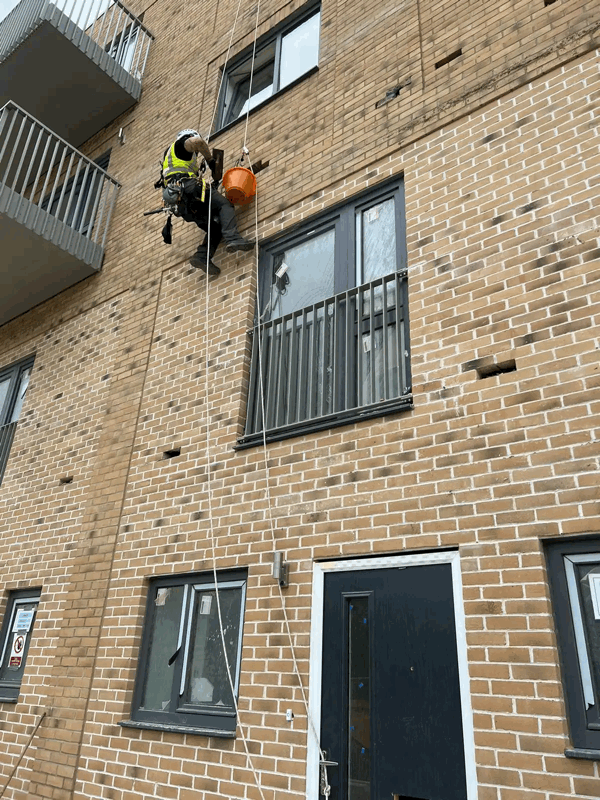
- Rope Access: Useful for inspections and minor responsible entity cladding remediation but rarely suitable for full replacement.
- Cradles: Often used on very tall buildings where scaffolding is impractical.
Resident Disruption and Communication
For a responsible entity, managing resident expectations is a full-time job. Recladding is noisy, dusty, and invasive. Residents may lose access to their balconies, and their natural light will be reduced by scaffolding or protective mesh.
Successful remediation projects rely on clear, regular communication. The responsible entity should provide residents with a detailed timeline of when work will occur on their specific elevation. Providing "respite spaces" or temporary shielding can also help maintain the quality of life during the project.
Interface Management
The "interface" is where the cladding meets other building elements, such as windows, roofs, and balconies. These are the points where failures most often occur.
When undertaking responsible entity external wall remediation, the technical team must ensure that the new system integrates perfectly with existing windows. This often requires bespoke flashing and complex sealant details to prevent future water ingress or thermal bridging.
Commercial Considerations for the Responsible Entity
Beyond safety, responsible entity unsafe cladding is a commercial problem. Buildings with unresolved cladding issues are often "unmortgageable," meaning leaseholders cannot sell or refinance their homes. This places immense pressure on the responsible entity to move quickly.
Furthermore, the cost of insurance for buildings with known cladding defects has skyrocketed. Completing remediation is often the only way to bring insurance premiums back to reasonable levels.
Professional Indemnity Insurance (PII)
A significant hurdle in the responsible entity cladding remediation process is securing contractors and consultants with the correct Professional Indemnity Insurance. Many insurers have excluded cladding-related claims from their policies.
The responsible entity must verify that all parties involved in the project have "cladding-clear" PII. This ensures that if a defect is discovered in the new work five years down the line, there is a mechanism for recourse.
Procurement and Tendering
Because these projects involve public or leaseholder funds, the responsible entity has a fiduciary duty to achieve value for money. This doesn't mean choosing the cheapest quote, but the one that offers the best balance of technical competence and price.
A typical procurement route involves a two-stage tender. In the first stage, contractors are pre-qualified based on their experience with high-rise, occupied buildings. In the second stage, they provide a detailed cost breakdown for the specific scope of responsible entity external wall remediation.
Technical Standards and Compliance
All remediation work must comply with the latest version of the Building Regulations, specifically Approved Document B (Fire Safety). For buildings over 11 metres, the use of combustible materials in the external wall is now strictly limited.
The responsible entity must ensure that the final installation is supported by a comprehensive "Completion Pack." This should include:
- Material data sheets for every component used.
- Photographic evidence of fire-stop installations.
- Building Control completion certificates.
- A new, clean EWS1 form (where required by lenders).
The Importance of Independent Oversight
Given the history of cladding failures, a responsible entity should not rely solely on the contractor's word. Independent Clerk of Works or third-party inspectors should be employed to verify the work at every stage.
These inspectors will check that cavity barriers are not just present, but installed without gaps and correctly fixed. They will also verify that the insulation is of the specified grade and that the rainscreen panels are correctly aligned and fixed.
Managing Risk During the Remediation Process
The "construction phase" is ironically when the building is often at its most vulnerable. With the facade removed, the internal structure may be exposed to the elements, and the presence of scaffolding can create new fire and security risks.
The responsible entity must update the building's Fire Risk Assessment (FRA) specifically for the construction period. This might include:
- Enhanced site security to prevent unauthorised access to scaffolding.
- Strict "Hot Works" permits for any welding or cutting.
- Temporary fire detection systems on the scaffolding itself.
- Clear signage and unobstructed escape routes for residents.
Mitigating Water Ingress
A common failure in responsible entity cladding remediation is water ingress occurring while the building is "open." If a rainstorm occurs while the outer cladding is off, water can penetrate the building’s inner leaf, causing damage to apartments.
A competent contractor will use "phased stripping," where only small sections of the facade are removed and replaced in a single work cycle. They will also have emergency weathering plans, using heavy-duty membranes to seal exposed areas overnight.
The Future of Cladding Safety in the UK
The industry is moving toward a more holistic view of the building envelope. Responsible entity cladding remediation is no longer just about fire; it is increasingly about thermal performance and carbon reduction.
As the UK strives toward Net Zero, many entities are taking the opportunity to upgrade their building's insulation beyond the minimum requirements of the responsible entity cladding safety scheme. This "future-proofs" the asset and reduces energy costs for residents.
Digital Twins and BIM
Modern remediation projects are increasingly using Building Information Modelling (BIM). By creating a "Digital Twin" of the building, the responsible entity can track every single panel and fire-stop in a virtual model.
This level of detail is invaluable for future maintenance. If a panel is damaged ten years from now, the responsible entity can simply look at the digital model to find the exact manufacturer, colour code, and fixing type required for a replacement.
Frequently Asked Questions
Who is the responsible entity for cladding in an RMC-led building?
In a building managed by a Resident Management Company (RMC), the RMC itself is usually the responsible entity because it holds the repairing obligations under the lease. However, the freeholder may still have certain overarching responsibilities, especially regarding structural integrity.
Can a responsible entity be forced to carry out remediation?
Yes. Local authorities and the Fire and Rescue Service have powers under the Housing Act 2004 and the Regulatory Reform (Fire Safety) Order 2005 to issue improvement notices. The Building Safety Regulator can also issue "Remediation Orders" to compel a responsible entity to act.
Does the responsible entity cladding safety scheme cover all costs?
The responsible entity cladding safety scheme covers the "reasonable" costs of remediating unsafe cladding. It may not cover "betterment" (upgrades that are not safety-related) or the repair of non-cladding-related defects like general wear and tear or roof leaks.
How long does the remediation process typically take?
The timeline varies significantly. A typical high-rise project can take 12 to 24 months from the initial investigation through to completion. The "construction phase" itself might last 9 to 15 months, depending on the building's size and the complexity of the responsible entity external wall remediation required.
What happens if the original developer is no longer in business?
If the original developer is insolvent, the responsible entity can apply to government funds like the Building Safety Fund or the Cladding Safety Scheme. These funds were specifically designed to act as a "safety net" for buildings where there is no developer to pay for the works.
Is an EWS1 form required after remediation?
While an EWS1 form is a valuation tool rather than a legal requirement, most lenders will require a new EWS1 form with a "Rating A1" or "B1" once responsible entity cladding remediation is complete. This confirms that the fire risk is low enough to support a mortgage.
Can we stay in the building during remediation?
In the vast majority of cases, residents can remain in their homes. The responsible entity and the contractor will implement a Construction Phase Plan designed to minimise disruption. "Decanting" residents is only necessary in extreme cases where the work is so invasive that it compromises the building's internal safety systems.
How does a responsible entity choose a contractor?
A responsible entity should look for contractors with a proven track record in "live" high-rise environments. They should be able to demonstrate their understanding of responsible entity unsafe cladding issues and provide case studies of similar projects they have successfully completed.
What is the difference between remediation and mitigation?
Remediation is the permanent fix—removing the defect. Mitigation refers to temporary measures (like a waking watch) that reduce the risk until responsible entity cladding remediation can be completed. Mitigation is never a permanent substitute for remediation.
Are balconies included in responsible entity cladding remediation?
Yes, if the balconies are made of combustible materials or are integral to the external wall system, they must be addressed. This often involves replacing timber decking with aluminium or composite non-combustible alternatives.
The journey from identifying a cladding defect to achieving a safe, compliant building is a complex one. For any responsible entity, the key is to move forward with a structured, technically sound plan. By focusing on detailed investigation and professional oversight, you can ensure that responsible entity cladding remediation is delivered efficiently, protecting both the residents and the long-term value of the property.
If you are currently managing a building and need professional assistance with investigations or the delivery of remediation works, Cladding Testing provides the specialist expertise required to navigate these challenges.
Responsible Entity Cladding Remediation